
Introduction: The Historic Recovery of Bengal Tigers in Nepal
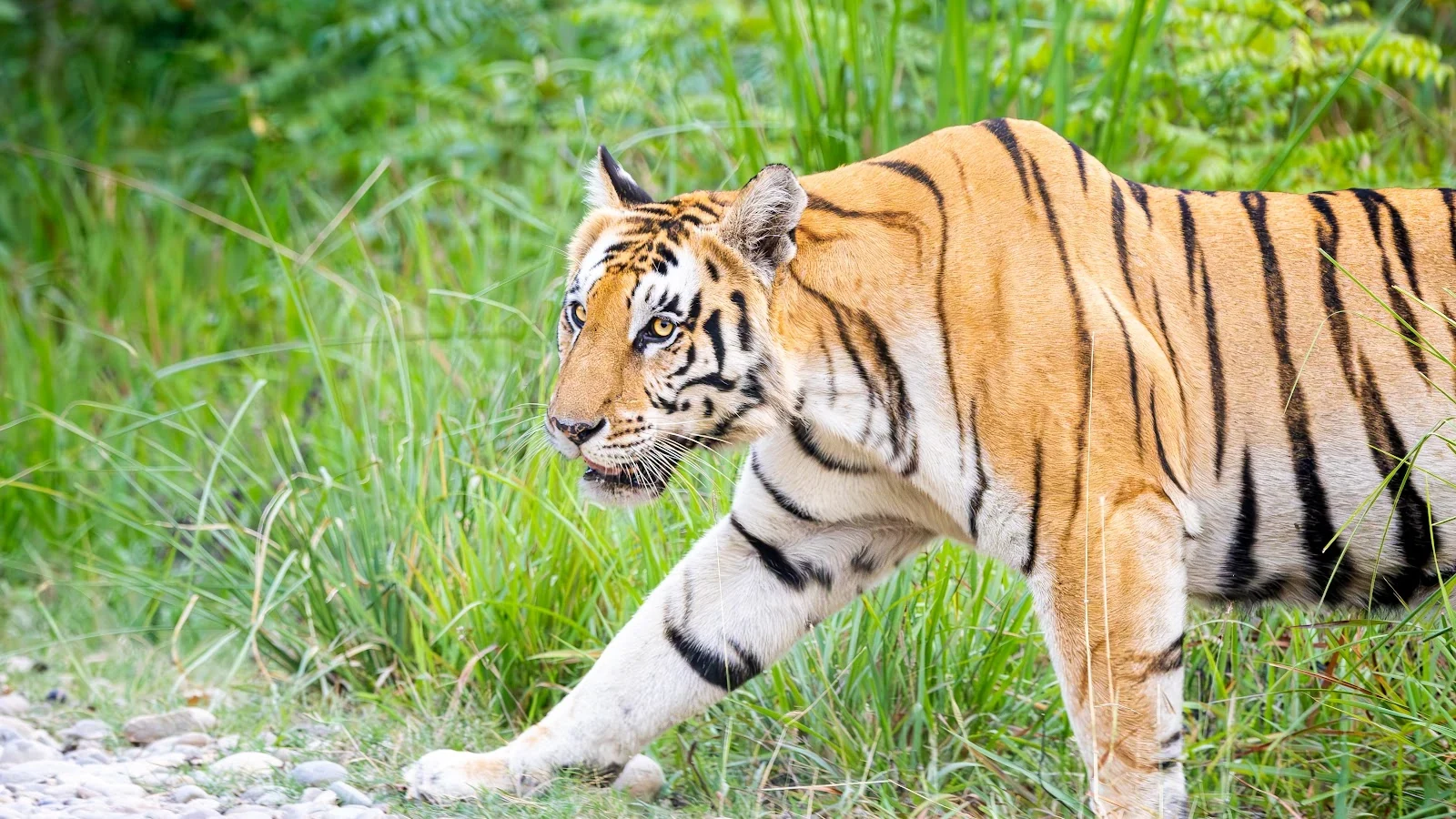
Tracking a wild Bengal tiger (Panthera tigris tigris) through natural jungle habitats is one of the most exhilarating wildlife experiences in Asia. While worldwide tiger numbers plummeted by 95% over the past century, Nepal achieved a celebrated conservation milestone: tripling its wild tiger population in just 15 years, rising from 121 individuals in 2010 to 355 tigers in 2022-2026 according to official censuses by the Department of National Parks and Wildlife Conservation (DNPWC) and WWF Nepal.
Where are the best places to see wild tigers in Nepal? Which national park should you choose, what is the best season, and how can you maximize sighting chances responsibly? Here is our comprehensive field guide.
Ethical Bengal Tiger Tracking Expedition
Track wild tigers on foot and at river hides with native Bardia naturalist guides carrying 15+ years of daily field experience.
1. Why Nepal Is the Premier Destination for Wild Tiger Safaris
Unlike overcrowded reserves in parts of neighboring India where dozens of noisy safari vehicles gather around a single animal, wildlife safaris in Nepal focus on quiet immersion, patience, and non-intrusive tracking.
This conservation success rests on three fundamental pillars:
- Strict military anti-poaching patrols: 24/7 foot patrols by the Nepal Army protect sanctuary borders and prevent poaching.
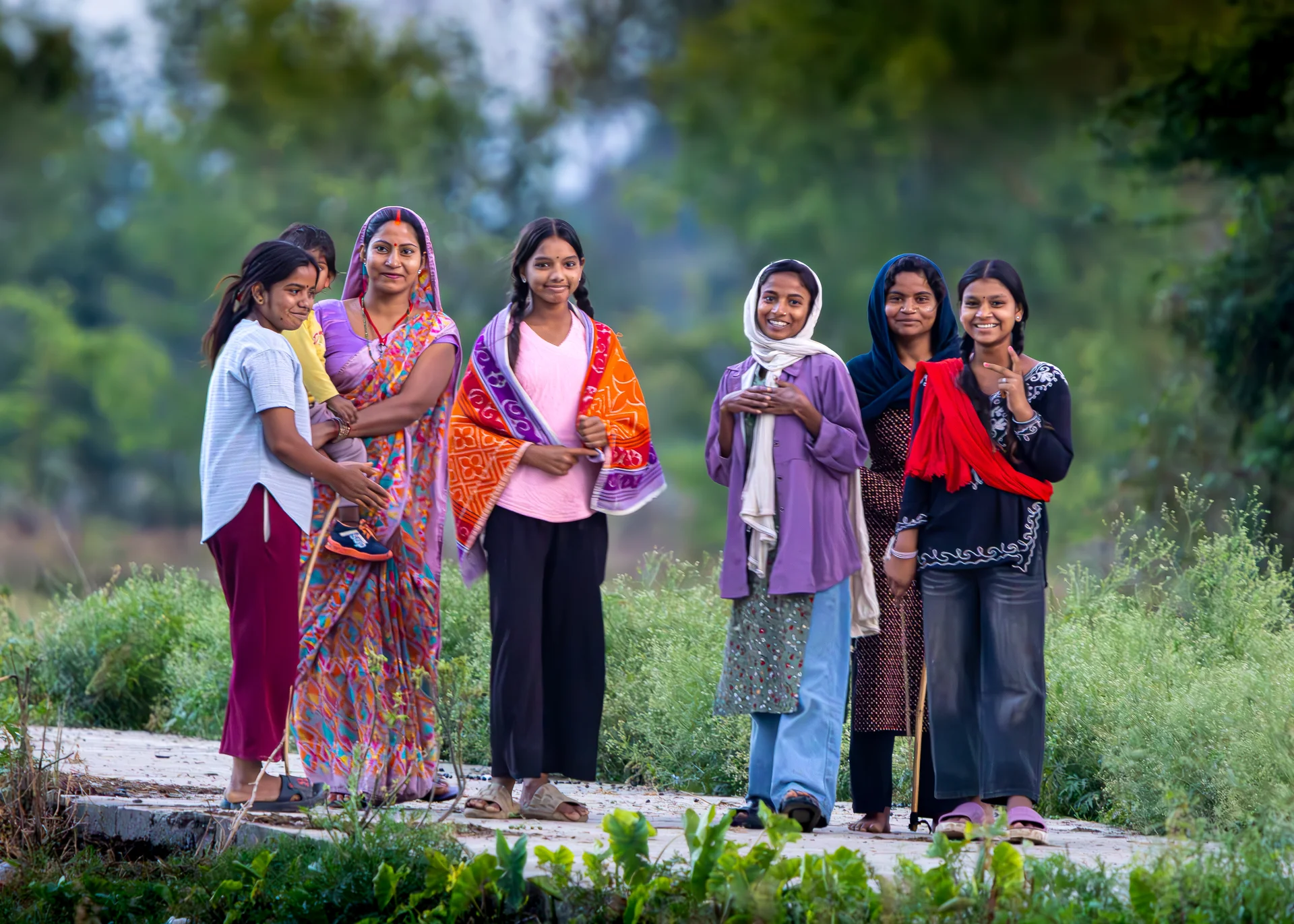
- Direct empowerment of indigenous Tharu communities: park revenue directly supports local schools and healthcare, turning former forest users into proud wildlife guardians. Learn more in our guide on Tharu culture and ancient jungle traditions in Nepal.
- Regulated on-foot walking safaris: Nepal is one of the only destinations worldwide where tracking large predators on foot with certified naturalist guides is permitted, offering an authentic and thrilling connection with nature.
| National Park | Tiger Count (2022-2026) | Surface Area | Safari Modes | Sighting Probability |
|---|---|---|---|---|
| ★ Bardia National Park | 125 tigers | 968 km² | Walking safaris, river hides, 4x4 jeep | Very High (70 to 85% over 3-4 days) |
| Chitwan National Park | 128 tigers | 952 km² | Jeep, dugout canoe, short walk | Moderate (25 to 40% - dense vegetation) |
| Suklaphanta National Park | 36 tigers | 305 km² | Jeep through open grasslands | Variable (strong potential in open phantas) |
| Parsa National Park | 41 tigers | 627 km² | Wildlife movement corridor | Low for general travelers |
2. Bardia National Park: The Prime Kingdom for Tiger Tracking
Located in Nepal's far-western lowlands, Bardia National Park is widely recognized by wildlife biologists and photographers as the finest location in South Asia for wild tiger encounters on foot.
The park's tiger population surged from just 18 adults in 2009 to 125 mature tigers today. Because dry weather concentrates animals around the Karnali and Babai riverbeds, viewing opportunities during peak months are exceptionally high.
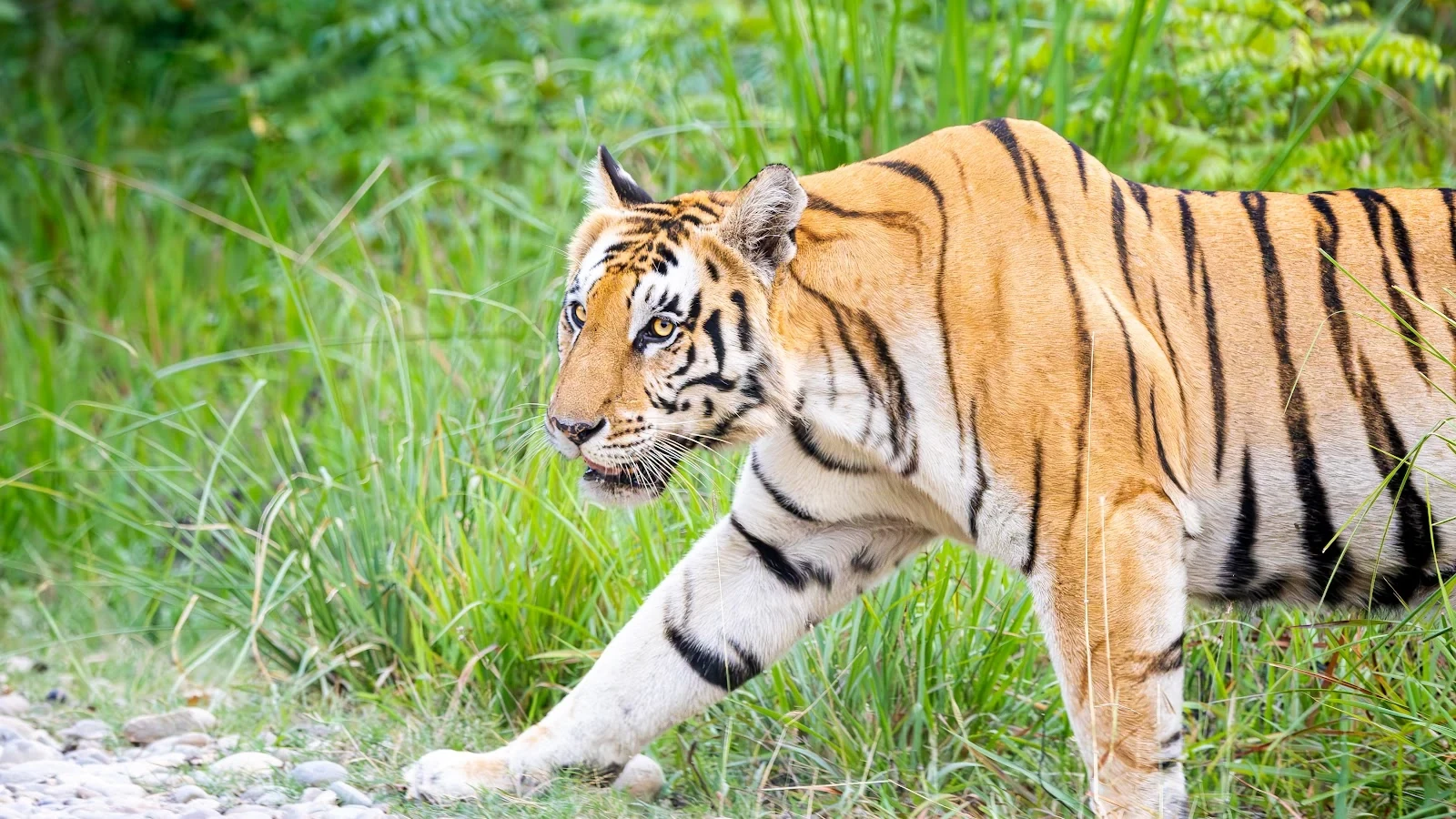
Key advantages of choosing Bardia:
- Silent walking safaris: guided by two certified naturalists carrying traditional bamboo safety sticks, you walk without motor noise. Read our complete guide to walking safaris in Bardia.
- Strategic riverbank hides (Machans): during warm midday hours, tigers seek relief in the cool waters of the Karnali river (notable vantage points include Kingfisher, Tinkuni, and Baghaura Phanta). Review our field report on Bardia tiger sighting statistics and secret spots.
- Zero vehicle crowds: you can spend an entire day tracking through the jungle without meeting another group of visitors.
3. Chitwan National Park: Iconic Historic Wildlife Sanctuary
Inscribed as a UNESCO World Heritage site in 1984, Chitwan National Park holds the highest total count of tigers in Nepal (128). However, tracking conditions are quite different from Bardia.
Chitwan is blanketed by dense subtropical Sal forests and massive 6-meter-tall elephant grasses that provide thick natural cover for big cats. While tiger sightings require more patience, Chitwan guarantees exceptional sightings of greater one-horned rhinoceroses, deer herds, and rare Gharial crocodiles.
To compare both parks in depth, read our side-by-side comparison: Bardia or Chitwan: which park should you choose?.
4. Suklaphanta National Park: Vast Grasslands and Raw Solitude
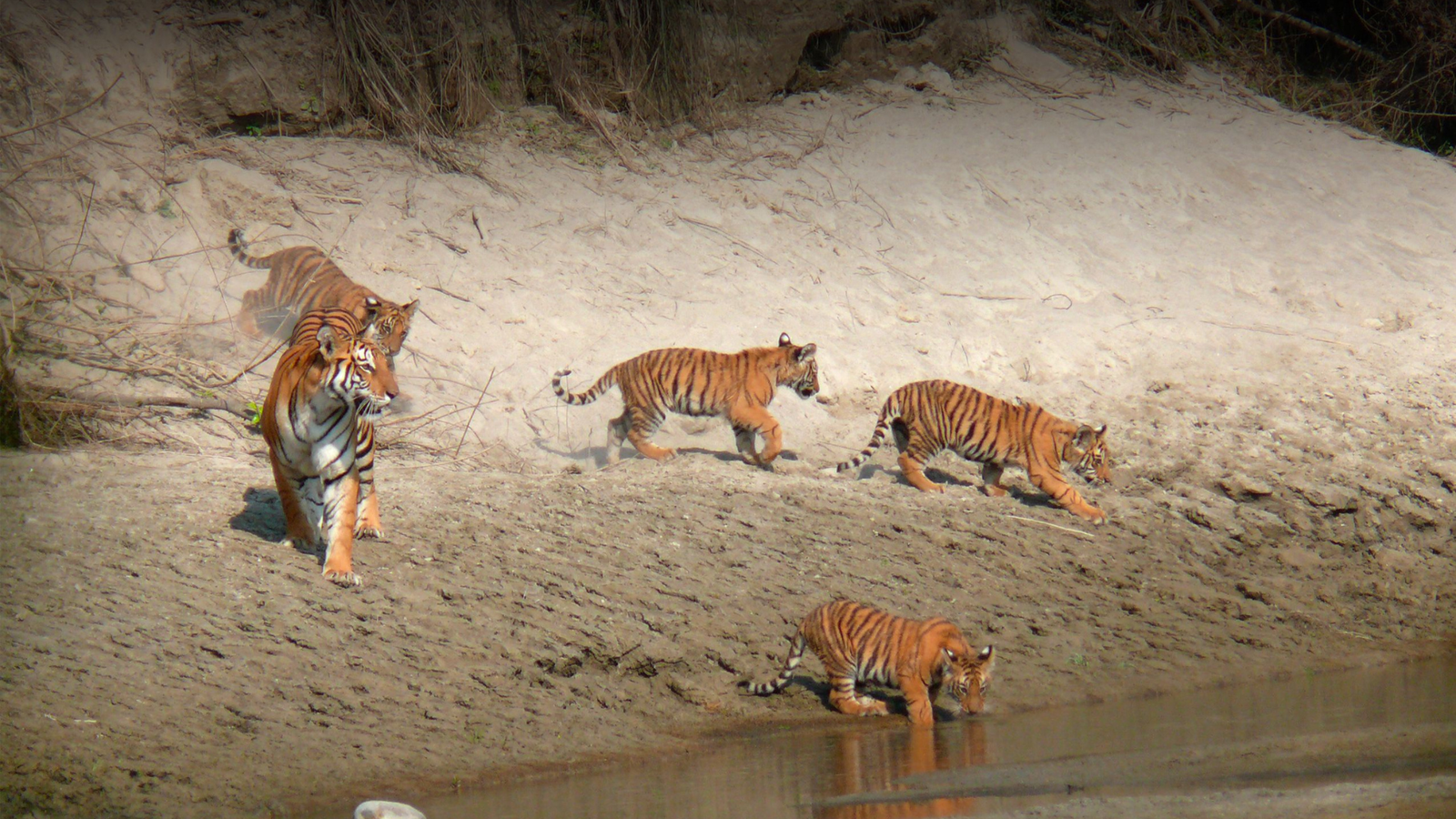
Positioned along Nepal's southwestern frontier, Suklaphanta National Park features the largest continuous grassland savanna in South Asia.
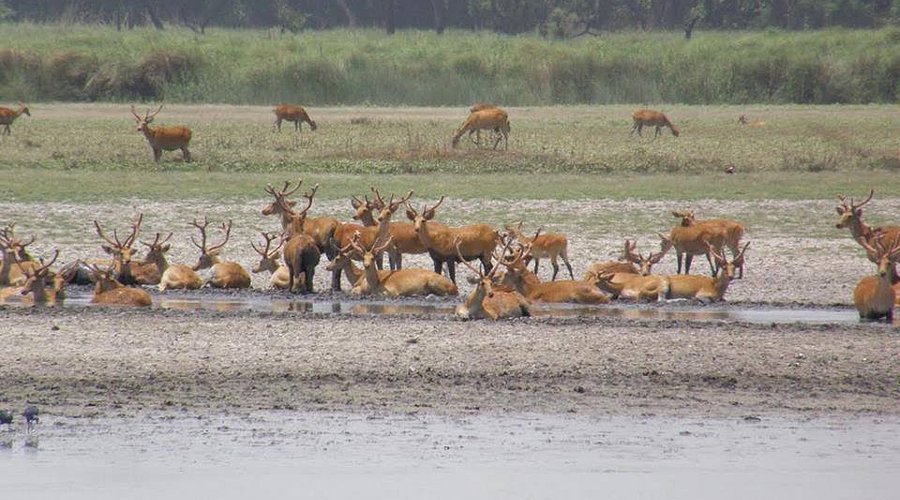
With 36 tigers and the world's largest gathering of swamp deer (barasingha, over 2,000 individuals), the open grassland terrain offers expansive visibility. Facilities remain basic, making it ideal for adventurous travelers seeking remote wilderness.
5. Best Season to Spot Tigers in Nepal: The Tracking Calendar
Seasonality is the single most critical factor determining safari success. Review our detailed guide to safari seasons in Nepal, summarized here for tiger observation:
| Season | Weather & Habitat Conditions | Tiger Success Rate | Field Recommendation |
|---|---|---|---|
| March to May (Peak Dry Season) | 32°C to 38°C. Grass has dried back, wide panoramic views. Inland water pools dry up. | 85%+ (over 3-4 days) | Prime window: tigers spend long daytime hours resting in riverbeds to regulate temperature. |
| October to February (Pleasant Climate) | 22°C to 26°C daytime, cool evenings. Very comfortable walking conditions. | 50 to 65% | Excellent general safari period: crisp morning air, fresh tracks on dusty trails, beautiful overall travel weather. |
| June to September (Monsoon) | Torrential downpours, swollen rivers, thick undergrowth, and leeches. | Low (tracks flooded) | Not recommended: most deep park roads and walking trails are flooded and closed. |
6. The Art of Jungle Tracking: Reading Signs of the Big Cat
Unlike African savannas with open sightlines, tracking big cats in subtropical Asian jungle relies on reading subtle environmental cues. Discover our comprehensive feature on the art of jungle tracking: pugmarks, alarm calls, and guide secrets.
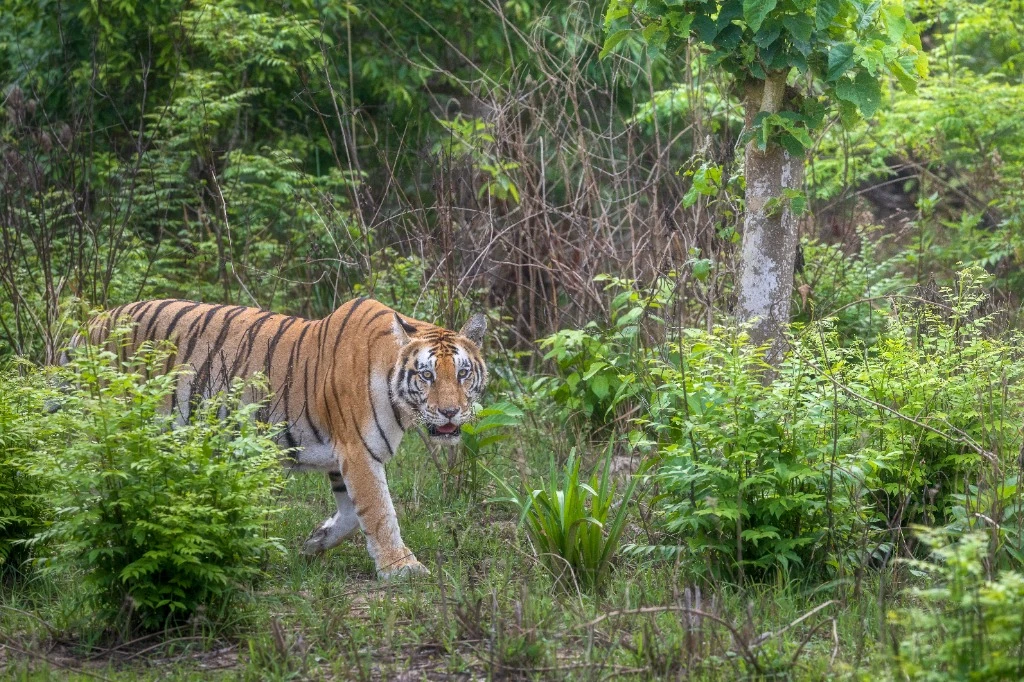
During your safari, our experienced trackers continuously analyze 4 primary signals:
- Alarm calls: as a tiger moves, spotted chital deer give sharp repetitive barks, while Hanuman langur monkeys in the canopy sound distinct coughing calls to alert the forest.
- Pugmarks (Footprints): prints in soft sand or dirt reveal the tiger's gender, build, and how recently it passed through.
- Territory markings: deep claw scratches on Sal tree trunks up to 2 meters high, alongside scent sprays, establish home range boundaries.
- Peacock flights: wild peacocks on the forest floor sound piercing warning calls and take heavy flight when a feline approaches.
7. Walking Safari vs. 4x4 Jeep Safari: Which Experience to Choose?
In Bardia, both styles complement each other and can easily be combined during your trip:
- Walking Safari: the signature Bardia experience. Silent foot exploration lets you position upwind of waterholes without vehicle noise. Safety is ensured through strict guidelines and two licensed naturalist guides. Learn more in Are walking safaris dangerous in Nepal?.
- 4x4 Jeep Safari: ideal for covering longer distances, reaching remote valleys like Babai, and carrying heavy camera lenses. Explore our Bardia 4x4 Jeep Safari tour.
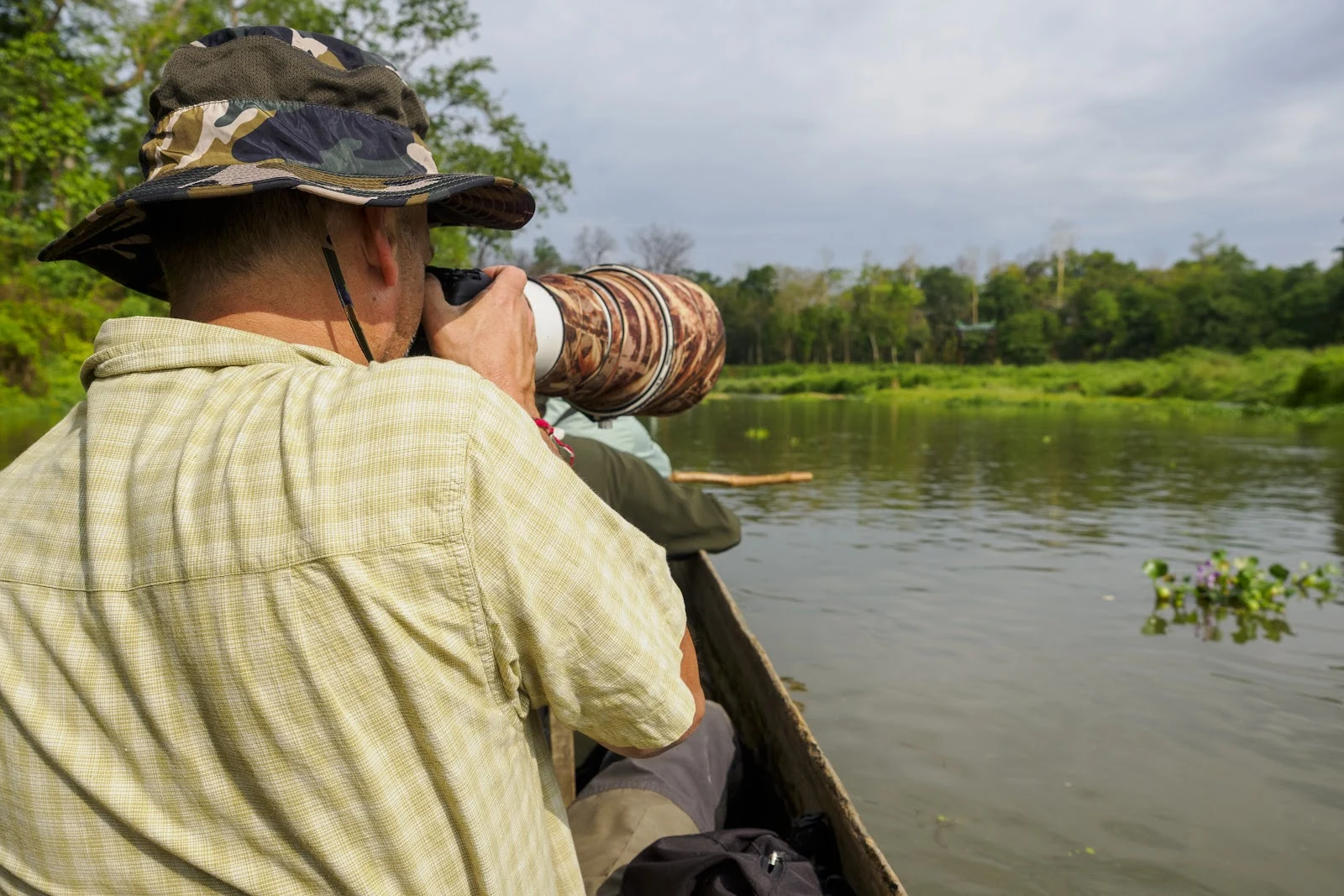
For wildlife photographers, a 300mm to 600mm telephoto lens is recommended alongside neutral-colored clothing (khaki, olive, brown - strictly avoid bright white or neon colors). Review our specialized guide: Bengal tiger photo safari in Bardia: gear and hides.
8. Planning Your Tiger Safari in Nepal
To ensure high chances of quality sightings, plan at least 3 to 5 full days in the park (representing 6 to 8 safari outings). See our practical recommendations in How many days to plan for a Nepal safari, and check pricing in our guide on Bardia safari costs, packages, and inclusions.
Reaching Bardia from Kathmandu is easy: take a 50-minute domestic flight to Nepalgunj Airport, followed by a 2-hour private road transfer to the park gate. Full transit logistics are detailed in our guide: How to get to Bardia from Kathmandu or Pokhara.
Ready to encounter Asia's majestic apex predator?
Jungle Nepal Adventure designs tailor-made wildlife tracking expeditions with top indigenous naturalist guides.