
Introduction
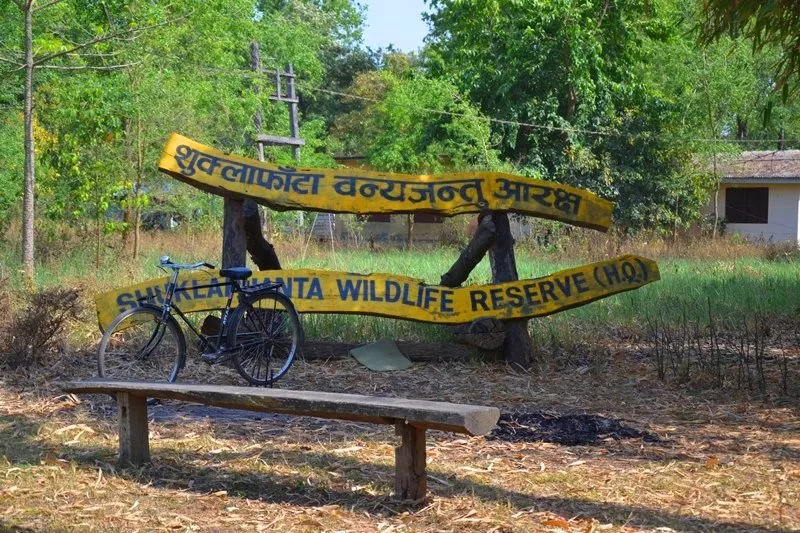
Still little known to mainstream international travelers, Suklaphanta National Park is nonetheless one of Nepal’s most pristine wild treasures.
Located in the far western corner of the country, far off the beaten tourist track, it offers a rare, remarkably untouched wilderness experience.
Here, you will find no crowds, minimal commercial infrastructure, and a natural ecosystem that remains entirely preserved.
Suklaphanta is not visited like Chitwan National Park.
It is explored, tracked, and truly discovered.
An Overview of Suklaphanta National Park
Where Is Suklaphanta National Park Located?
Suklaphanta National Park is situated in the far western Terai lowlands, bordering the Indian frontier in Kanchanpur District.
It is one of Nepal’s most remote protected reserves, which largely explains its wonderfully low visitor numbers.
This remoteness makes it less readily accessible, but exponentially more authentic and rewarding.
Travelers rarely stumble upon Suklaphanta by chance; it is a pilgrimage for dedicated wilderness enthusiasts.
Discreet Yet Extraordinary Wildlife
Suklaphanta is home to exceptionally rich biodiversity, though wildlife observation requires greater stealth and patience than in more frequented reserves.
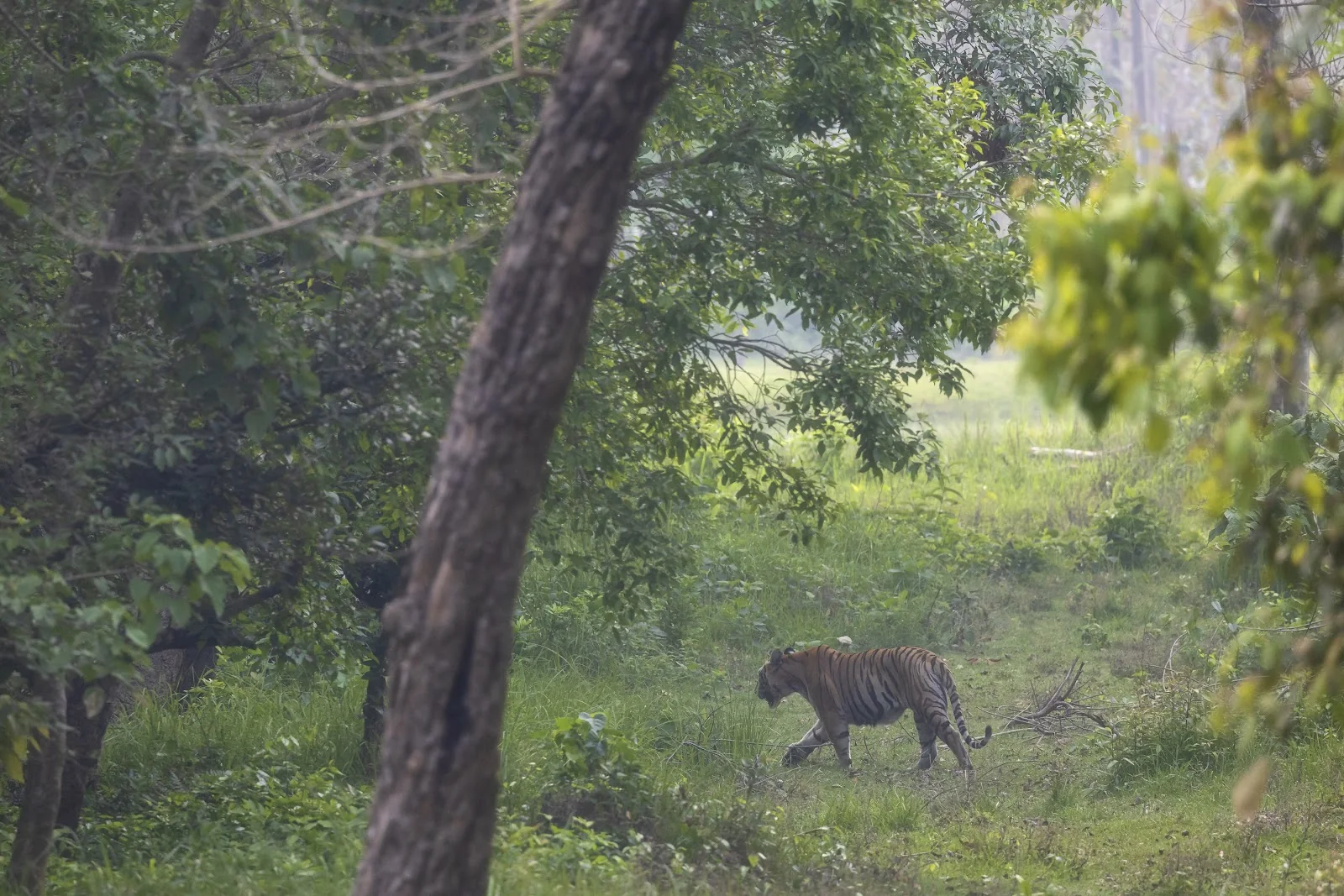
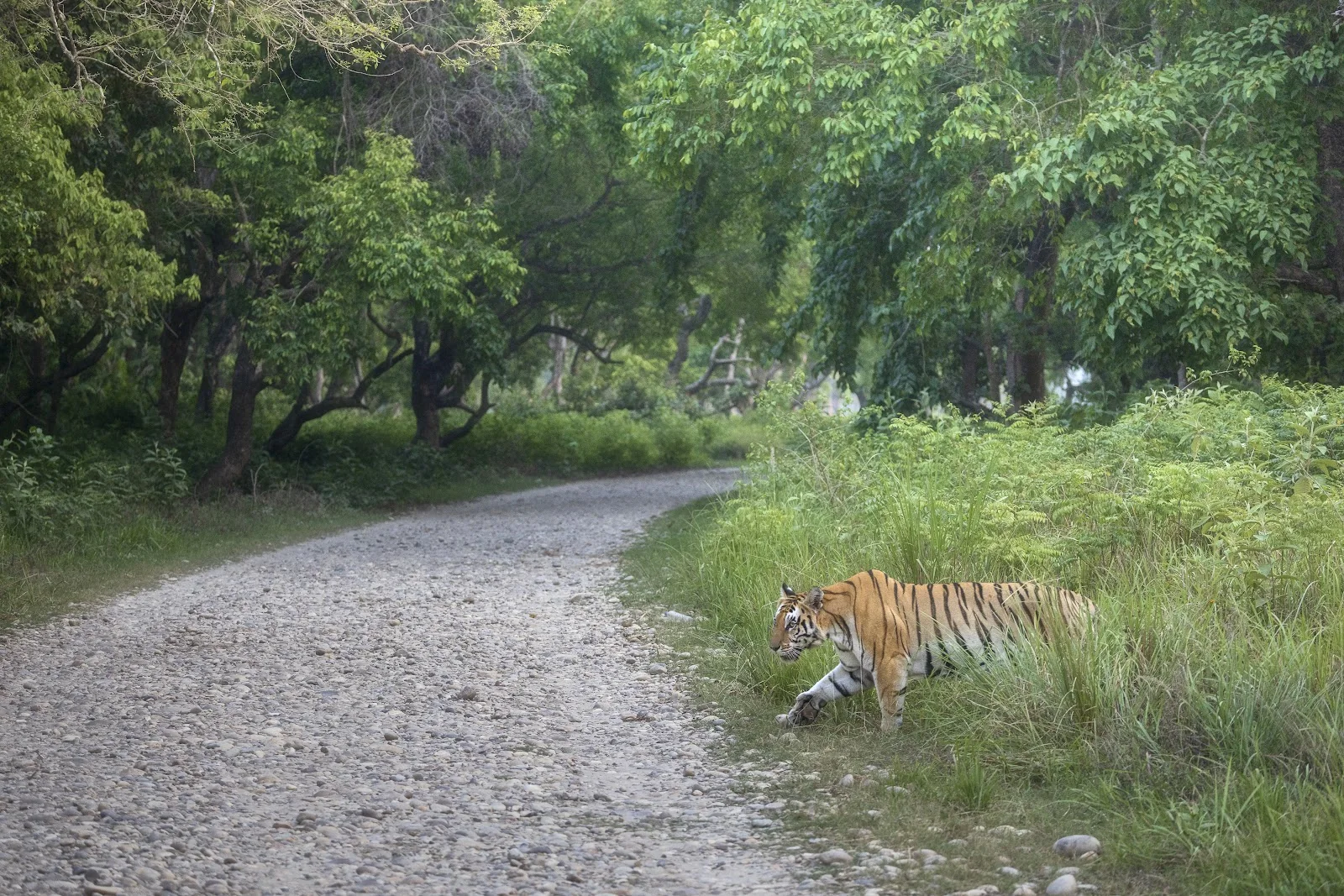
The majestic Royal Bengal tiger roams these grasslands and riverine tracts, alongside Indian leopards, wild Asian elephants, and sloth bears.
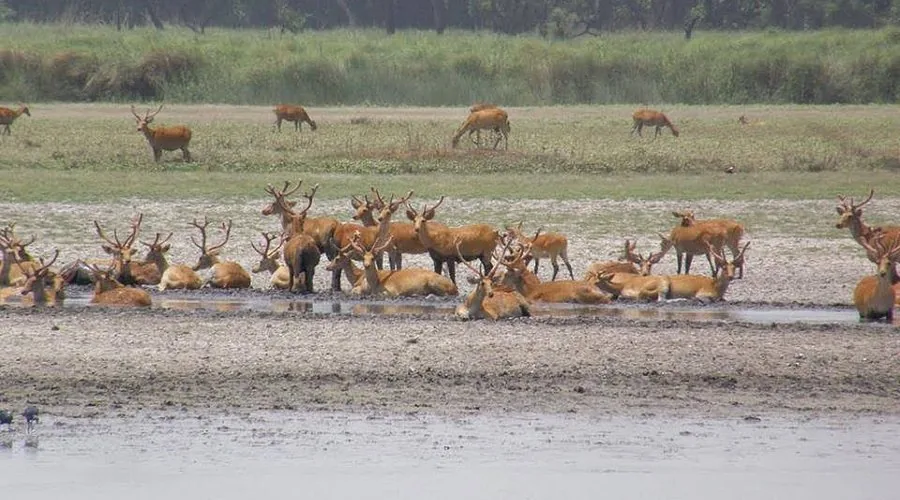
Yet what makes Suklaphanta truly world-renowned is its vast open savannah grassland—the largest contiguous grassland in all of Nepal.
These expansive plains harbor the world’s largest single population of swamp deer (barasingha), creating jaw-dropping sights of hundreds grazing together across the open savanna.
The avifauna is equally extraordinary, boasting over 450 bird species including the critically endangered Bengal florican.
- Wild Asian elephants
- Spotted deer (chital) and massive herds of swamp deer (barasingha)
- Rhesus macaques and Terai langurs
- Diverse resident and migratory birdlife, including rare wetland raptors and grassland specialists
Bengal tigers patrol established territories across the reserve, offering thrilling tracking opportunities for patient wildlife lovers.
A Rawer, More Wilderness-Centric Experience
Unlike Chitwan, Suklaphanta has never been shaped by mass tourism.
Infrastructure remains minimal, eco-lodges are few and unpretentious, and activities focus purely on the authentic natural environment.
Yet this understated simplicity is precisely what constitutes its greatest magic.
Here, the wilderness encounter is raw, unhurried, and deeply rooted in the true, untamed reality of the jungle.
🦌 Explore Suklaphanta with Seasoned Wildlife Trackers
Jungle Nepal Adventure organizes specialized expeditions to Nepal’s most remote national parks, including Suklaphanta.
You take the time to observe, to listen, and to truly understand the jungle’s subtle language.
Safari Formats in Suklaphanta
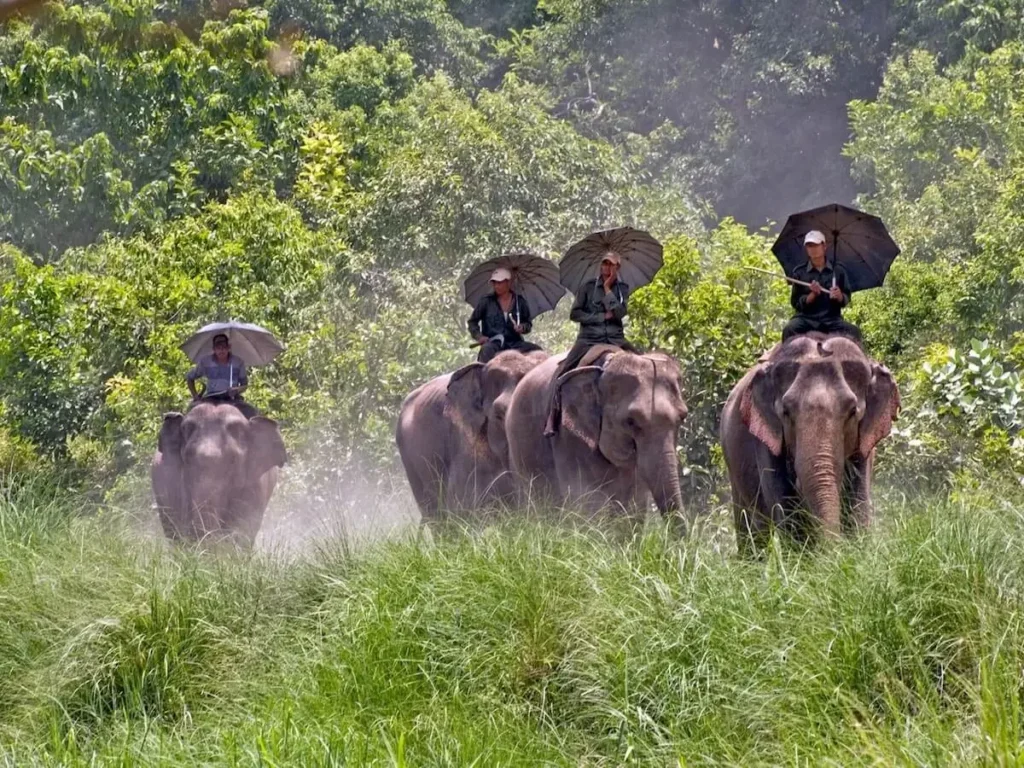
Safaris in Suklaphanta are conducted primarily by private open-top 4x4 jeep or on foot, always accompanied by expert native Tharu guides.
Excursions are far less rigid and standardized than in busy tourist circuits, allowing for immense flexibility.
Your naturalist guides constantly adapt the tracking route according to weather conditions, fresh tracks on the sand, and real-time animal behavior.
This ensures that every single outing is uniquely thrilling and unpredictable.
A Rare and Solitary Immersion
What strikes visitors most powerfully in Suklaphanta is the palpable sense of solitude.
Completely immersed in the wild, far removed from modern noise, traffic, and commercial tourism.
Wildlife encounters here are often subtle and quiet, but for that very reason, immeasurably more profound.
You are not merely checking off an animal checklist.
You learn to genuinely observe and commune with the natural world.
From charming heritage community lodges to rustic jungle cottages, local accommodations cater to authentic travelers seeking immersion.
Unlike commercial tourist hubs, hospitality here is grounded in warm community hospitality and pure wilderness serenity.
Who Is Suklaphanta Best Suited For?
Suklaphanta is not intended for every type of traveler.
It may not be the most straightforward choice for someone seeking a quick, casual first-time safari.
On the other hand, it will enchant travelers who prioritize:
- Deep wilderness immersion and absolute tranquility
- Pristine, untouched grassland and forest ecosystems
- An authentic off-the-beaten-path expedition in Nepal’s wild west
It is a sanctuary crafted for curious explorers, patient wildlife enthusiasts, and devoted conservation travelers.
Suklaphanta Compared to Nepal’s Other National Parks
Compared to Chitwan, Suklaphanta is vastly wilder and quieter, yet further from major travel hubs.
Compared to Bardia National Park, it remains even more secretive and secluded.
Each national park boasts its own distinct identity and wildlife highlights.
Yet Suklaphanta is undoubtedly the sanctuary that comes closest to a completely untouched Terai ecosystem.
Conclusion
Suklaphanta National Park is a destination in a league of its own.
Less famous, delightfully uncrowded, and profoundly authentic.
It is an expedition that leaves an indelible mark on those who make the journey and take the time to embrace its wilderness.
Explore Nepal’s Wildest Frontiers
At Jungle Nepal Adventure, our safaris are crafted to deliver deep, ethical immersion into the living jungle.
Small private groups, senior native Tharu guides, on-foot tracking, and bespoke itineraries: our mission is to provide an authentic wildlife journey far removed from mass commercial tourism.
👉 Discover our wilderness safaris:
🌿 Ready to Venture Off the Beaten Track?
Suklaphanta, Bardia, Chitwan—our expert local guides lead you through Nepal’s most pristine wildlife sanctuaries.
Suklaphanta is an extraordinary, crowd-free wilderness. To explore it alongside Bardia and Chitwan, discover our flagship 15-day expedition Wild Nepal Safari (15 Days) or compare it with our Bardia Walking Safari.
Field Expertise from Pawan & Robin: How to Maximize Your Wildlife Sightings in Nepal
Spotting iconic megafauna in Nepal's Terai lowlands is never a matter of luck—it is the result of disciplined tracking and local ecological knowledge. Alongside Pawan—our master tracker born in Bardia, president of the local NAGA conservation association, and field collaborator for BBC wildlife film crews—we structure every safari day around the true biological rhythms of the Royal Bengal tiger (Panthera tigris tigris), the greater one-horned rhinoceros (Rhinoceros unicornis), and the Indian leopard.
1. Reading Fresh Pugmarks and Decoding Jungle Alarm Calls
During a walking safari in Bardia or a private 4x4 jeep track, the first 90 minutes after sunrise are critical. Our naturalist guides inspect the sandy riverbeds (sots) and the banks of the Karnali and Babai rivers to locate fresh pugmarks, judge track age by edge moisture, and check Sal tree trunks (Shorea robusta) for territory claw marks and scent-spraying. The moment a spotted deer (chital), sambar, or gray langur barks a sharp, repetitive alarm call, our trackers triangulate the prey's line of sight to position our small group silently at a natural river crossing.
2. Choosing the Right National Park for Your Schedule
- If you have 8 to 12 days: Head straight to Bardia National Park on our flagship 9-Day Tiger & Rhino Tracking Expedition. With 968 km² of pristine wilderness, roughly 125 adult tigers, and less than 3% of Chitwan's visitor numbers, Bardia delivers Asia's most authentic walking safari experience.
- If you are combining Kathmandu, Pokhara, and the jungle in 12 to 14 days: Chitwan National Park fits naturally between Kathmandu and the Annapurna foothills, as featured in our Chitwan Nature & Culture Safari and our 14-Day Grand Tour of Nepal.
- If you are a dedicated wildlife photographer or birder: Combining Suklaphanta and Bardia (12-Day Wild West Terai Expedition) unlocks the world's largest herds of swamp deer (Barasingha), the critically endangered Bengal florican, and Nepal's highest tiger density per square kilometer.
3. Uncompromising Ethics: Zero Captive Elephants & Direct Tharu Community Support
Unlike mass-market operators that still promote elephant-back rides in buffer zones, Jungle Nepal Adventure enforces a strict ethical charter: zero captive elephant activities, small groups capped at 4–10 travelers, family-run Tharu eco-lodges, and direct financial contributions from every booking to Bardia's Community-Based Anti-Poaching Units (CBAPU). To compare all our itineraries, transparent prices, and seasonal tiger sighting statistics, visit our comprehensive compare all our Nepal safari itineraries hub.