

Introduction
The Bengal tiger fascinates as much as it commands awe. Often perceived as a dangerous predator, it is nonetheless one of the most discreet and misunderstood animals in the jungle.
Understanding its behavior not only allows you to observe it better, but also to move past common misconceptions.
In this article, discover everything about the behavior of the Bengal tiger to best plan your upcoming safari in Nepal.
A Solitary and Territorial Animal
The Bengal tiger is a solitary creature. Each individual holds a territory that it marks regularly using scent markings and claw scratches on trees.
Males occupy expansive home ranges that can span several dozen square kilometers, while females roam across slightly more compact territories.
Encounters between tigers are rare outside of the breeding season.
A Discreet Apex Predator
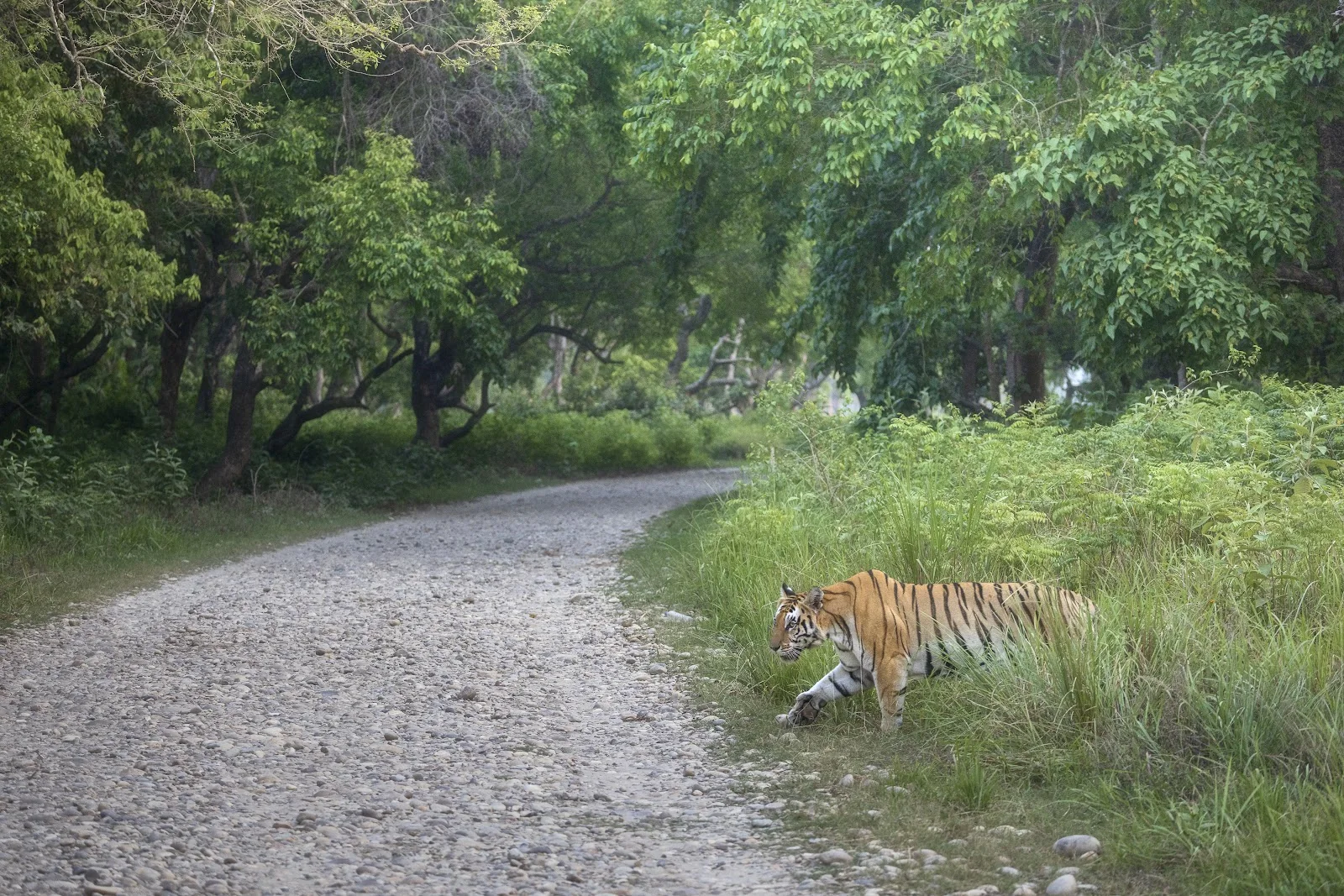
Contrary to popular belief, the tiger actively avoids contact with humans. It shuns frequented areas and moves primarily during dawn and dusk. However, in certain parts of the world, Bengal tigers are encroaching closer to human settlements due to habitat fragmentation. This is indeed the case near Bardia National Park, where human-wildlife conflicts can flare around buffer zone villages.
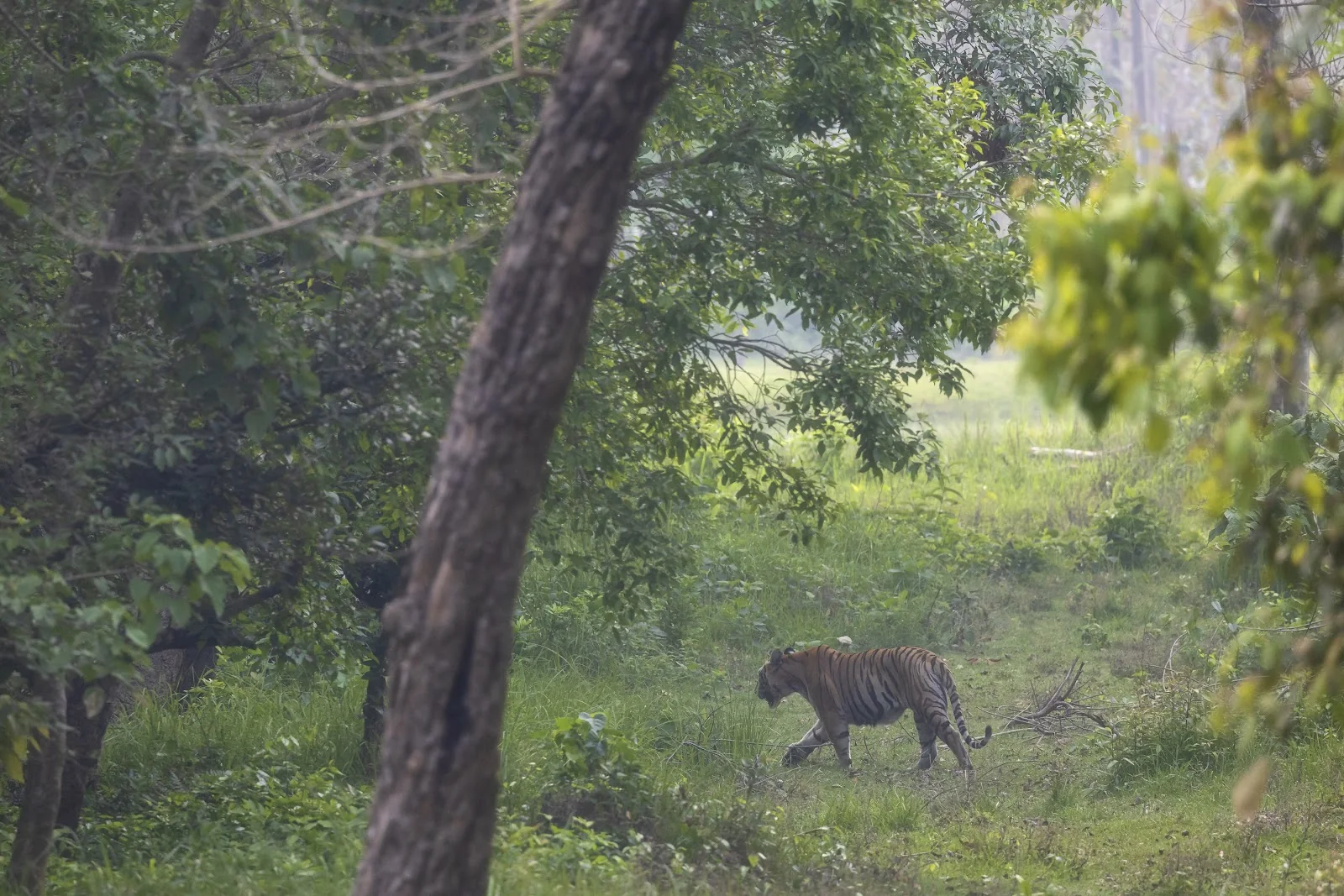
Despite this, its ability to blend seamlessly into dense vegetation remains extraordinary. In the vast majority of cases, a tiger has already spotted you… long before you even realize it – on a walking safari, for instance.
A Hunting Strategy Built on Stealth
The tiger is an ambush predator. It stalks its prey in absolute silence before launching a swift, explosive short-distance charge. It favors areas with dense cover and tall elephant grass where it can remain entirely invisible until the final strike. Another fascinating fact about Bengal tiger behavior: unlike some felines, the tiger is not an opportunistic hunter. Once it selects a target, it commits to it with near-relentless determination, even if an easier target presents itself along the way.
Its primary prey species include:
- deer (spotted deer, sambar, hog deer)
- wild boar
- wild water buffalo
Though it occasionally ventures to hunt young rhino calves, which can trigger fierce, dangerous clashes with the protective mother.
🐾 Observe the Bengal Tiger in Its Natural Habitat
Understanding tiger behavior is the first step. Seeing one in the wild in Bardia is the ultimate thrill.

A Very Cautious Relationship with Humans
Attacks on humans remain exceptionally rare. In the vast majority of encounters, the tiger chooses flight over confrontation.
High-risk situations primarily involve:
- injured tigers
- elderly or weakened individuals
- or highly specific territorial contexts (such as a mother protecting cubs)
Rest assured: on a professionally guided safari with experienced naturalists, the risk of an attack is extraordinarily low to virtually non-existent.
Signs of Tiger Presence: Reading the Jungle
Directly spotting a tiger is rare and thrilling. However, you can frequently detect its presence through subtle jungle signs:
- pugmarks imprinted in dust and sand
- fresh territorial trackways along jungle paths
- characteristic pungent spray scent markings
- alarm calls and altered behavior from prey animals (spotted deer, langurs)
This is where the seasoned expertise of local Tharu trackers becomes truly invaluable.
A Keystone Species for the Ecosystem
The tiger plays a fundamental role in maintaining the ecological balance of the jungle. By regulating herbivore populations, it prevents overgrazing and preserves forest health. It stands undisputed at the top of the food web across Nepal's lowlands.
Its thriving presence serves as a direct indicator of a healthy, robust ecosystem.
Conclusion
The Bengal tiger is far from the mindless, aggressive predator often portrayed in folklore. It is a discreet, remarkably intelligent animal deeply adapted to its forest environment.
Understanding its behavior means learning to see the jungle through entirely new eyes.
Observe Tigers in Their Natural Environment
At Jungle Nepal Adventure, our safaris are designed to understand and observe wildlife with the utmost respect for conservation ethics.
Our local guides know how to interpret every subtle sign and immerse you in a once-in-a-lifetime experience, aligned with authentic field reality.
🌿 From Theory to the Field: Track the Bengal Tiger
Our naturalist guides decipher every behavior directly in the field. Silent walking safari in the deep heart of Bardia.
Understanding the territory and watering habits of the Bengal tiger is key to planning a successful wildlife photography safari in Nepal.
Observing wild tiger behavior in their natural territory is our specialty. Track tigers on foot with our Bardia Walking Safari (from €50), by Private 4x4 Jeep Safari, or across our 5-day immersion Bardia Tiger Safari 5 Days (€690).