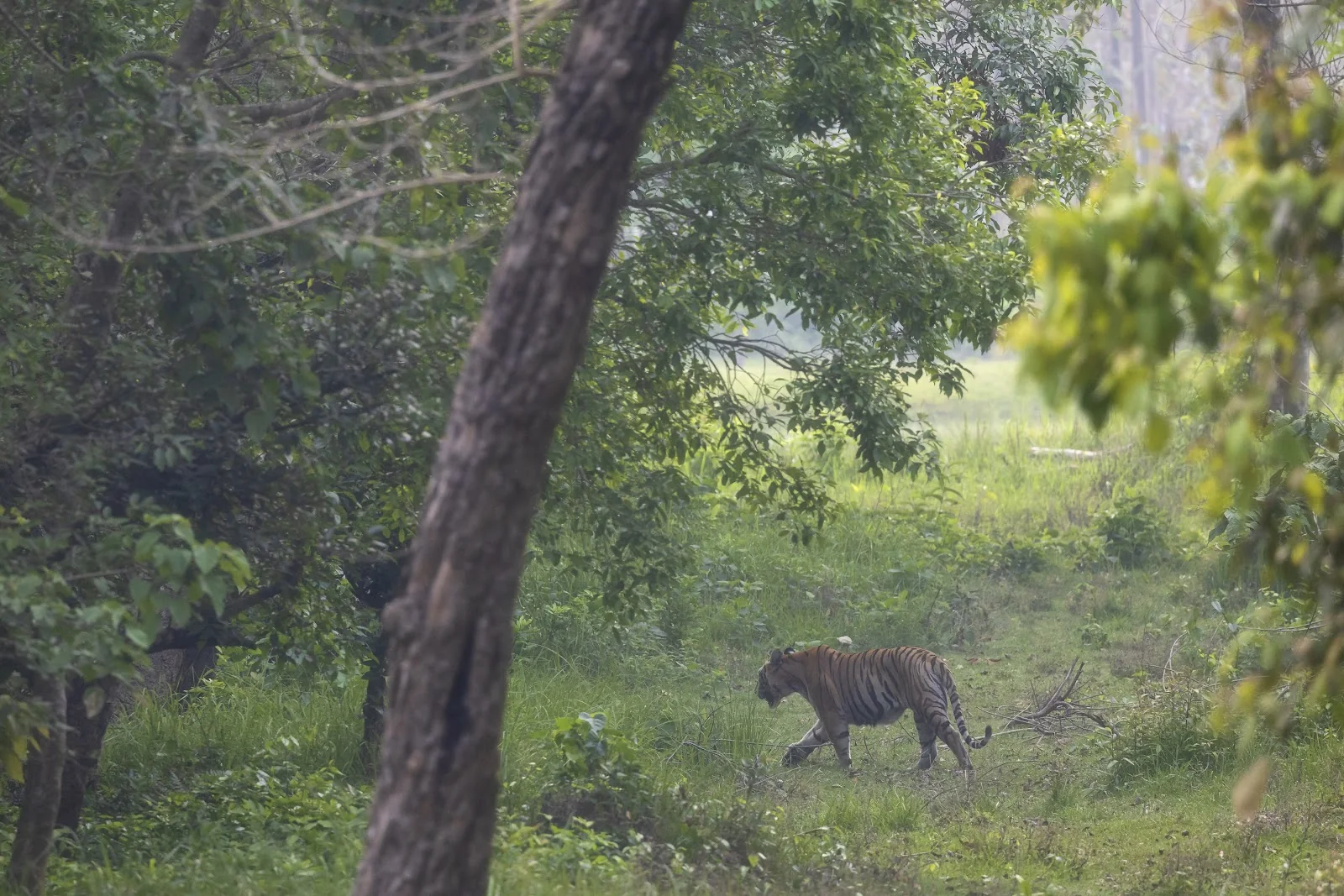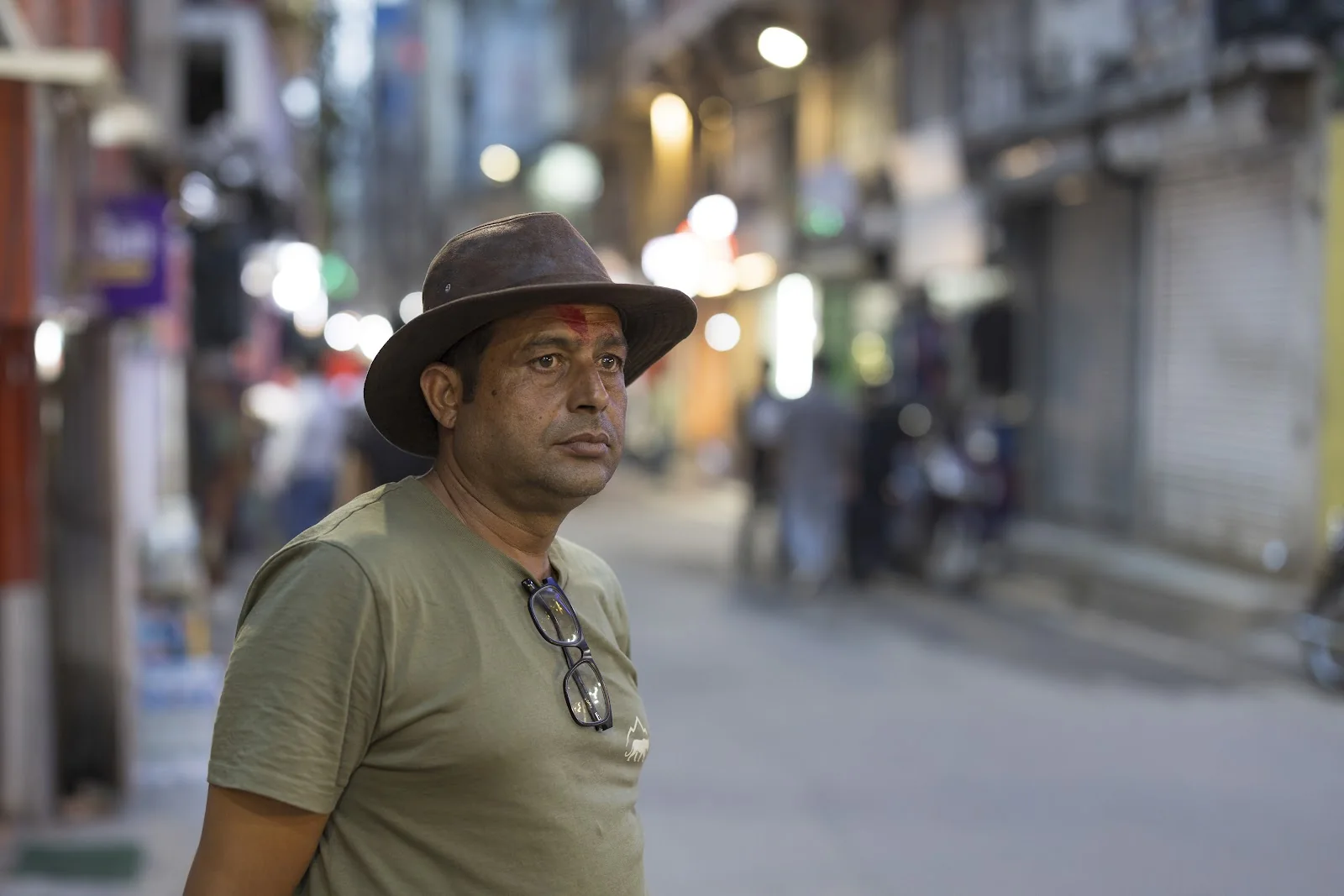
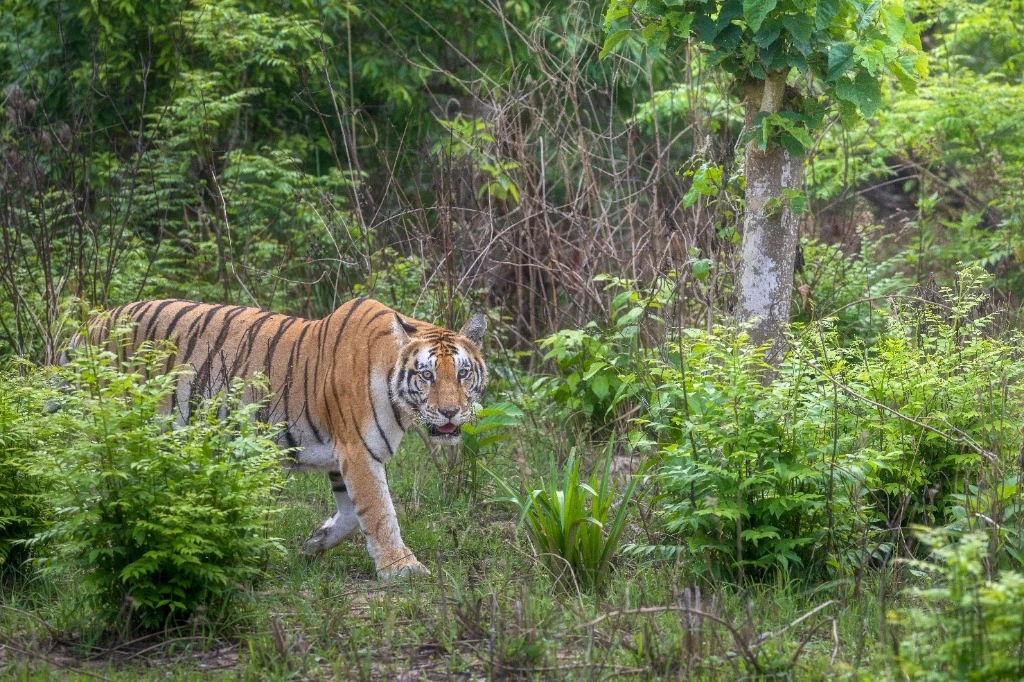
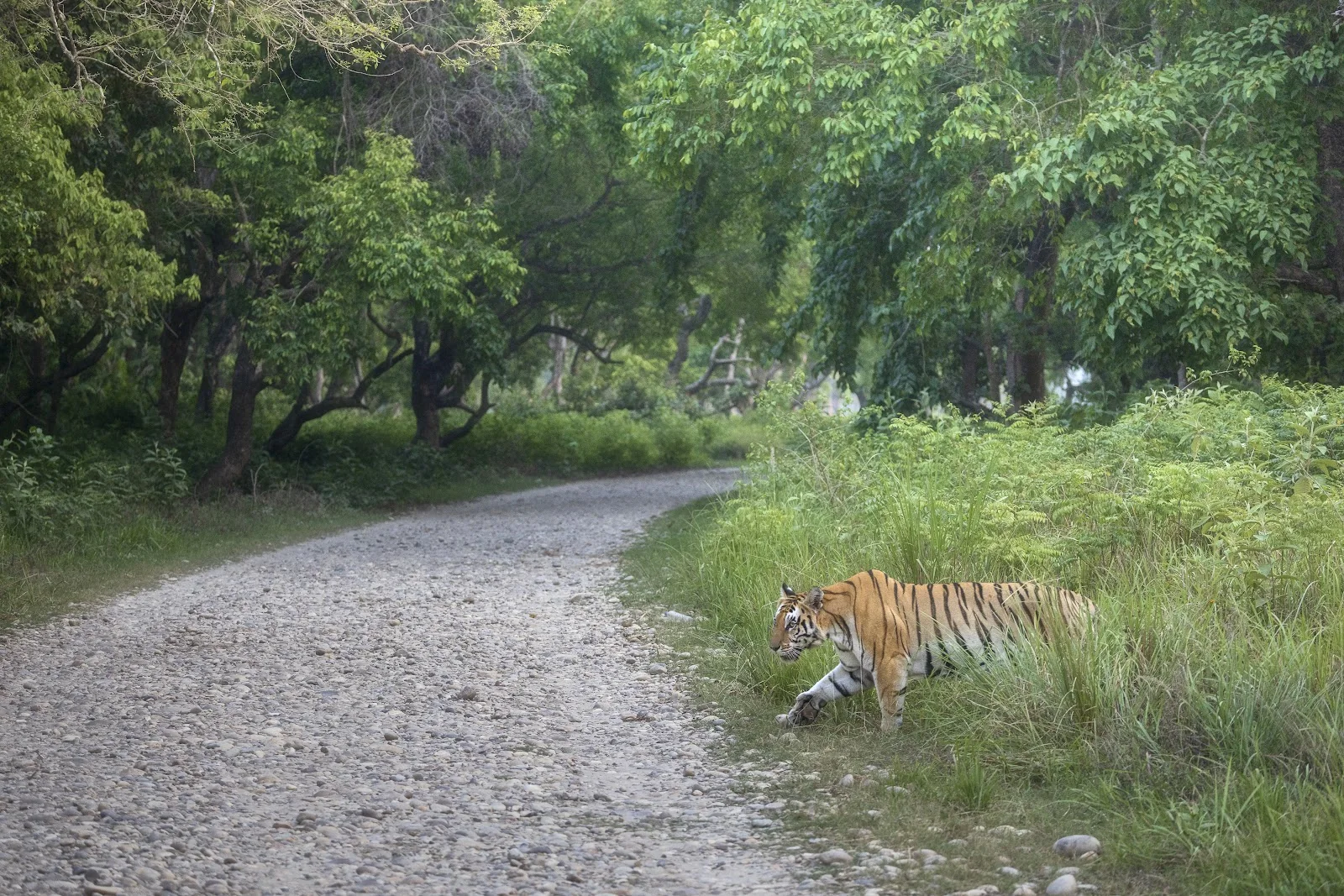
05:45 AM on the misty banks of the Geruwa River, in the far west of the Nepalese Terai. Pawan, our master Tharu tracker, raises his hand in a gesture of absolute stillness. Complete silence. Fifty meters away, beneath the dense canopy of Sal trees (Shorea robusta), an Axis deer alarm call cracks through the crisp air like a whip. A few seconds later, a second, huskier cry echoes from the top of the canopy: the sentinel langur monkeys have just spotted the predator. It is not a leopard. The tension paralyzing the jungle is far too heavy. It is him: the great Royal Bengal tiger.
Kneeling in the damp sand and river pebbles, telephoto lens braced on your shoulder and monopod anchored into the ground, your heart races. No metal vehicle body, no vibrating 4x4 engine, no tourist chatter. You are on foot, at the exact eye level of the apex predator. When his powerful silhouette parts the tall elephant grass to step toward the river, the visual and photographic emotion is of peerless intensity.
Why this guide is the benchmark for tiger photo safaris in Nepal
This guide brings together over 10 years of fieldwork in Bardia National Park. Written by photographers for photographers, it details the art of tracking on foot with our local guides, camera body settings for tropical jungle environments, light management, and the raw, unfiltered reality of riverbank hides.
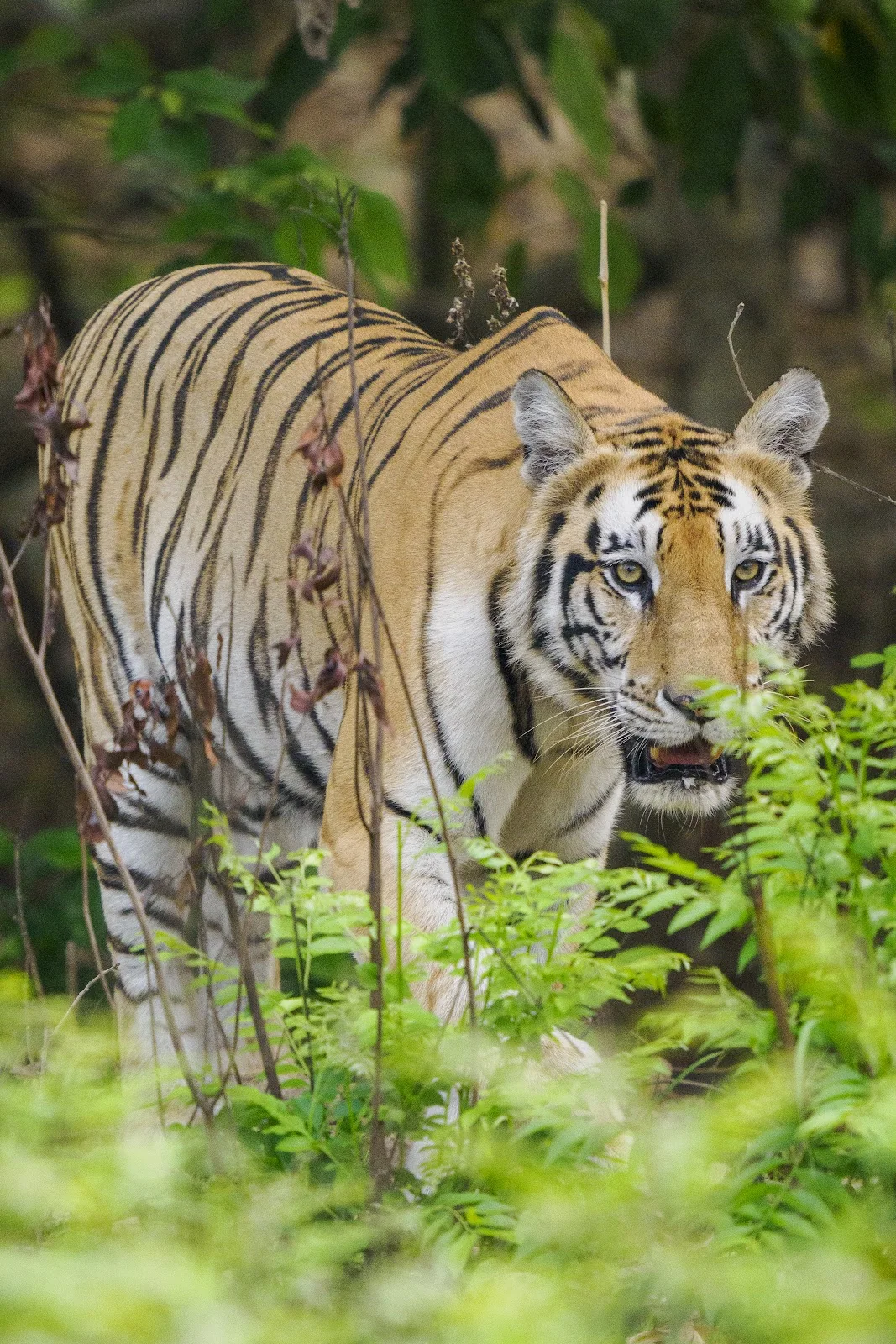
1. Why Nepal and Bardia Surpass India for Wildlife Photography
For decades, India (Ranthambore, Bandhavgarh, Tadoba) has been the default destination for seeing tigers. But for discerning wildlife photographers, Indian safaris have become a real ethical and artistic frustration: mandatory safari tracks, strict bans on stepping out of vehicles, high and unnatural bird's-eye shooting angles, and above all, clusters of 15 to 20 jeeps surrounding a single cat to the roar of diesel engines.
Nepal, and more specifically Bardia National Park (968 km²), offers a diametrically opposed philosophy: an exclusive walking safari in absolute silence.
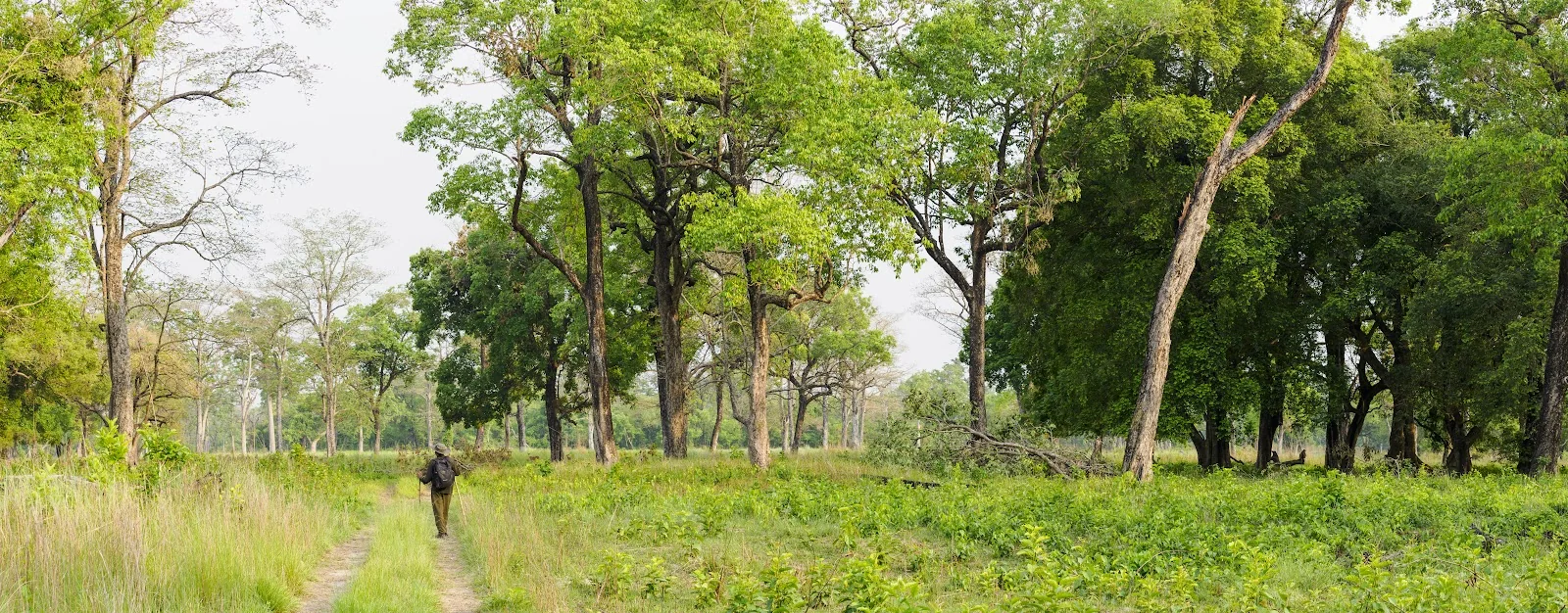
2. The Art of Tracking on Foot: In the Footsteps of Pawan and Kiran
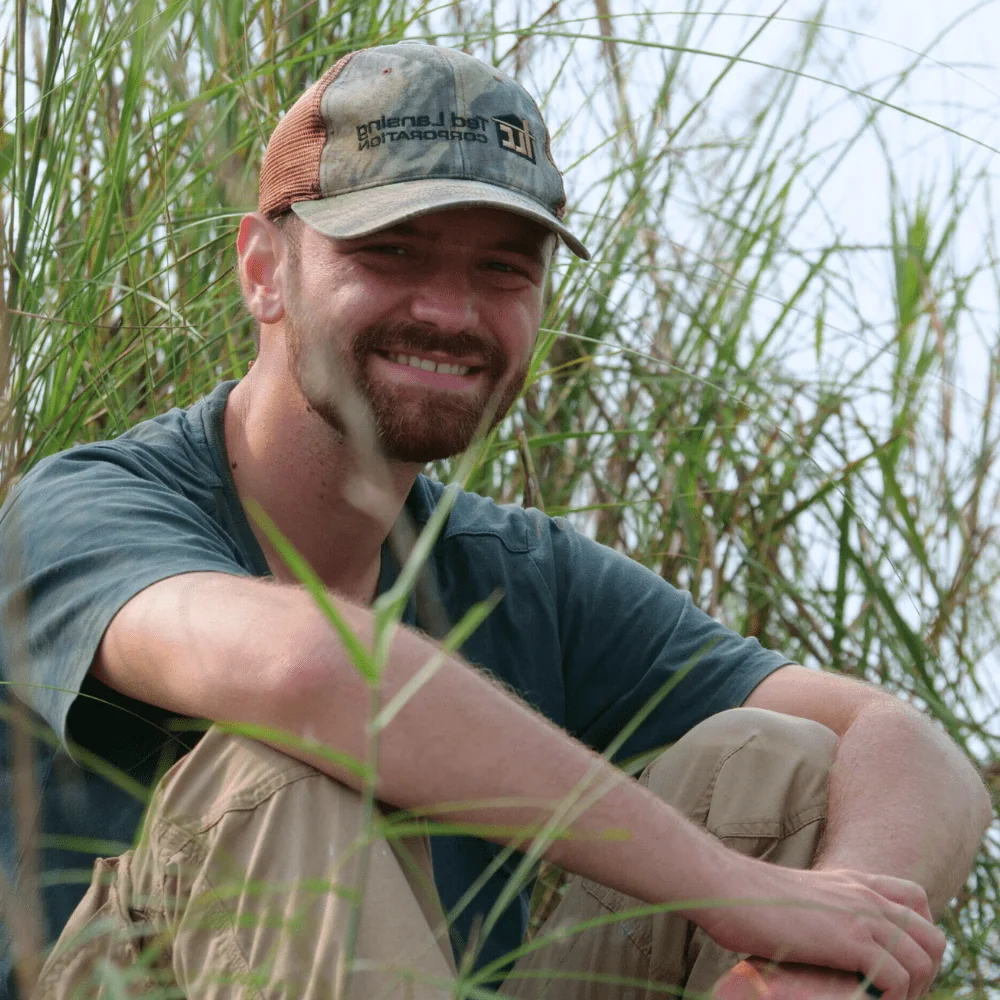
In Bardia, the success of a photo safari does not depend on the horsepower of an engine, but on the ancestral knowledge of our indigenous Terai trackers, Pawan and Kiran. Born on the fringes of the jungle, they read tracks like an open book.
Reading Pugmarks (Tiger Tracks)
On the sandbanks of the Geruwa River or in the fine dust of water buffalo trails, every footprint tells a precise story:
- Determining Sex: A male tiger's pad is broader and more rounded, with toe impressions forming an almost perfect circle. A tigress's pugmark is more oval and elongated.
- Assessing Freshness: Damp sand grains still clinging to the claw depressions indicate the tiger passed less than 20 minutes ago. A morning breeze that has begun softening the ridges suggests a dawn passage.
- Understanding Gait and Intent: Steady, evenly spaced strides indicate a tiger on territorial patrol. Tightly spaced, hesitating steps signal a stalk or the start of an ambush on a herd of deer.
The Acoustic Score: Sentinels of the Jungle
In thick foliage, a photographer's ear is just as vital as their eye. Our trackers triangulate the big cat's position by decoding alarm calls from other species:
- The Spotted Deer (Chital) Alarm Call: A short, piercing bark repeated frantically the moment the tiger steps into view.
- The Langur Monkey Warning: High up in the treetops, langurs utter a throaty, guttural "Khaa-khaa" whenever they spot the cat prowling beneath the undergrowth. This is the single most accurate indicator of the tiger's trajectory.
- The Ground Peafowl Call: A sharp, ringing "May-awe" bugled when a tiger enters an open clearing.
Strategic Hide Locations
Rather than trekking aimlessly during the midday heat, we set up silent hides at crucial vantage points studied and monitored over many years:
- Kingfisher Point: The confluence of two river channels where tigers routinely swim across or soak during hot afternoons.
- Tinkuni (The Three Rivers): An expansive network of gravel bars and wooded islets providing clear sightlines extending up to 200 meters.
- The Machans (Wooden Tree Towers): Positioned along clearings and forest waterholes, perfect for watching the big cat approach without our scent being carried downwind.
Ready to Experience This Photographic Stalk?
Explore our itinerary 100% dedicated to tracking and hides with our master wildlife guides.
View the Extreme Jungle Expedition (Bardia) →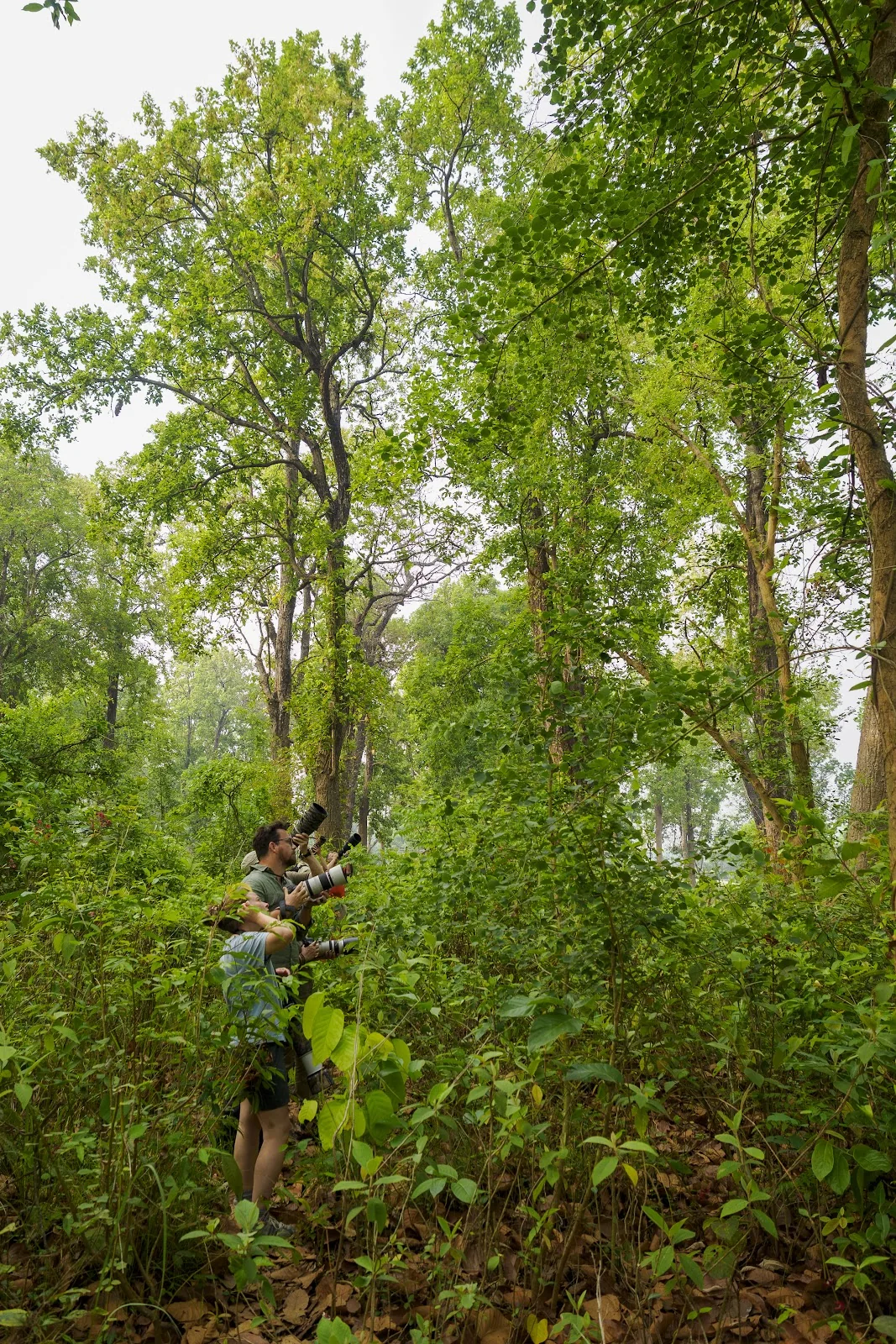
3. Technical Gear Guide: Focal Lengths, Camera Bodies, and Settings
Photographing wild tigers on foot in a tropical environment presents physical and optical demands far different from vehicle-based safaris. Here is our direct, field-tested advice on what gear to pack:
Which Lenses to Choose for Bardia?
1. The Versatile Telephoto Zoom (100-400mm or 150-600mm)
The ultimate lens on foot. When walking, your distance to a tiger can shift from 25 meters to 120 meters within seconds. A 100-400mm allows you to frame the cat within its majestic habitat as well as tighten into an intimate portrait. Its manageable weight (1.3 to 1.8 kg) remains comfortable over 15 km of daily trekking.
2. The Fast Super-Telephoto Prime (500mm or 600mm f/4)
The definitive setup for static hides. On the gravel bars of Tinkuni or from a machan tower, an f/4 aperture works wonders at dusk, isolating the subject with creamy, sumptuous bokeh. However, its bulk strictly requires a sturdy carbon-fiber monopod.
Recommended Camera Settings in the Forest Canopy
- Shutter Speed: Never drop below 1/1000s when the tiger is moving (the swaying motion of its head easily creates motion blur). When stationary in the water, you can slow down to 1/400s - 1/500s to lower your ISO.
- ISO Sensitivity: Sal forests cast deep shadows in early morning light. Shoot in Auto ISO with a locked minimum shutter speed. Modern full-frame sensors effortlessly handle ISO 3200 to 6400, which is essential to freeze the action.
- Autofocus Mode: Small zone or single-point AF with Animal Eye AF enabled. Caution: tall elephant grass can easily fool wide-area AF tracking; be ready to grab the manual focus ring if stems cross in front of the subject.
- Silent Shutter: Always enable the electronic or silent shutter. The mechanical slap of a 14 fps burst can startle a cautious tiger at 35 meters.
4. Best Seasons and Lighting Calendar
The Nepalese Terai experiences dramatic seasonal shifts. Each season brings distinct lighting conditions and unique photographic opportunities:
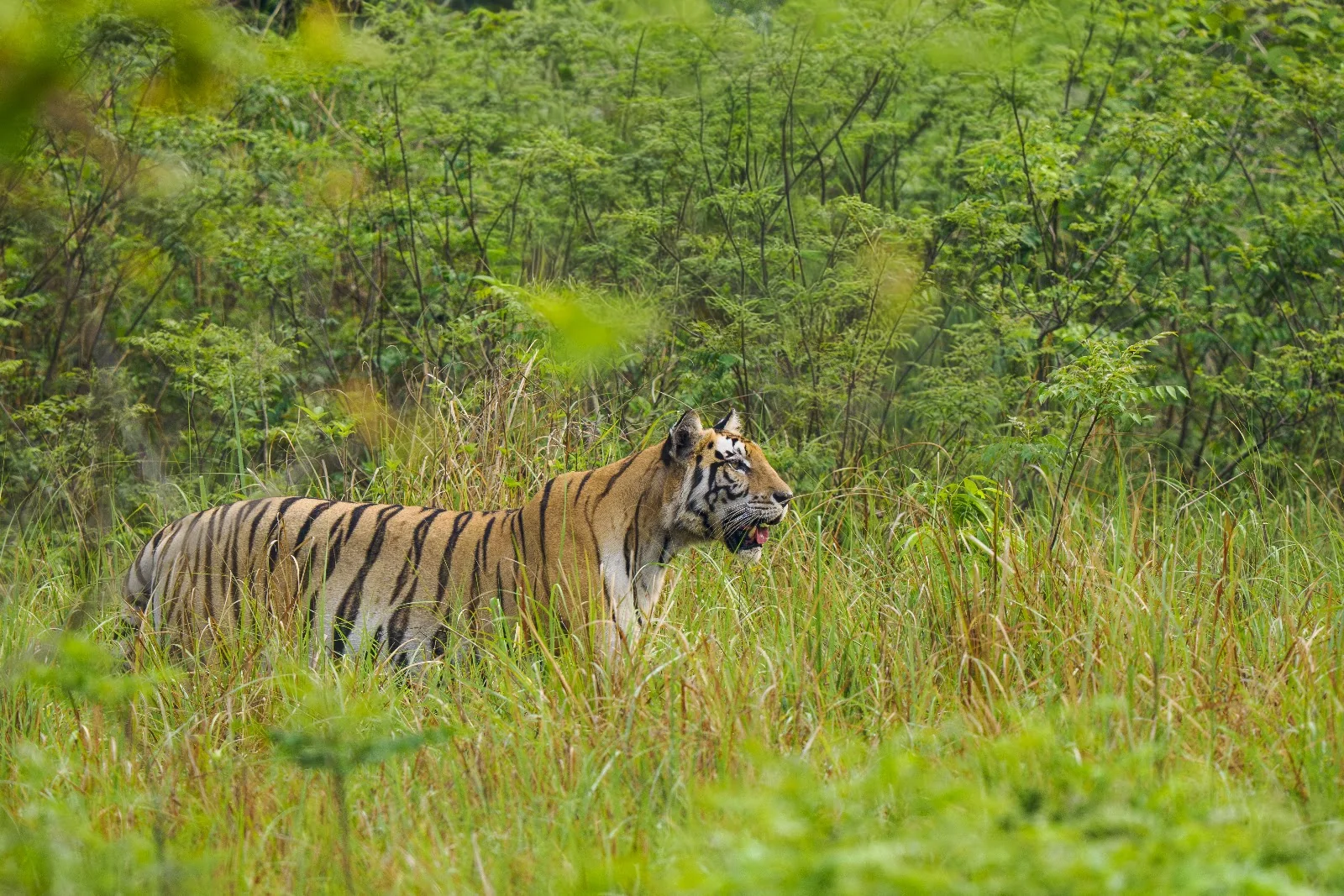
March to May: Peak Tiger Season (Sighting Rate: 75-85%)
The tail end of the dry season. Giant elephant grasses have been cut by local villagers or dried out by the sun, opening up extraordinary visibility up to 300 meters into the forest. With midday temperatures reaching 35°C to 40°C, interior jungle streams dry up: tigers are compelled to spend hours cooling off in the main river channels.
October to November: Golden Light and Lush Jungle (Sighting Rate: 55-65%)
Fresh from the monsoon, the jungle is spectacularly lush and green. The atmosphere is crystal clear, with snow-capped Himalayan peaks occasionally visible on the northern horizon. Early morning and late afternoon light is soft and warm, ideal for habitat photography and environmental portraits.
December to February: Atmospheric Mists and Migratory Birds (Sighting Rate: 50-60%)
Mornings are crisp (8°C to 12°C) and cloaked in dense fog drifting through the trunks of towering Sal trees. Sunlight pierces the canopy in dramatic light rays (god rays). River channels host thousands of wintering migratory birds arriving from Siberia.
5. Safety and Ethics: Walking Among Apex Predators
The prospect of walking through the territory of the world's largest cat naturally raises valid safety questions. In over 15 years of operations, we have never had a single safety incident. Why? Because we follow strict protocols rooted in animal psychology:
Every small group is accompanied by two certified naturalist guides: a lead tracker scouts ahead monitoring footprints and wind direction, while a second guide trails behind to secure the rear.
We strictly maintain a safety buffer of 30 to 50 meters. The tiger is aware of our presence and never feels cornered or startled in its vital space.
Single-file walking without speaking, neutral earth-toned clothing (khaki, olive, beige, dark brown), and zero artificial fragrance. We blend completely into the biotope.
To learn more about the big cat's behavior, explore our comprehensive guide on the behavior and secret life of the Bengal tiger.
Track Wild Bengal Tigers on Foot in Bardia (50€)
Already in Nepal or traveling to the western lowlands? Join our senior native master trackers for an unforgettable full-day walking safari in Bardia National Park. Jungle bush lunch included.
6. Our Recommended Wildlife Expeditions
Whether you are an avid wildlife photographer or a lover of untouched wilderness, we offer tailor-made itineraries designed to maximize your time in close proximity with wildlife:
Extreme Jungle (7 Days in Bardia)
Total immersion in the heart of the national park. 5 full days of walking safaris and riverbank hides from sunrise to sunset with our finest master trackers. Small group capped at 4 to 8 participants.
- Private eco-lodge accommodation
- Full board & all ground transfers included
- Daily park entry permits and conservation fees
Chitwan & Bardia Complete (10 Days)
The definitive expedition to experience both sanctuaries: one-horned rhinos and gharial crocodiles in Chitwan, followed by foot tracking wild tigers and elephants in Bardia.
- Mixed safaris (jeep, river canoe, and walking)
- Domestic flight Kathmandu - Terai
- Bilingual naturalist & native local guides
Planning a Photography Project or a Private Departure?
Robin and the Jungle Nepal Adventure team create your bespoke itinerary (extended durations, dedicated hides, personalized logistics). Connect directly with us on WhatsApp.
7. Frequently Asked Questions (FAQ)
Can you really photograph Bengal tigers on foot safely?
Yes, absolutely. Walking safaris are led by two certified naturalist guides deeply versed in jungle behavior and animal body language. The Bengal tiger is an elusive cat that naturally avoids human contact when aware of an approach. By maintaining silence, strict safety distances (30-50m), and following the trackers' instructions, walking safaris operate under optimal safety conditions without a single incident in over 15 years.
How many days should I plan to guarantee successful tiger photos?
We recommend a stay of at least 4 to 5 full safari days in Bardia (ideally 7 days, as in our Extreme Jungle package). Because wild animals are unpredictable, multiplying morning and late afternoon hides achieves a sighting probability of over 80% between March and May.
What is the best focal length for a walking photo safari in Bardia?
The most adaptable and versatile focal range is a 100-400mm or 150-600mm telephoto zoom. It allows you to reframe instantly depending on the cat's proximity while remaining light enough to carry comfortably over 12 to 15 km of walking under warm temperatures.
What is the main difference between a photo safari in India versus Nepal?
In India, safaris are conducted strictly inside 4x4 vehicles on designated tracks with high vehicle density. In Nepal (Bardia), safaris are conducted on foot at eye level in near-total solitude, offering unique, low-angle photographic perspectives and unhurried, authentic wildlife encounters.
Do I need to pay a special camera fee for professional photo gear?
For standard DSLR/mirrorless cameras and telephoto lenses used for personal or artistic photography, no extra fee is required beyond the regular national park entry permit. Only commercial documentary film crews or television productions require advance filming permits from the DNPWC in Kathmandu.
Scientific sources and references: National tiger census data from the Department of National Parks and Wildlife Conservation (DNPWC) and conservation initiatives supported by WWF Nepal.
Wildlife Photography in Bardia
For telephoto flexibility, reserve our Private 4x4 Jeep Safari (€190/vehicle) and pair it with our silent Walking Tiger Safari (from €50) or our immersive 5-Day Bardia Tiger Safari.