
The Myth of the Snow Leopard: Mapping Nepal's High-Altitude Sanctuaries
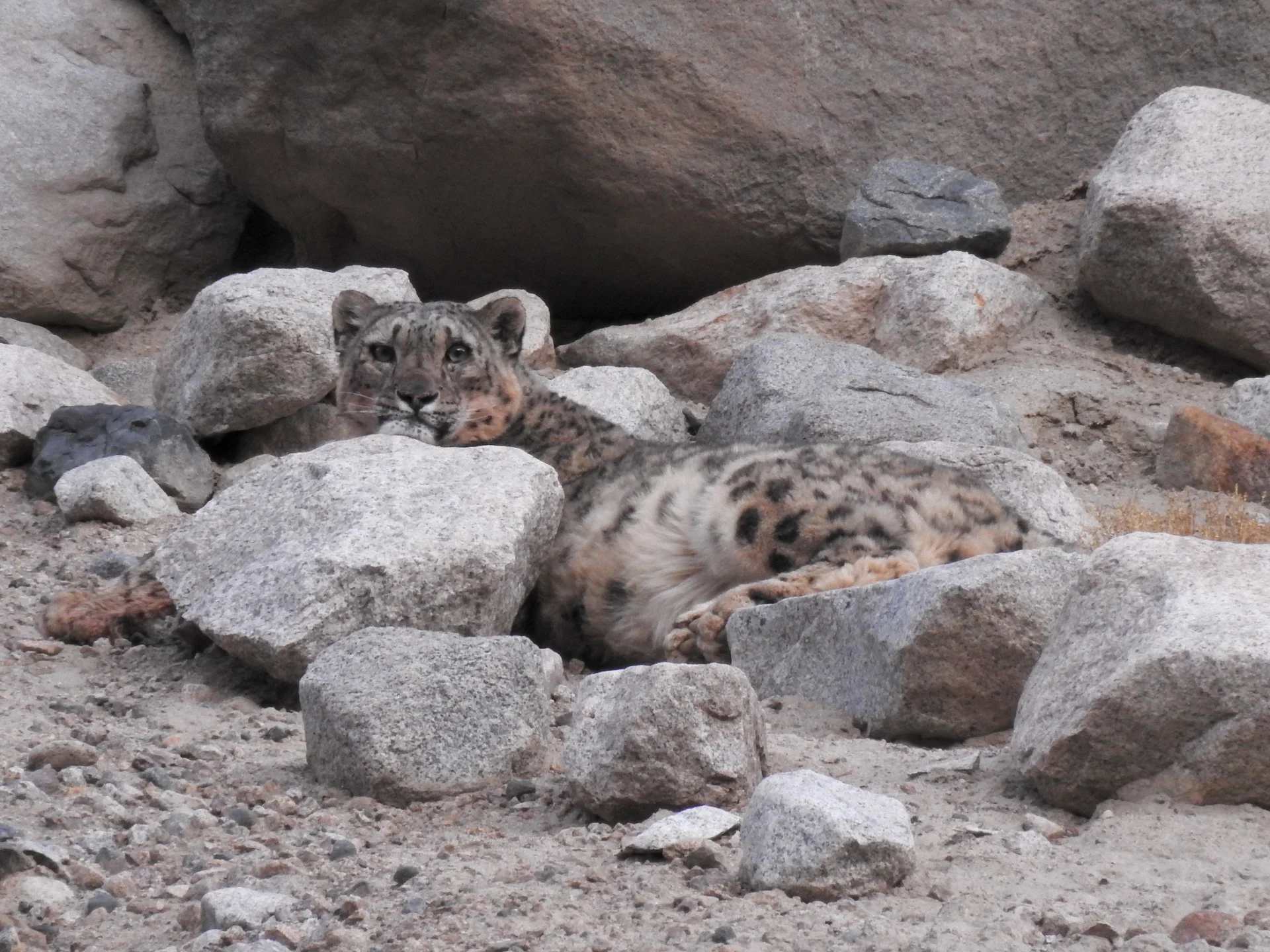
Nicknamed "the ghost of the mountains" (Shan in Tibetan or Hiun Chituwa in Nepali), the snow leopard (Panthera uncia) reigns supreme over the high-altitude deserts and rocky ridgelines of the Himalayas. Nepal—with its 147,181 km², over a third of which lies above 3,000 meters in elevation—stands as one of the species' most critical global strongholds according to WWF Nepal, harboring an estimated breeding population of 350 to 500 individuals.
Yet catching a glimpse of this solitary big cat cannot be left to chance along standard trekking trails. Its smoky silver-gray coat, rosetted with dark spots, blends seamlessly into the shale and limestone scree. To maximize your chances of an encounter while strictly respecting wildlife ethics, it is vital to pinpoint the most promising watersheds and target the ideal seasonal window. Here is our comprehensive analysis of Nepal's three primary snow leopard sanctuaries.
1. Shey Phoksundo National Park (Upper Dolpo): The Historic Stronghold
It was here, across the windswept high plateaus of Dolpo between 3,600 and 5,400 meters of altitude, that legendary biologist George Schaller and author Peter Matthiessen immortalized their quest for the cat in the literary masterpiece The Snow Leopard. Spanning 3,555 km², Shey Phoksundo is Nepal's largest national park and protects the country's highest snow leopard density.
Why is Dolpo the premier sanctuary?
- Near-zero human disturbance: In winter, the total isolation of the Saldang, Ringmo, and Shey Gompa valleys provides absolute peace and quiet for wildlife.
- An abundant prey base: Thriving herds of Himalayan blue sheep (Pseudois nayaur, or bharal) graze the sheer crags surrounding the turquoise waters of Phoksundo Lake.
- Well-defined ridgeline corridors: Traditional ridge trails act as veritable highways for cats patrolling their territories, leaving cheek-rub scent marks and ground scrapes.
An expedition into Dolpo demands fully self-sufficient logistics and excellent physical stamina. You can discover the detailed planning of our expeditions on our dedicated snow leopard expedition in Nepal page.
2. Upper Mustang: Arid Gorges and Secret Canyons
A trans-Himalayan rain-shadow kingdom nestled behind the towering Annapurna and Dhaulagiri massifs, Upper Mustang features a windswept arid climate painted in shades of ochre, crimson, and purple. Unlike the dense, sub-tropical forested plains of the Terai explored during a Bardia National Park safari, Mustang is defined by vertiginous canyons and wind-carved plateaus rising above 3,800 meters.
The secluded side valleys of Yara, Ghiling, and the rugged foothills surrounding Lo Manthang shelter resident populations thoroughly documented by wildlife biologists. Mustang's distinct advantage lies in its open topography: sightlines often stretch unimpeded for several kilometers, making long-range spotting scope surveys on opposite ridges exceptionally effective at first light.
3. The Manang Valley (Annapurna Conservation Area): Strategic Accessibility
Situated north of the Annapurna massif, the upper Manang Valley and secondary tributary valleys leading toward Tilicho Lake or the Thorong La Pass (between 3,500 and 4,800 meters) represent an outstanding tracking alternative. Pioneered by the Snow Leopard Conservation Committee (SLCC) of Manang and local scouts, GPS satellite collars and trail cameras closely monitor feline movements across key travel corridors.
In Manang, winter-ready lodge infrastructure provides heated shelter by evening while allowing daily scouting excursions into surrounding ridgelines, avoiding the sub-zero tent bivouacs at -25°C necessary deep within Dolpo.
When to Go? The Golden Calendar for Snow Leopard Tracking
Snow leopards do not migrate, but their vertical movements are dictated by two crucial factors: the snowline boundary and their mating cycle.
| Period | Weather Conditions | Snow Leopard Behavior | Sighting Chances |
|---|---|---|---|
| January – February (Prime Season) | Extreme cold (-15°C to -25°C), heavy snow blanket across upper ridges. | Mating season (rut): powerful nocturnal vocalizations, frequent scent marking, bharal descending to ~3,600m. | Exceptional (Peak) |
| March – Early April | Gradually rising temperatures, partial snowmelt on sunny slopes. | Active twilight hunting on exposed alpine grazing grounds. | Very High |
| October – November | Crystal-clear skies, highly stable weather for approach trekking. | Prey herds remain high (4,500m – 5,200m); cats are more widely dispersed and distant. | Moderate |
| June – September (Monsoon) | Torrential rains in southern valleys, persistent fog and cloud cover. | High passes blocked by landslides and mud, zero visibility. | Not Recommended / Nil |
Keys to a Successful Sighting: The Eyes of Himalayan Scouts
Attempting to locate a snow leopard on your own with standard binoculars is a statistical near-impossibility. On a professional expedition, success relies on two fundamental pillars:
- The vital role of local trackers (Snow Leopard Scouts): Raised in high-mountain villages, these trackers grew up traversing these very cliffs. Their exceptional visual acuity allows them to spot a smoky gray coat over a kilometer away against fractured moraine. To learn more about our tracking philosophy and field ethics, check out our guide to walking safaris and wildlife tracking in Nepal.
- Listening to sentinel prey species: Himalayan blue sheep emit a sharp, whistling alarm snort the moment a predator crests a ridge. Himalayan marmots and red-billed choughs (cliff-dwelling birds) also act as infallible early-warning sentinels that our guides monitor continuously.
If you are weighing how to integrate such an expedition into your Nepal travel plans, explore our comprehensive guide on combining high-altitude trekking and wildlife safaris in Nepal.
Himalayan High-Altitude Expeditions
Explore our flagship Snow Leopard Expedition in Dolpo & Mustang (17 Days) or discover ancient cliff monasteries on our Tiji Festival Upper Mustang Trek.