📌 Quick Summary: Why We Reject Elephant-Back Riding
- Anatomy & Spine Damage: An elephant's spine consists of upward-pointing bony protrusions (spinous processes) that are not evolved to support heavy wooden saddles (howdahs) or human weight.
- The Brutal "Phajaan" Training: Captive riding elephants undergo psychological crushing through restraint, sensory deprivation, and pain to force obedience to the bullhook (ankush).
- Ethical Alternatives Exist: Experience the jungle ethically through silent walking safaris on foot, open-top 4x4 jeep expeditions, and traditional river canoe patrols.
- Our Unwavering Commitment: Jungle Nepal Adventure strictly refuses to sell, promote, or facilitate elephant-back safaris.
For decades, commercial travel agencies in South Asia marketed riding atop a captive elephant as the quintessential jungle experience. However, growing global awareness of animal ethology and veterinary science has pulled back the curtain on this outdated practice. At Jungle Nepal Adventure, we believe true wildlife travel must never come at the cost of animal exploitation.
1. The Anatomy Myth: An Elephant's Spine Is Fragile
Despite their massive physical power, Asian elephants are anatomically unsuited for carrying heavy loads on their backs:
- Delicate Skeletal Structure: Unlike horses or camels whose vertebrae evolved horizontally to bear weight, an elephant's backbone features tall, delicate vertical dorsal spines covered by a thin layer of muscle and tissue.
- Chronic Injuries from Saddles: Heavy wooden saddles (howdahs) carrying four adult tourists plus a handler weigh upwards of 300 kilograms. Over years of daily riding, this causes chronic spinal lesions, permanent tissue necrosis, and severe arthritis.
2. The Invisible Cruelty of the "Phajaan"
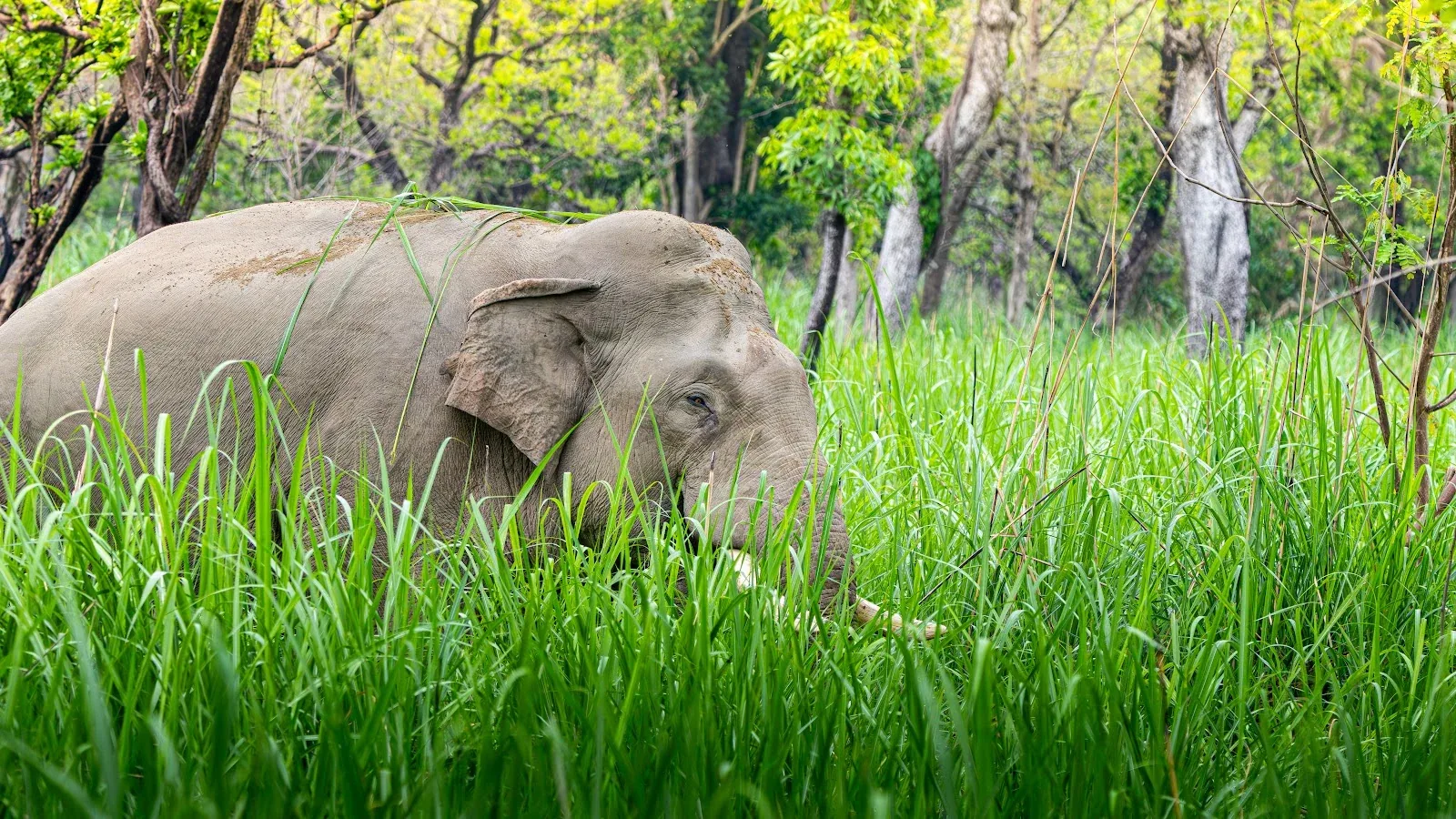
Wild elephants are naturally wild creatures with strong family bonds and high intelligence. To compel an elephant to accept human riders and tolerate sudden movements without retaliating, young calves are subjected to a traditional breaking process known as the Phajaan ("crushing the spirit"):
- Separation from their mothers at a young age.
- Confinement in small wooden crushes with tight ropes.
- Deprivation of sleep, food, and water alongside physical punishment with metal-tipped bullhooks until their natural defensive instincts are extinguished.
3. Life Outside the Safari: Short Chains and Isolation
When tourists return to their lodges, captive riding elephants often spend up to 18 hours chained by their feet to concrete posts, unable to socialize, graze naturally, or bathe in river waters. Elephants in commercial riding camps frequently exhibit repetitive stress behaviors (weaving and swaying), clear indicators of deep psychological distress.
Experience the Raw Jungle on Foot (50€)
Say NO to captive elephant exploitation. Walk the wild trails of Bardia National Park with our certified native naturalists for an authentic, respectful wildlife encounter.
Ethical Alternatives: How to Experience the Jungle Responsibly
Choosing responsible tourism sends a direct economic signal to local communities and park operators:
- Guided Walking Safaris: The most intimate and low-impact way to explore the wilderness, leaving zero carbon footprint and zero disturbance to wildlife.
- Open 4x4 Jeep Safaris: Cover expansive territory safely, allowing ethical observations from a respectful distance.
- Traditional River Canoes: Silent drift safaris on river systems that do not stress resident animals.
Experience Chitwan with Native Guides
Track rhinos on foot with our Chitwan Walking Safari (from €70) or book a full-day Private Jeep Safari (€190).
For an all-inclusive stay: discover the Chitwan Safari Cultural Tour (4 Days).