📌 Quick Summary: Wildlife of Chitwan National Park
- The Star Species: Over 690 greater one-horned rhinos (Rhinoceros unicornis) – the second-largest wild population on Earth.
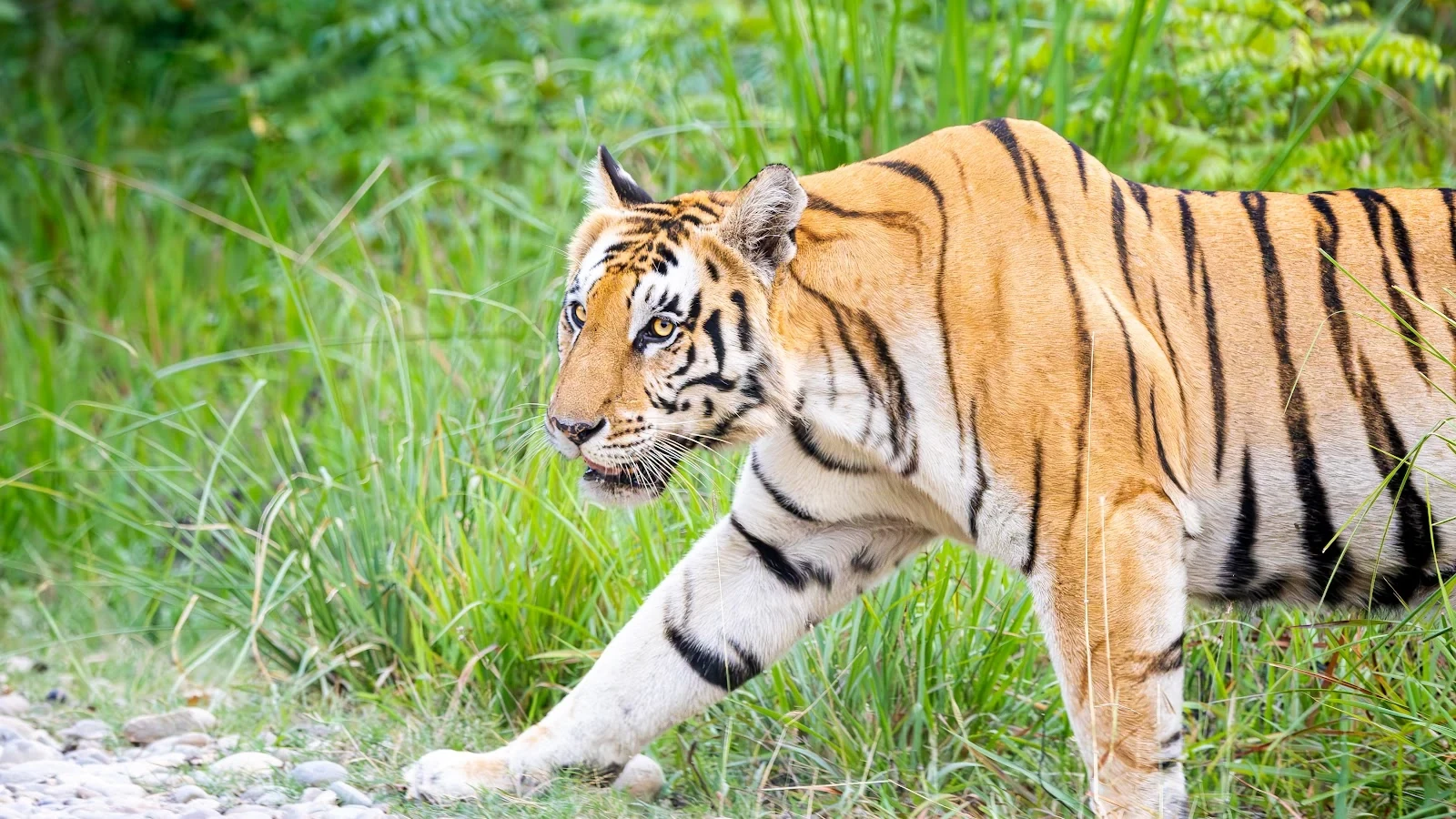
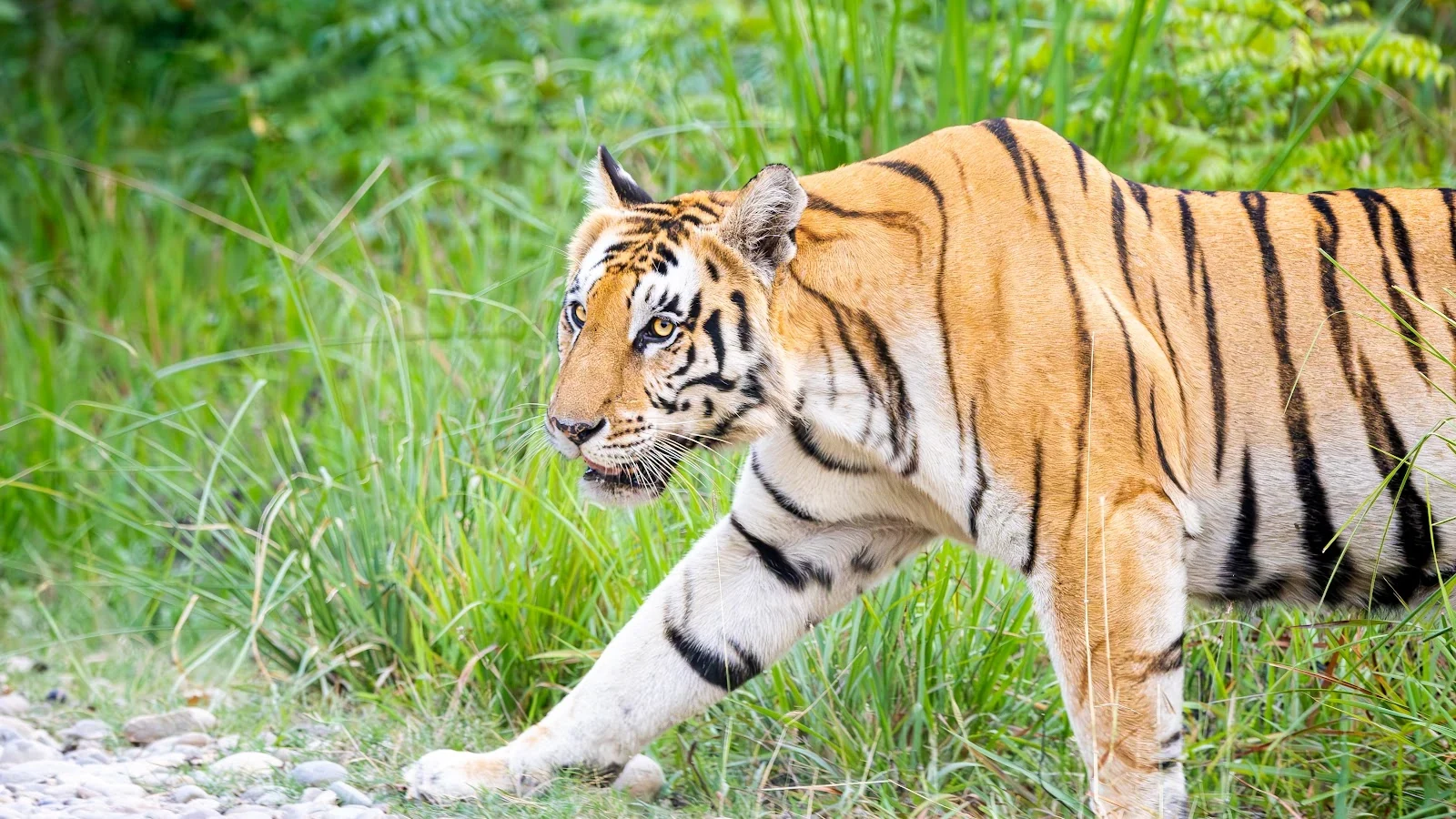
- Apex Predators: ~128 adult Bengal tigers, dense populations of sloth bears (Melursus ursinus) and Indian leopards.
- River Giants: Critically endangered fish-eating gharials (Gavialis gangeticus) and marsh mugger crocodiles on the Rapti and Narayani rivers.
- Avian & Ungulate Richness: 540+ bird species, golden jackals, mongooses, spotted chital deer, barking deer and giant sambar.
Inscribed as a UNESCO World Heritage Site in 1984, Chitwan National Park is Nepal's oldest, most celebrated wildlife sanctuary. Nestled within an expansive subtropical inner Terai river valley bordered by the Rapti, Narayani and Reu rivers, its mosaic of dense Sal hardwood forests, riverine marshes, and soaring elephant grasslands provides a thriving habitat for Asia's most iconic megafauna.
1. Greater One-Horned Rhinoceros (Rhinoceros unicornis): The Pride of Chitwan
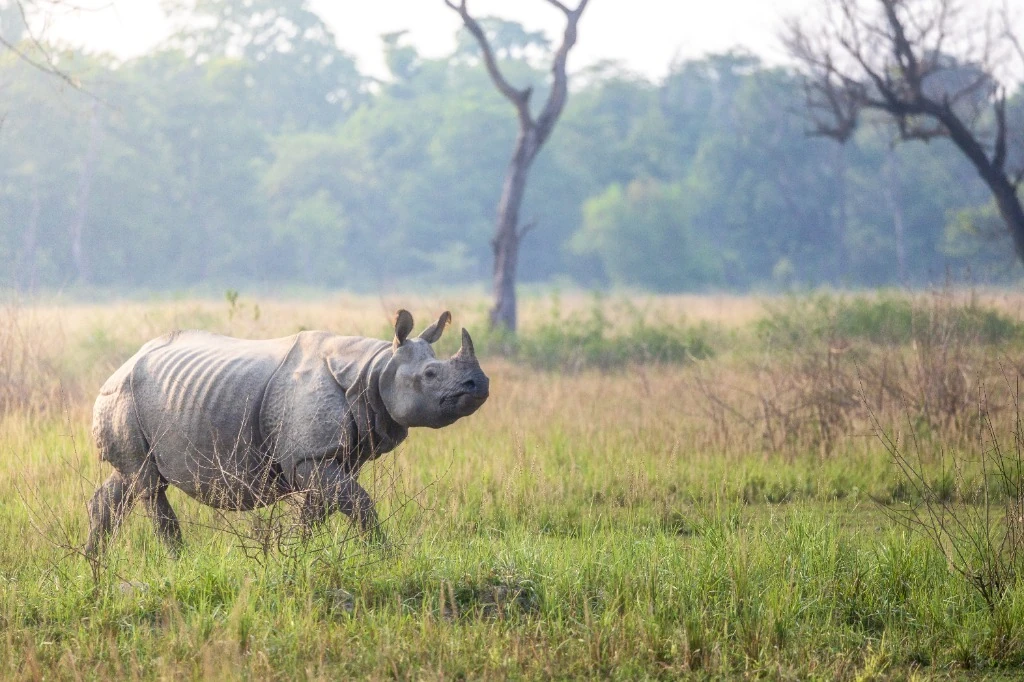
With more than 690 individuals recorded in the official National Rhino Count Nepal, Chitwan shelters the second-largest population of greater one-horned rhinos in the world, surpassed only by Kaziranga in Assam. Unlike elusive predators, rhinos are frequently encountered grazing in riverbeds at dawn, wallowing in mud pools during hot afternoons, or quietly strolling through community forests bordering Sauraha village at dusk. To understand their biology and survival strategies, explore our guide on greater one-horned rhino behavior.
Weighing between 1.8 and 2.2 metric tons and armored with thick folds of tuberculated skin resembling riveted plates, these magnificent herbivores can be safely observed on ethical private Chitwan jeep safaris and guided walking safaris in community buffer zones.
2. Bengal Tigers in Chitwan: Magnificent yet Challenging
Chitwan is home to an impressive population of approximately 128 adult Bengal tigers. However, spotting a tiger in Chitwan is notoriously more demanding than in Bardia National Park (see our in-depth comparison: wildlife of Bardia National Park):
- Chitwan's grasslands feature elephant grass reaching towering heights of 6 to 8 meters after the monsoon, providing almost impenetrable natural camouflage.
- Heavier tourist volume around eastern Sauraha prompts resident tigers to patrol deep interior sectors far from routine tracks. For travelers obsessed with seeing a tiger, check our statistical guide: Bardia tiger tracking success rates and hides.
- Expert Tip from Our Naturalists: Focus your safari between March and May when winter grass fires have cleared undergrowth and water scarcity concentrates feline activity near permanent river oxbows. Opt for full-day jeep expeditions reaching remote sectors like Kasara, Sukhibhar and Meghauli.
3. River Crocodilians of Rapti and Narayani: Gharials and Muggers
Drifting silently aboard a hand-carved wooden canoe down the Rapti River offers intimate views of two of the planet's most fascinating crocodilian species (read more in our guide on the Gharials and crocodiles of Nepal):
- The Gharial (Gavialis gangeticus): Critically endangered on the IUCN Red List, unmistakable with its needle-thin elongated jaws lined with over 100 interlocking teeth and the bulbous nasal boss (ghara) on mature males. They feed exclusively on river fish. A world-renowned captive breeding and conservation center operates at park headquarters in Kasara.
- The Marsh Mugger (Crocodylus palustris): A robust, broad-snouted apex ambush predator thriving in still oxbow lakes, muddy creeks, and sunny sandbars.
4. Sloth Bears (Melursus ursinus): Record Densities in Chitwan
Chitwan is widely recognized by field zoologists as one of the finest refuges in South Asia for the nocturnal, insectivorous sloth bear. Often active around sunrise and late afternoon, they excavate subterranean termite mounds with enormous curved ivory claws, producing vacuuming snorts audible from dozens of meters away. They frequently cross sandy tracks between Sal forests and riverbanks.
Full-Day Private Jeep Safari in Chitwan (190€)
Venture deep into the pristine core sectors of Chitwan National Park aboard our customized open-top safari 4x4. Dedicated naturalist guide, park permits, and lunch included.
Comparative Matrix: Iconic Wildlife of Chitwan
| Species | Chitwan Population | Sighting Probability | Recommended Activity |
|---|---|---|---|
| Greater One-Horned Rhino | > 690 individuals | Near-Guaranteed (95-100%) | Jeep safari & buffer walking safari |
| Gharial Crocodile | ~200 individuals | Very High (90%) | Rapti River traditional canoe safari |
| Sloth Bear | Dense healthy population | Good (40-60%) | Late afternoon open jeep safari |
| Bengal Tiger | ~128 adults | Challenging (25-35%) | Full-day deep jeep safari (Kasara/Sukhibhar) |
To encounter greater one-horned rhinos on foot or by vehicle, explore our Chitwan Rhino Walking Safari (from €70), our Private Chitwan Jeep Safari (€190), or combine both world-heritage parks on our Chitwan + Bardia Combined Safari (11 Days).