Quick Summary: Wildlife of Bardia National Park
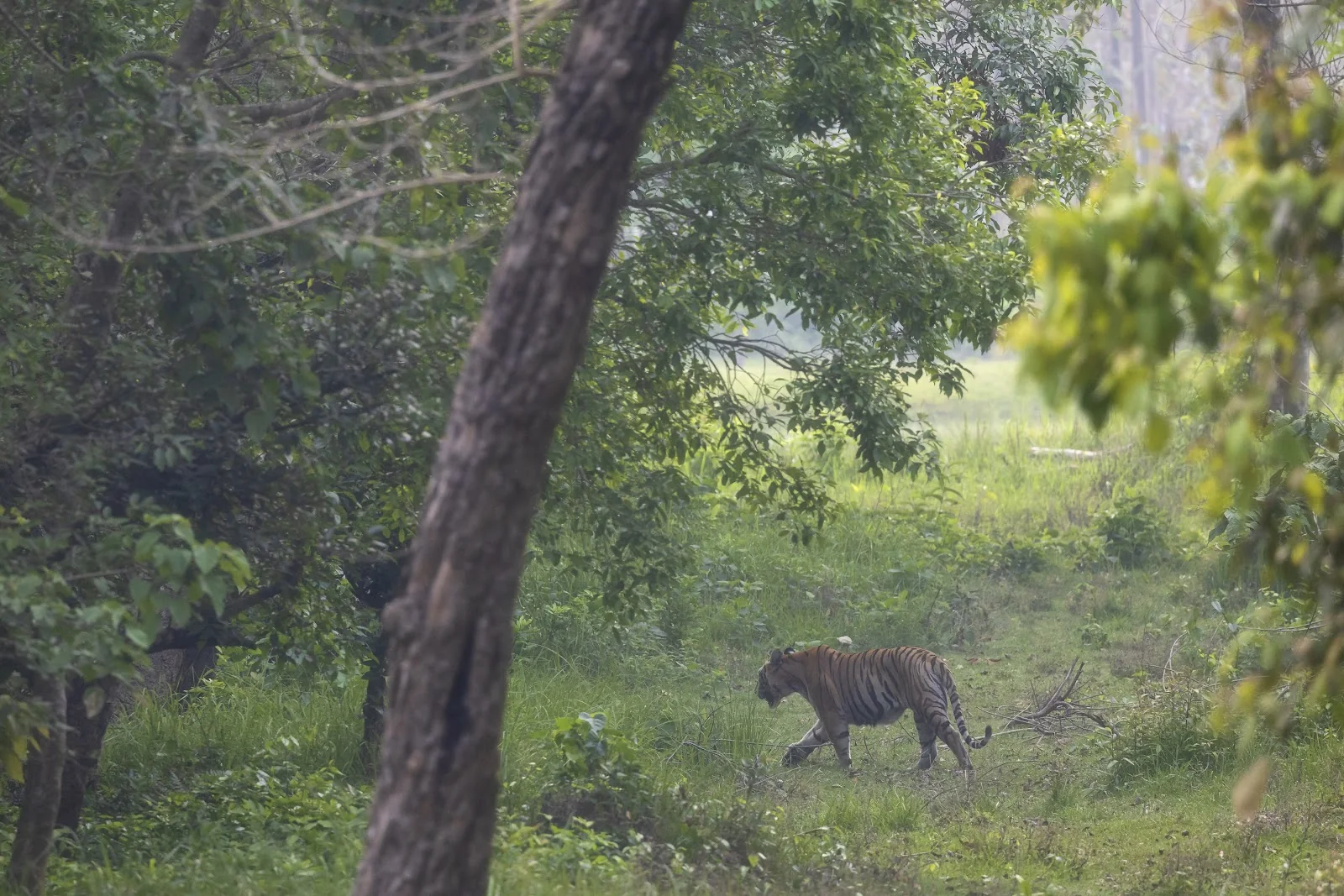
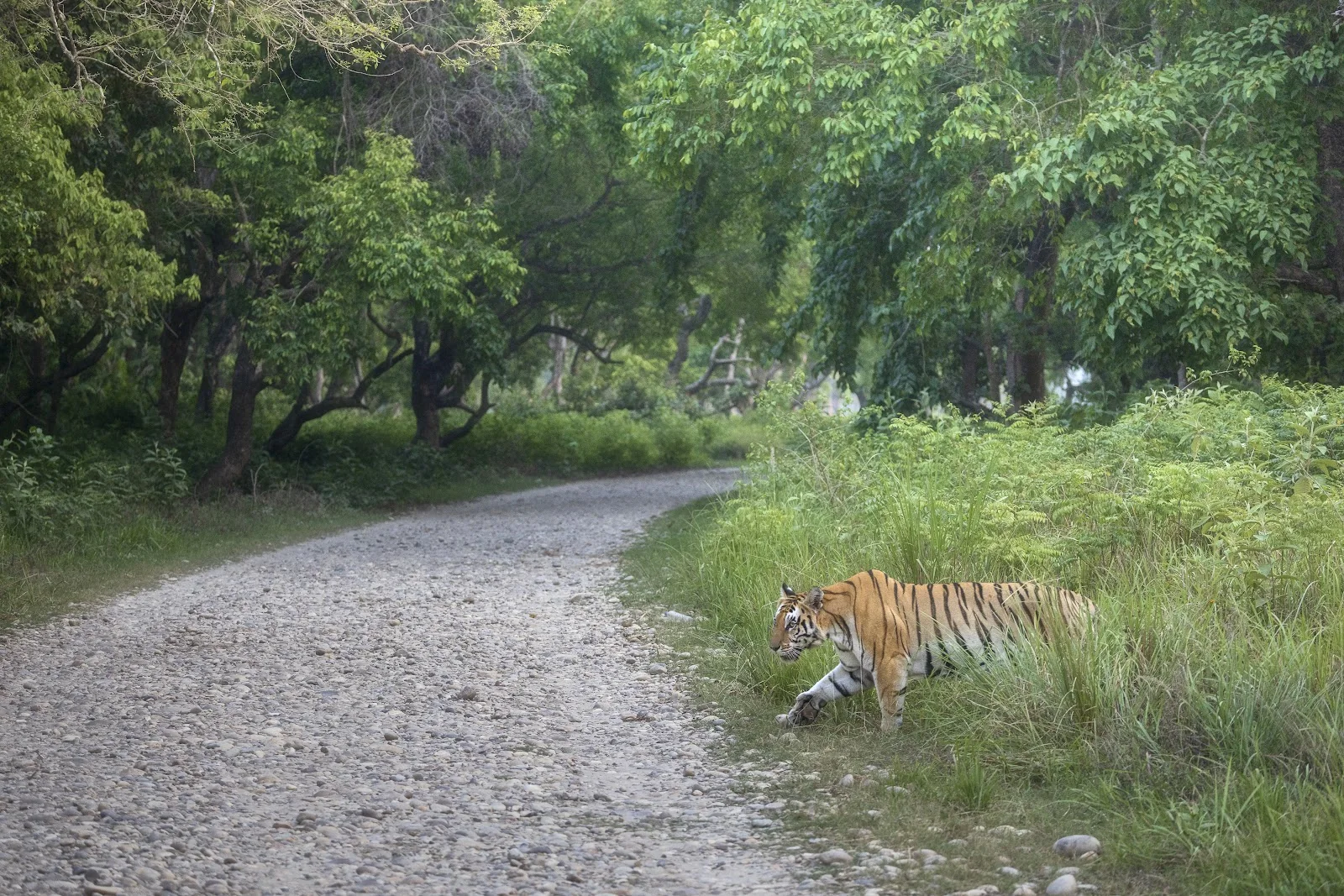
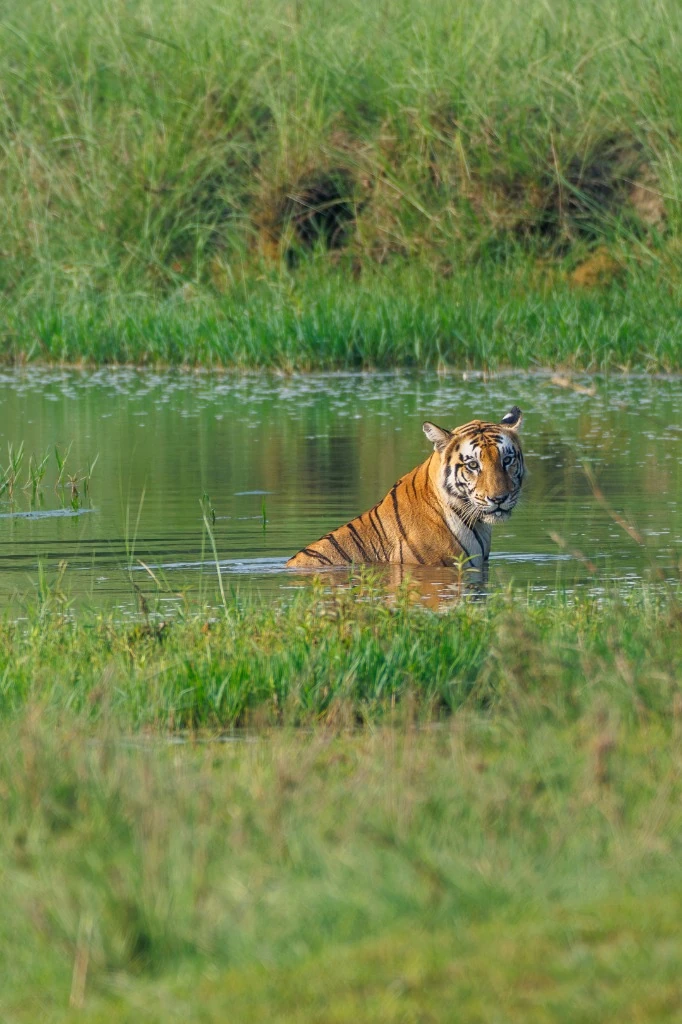
- The King of the Jungle: Bengal tigers (~125 recorded adults, highest density and best sighting probability in Nepal).
- Wild Asian Giants: Free-roaming migratory wild bull elephants and a flourishing population of reintroduced greater one-horned rhinos.
- Rivers & Aquatic Life: Freshwater Gangetic dolphins (Platanista gangetica), marsh muggers, and fish-eating gharial crocodiles on the Karnali and Geruwa rivers.
- Carnivores & Ungulates: Indian leopards, sloth bears, striped hyenas, dholes (wild dogs), spotted chital deer, swamp deer (barasingha), and the massive blue bull antelope (nilgai).
- Birdwatching Haven: Over 400 recorded bird species including great hornbills, Bengal floricans, and sarus cranes.
Located in the remote southwestern Terai lowlands, Bardia National Park spans 968 km² of pristine Sal hardwood forest, alluvial river islands, and savannah grasslands. It is globally recognized by conservationists as Nepal's most untouched wilderness sanctuary, offering unparalleled opportunities to observe apex predators on foot.
1. The Bengal Tiger (Panthera tigris tigris): Undisputed Ruler of Bardia
Bardia has become Asia's preeminent tiger tracking destination. While India's tiger reserves strictly restrict visitors to brief jeep corridors, Bardia allows travelers to track tigers silently on foot with senior naturalist guides. Over the past decade, rigorous anti-poaching enforcement and community-led buffer zone management have boosted Bardia's adult tiger population from just 18 individuals in 2009 to over 125 resident tigers today. For an empirical breakdown of observation spots and success rates, read our study: Bardia tiger sightings: spots, seasons, and success rates.
2. Wild Asian Elephants (Elephas maximus): Roaming the Churia Hills
Bardia serves as a vital cross-border transboundary corridor for wild Asian elephants migrating between Nepal and India's Katarniaghat Wildlife Sanctuary. Solitary massive bull tuskers—most famously legendary wanderers like Shankar and Rajagaj—roam the riverine forests. Spotting a wild bull emerging from the towering Sal trees to cross the Geruwa riverbed is an awe-inspiring spectacle.
3. Greater One-Horned Rhinoceros (Rhinoceros unicornis)
Following historical poaching pressures in the late 20th century, successful translocations from Chitwan have rebuilt a robust, thriving wild rhino population in Bardia's Baghaura and Babai river sectors. These solitary prehistoric giants thrive in riverine oxbow lakes and grassy floodplains, often encountered grazing peacefully at sunrise.
4. Secondary Predators: Leopards, Sloth Bears, and Dholes
Beyond the tiger, Bardia shelters an extraordinary community of sympatric carnivores:
- Indian Leopard (Panthera pardus): Highly adaptable and agile, leopards patrol the forest periphery and buffer zones, frequently resting high in the branches of large silk-cotton trees (Semal).
- Sloth Bear (Melursus ursinus): Common in the termite-rich open Sal forests, actively foraging during early mornings and late afternoons.
- Asiatic Wild Dog / Dhole (Cuon alpinus): Endangered pack hunters capable of exhausting large prey through coordinated tactical pursuits.
5. Aquatic Wildlife of the Karnali and Geruwa Rivers
The braided channels of the Karnali river system provide vital sanctuary for rare aquatic species:
- Gangetic Dolphin: One of the world's few freshwater river dolphin species, surfacing for breath in deep river pools near the Chisapani gorge.
- Gharial and Mugger Crocodiles: Basking on sunny pebble islands beside giant golden mahseer fish.
Full-Day Walking Tiger Safari in Bardia (50€)
Join our senior native master trackers for an unforgettable full-day walking safari in Bardia National Park. Jungle bush lunch, entry permits, and safety gear included.
Comparative Matrix: Wildlife Sightings in Bardia
| Species | Bardia Population | Sighting Probability (3-Day Stay) | Best Safari Format |
|---|---|---|---|
| Bengal Tiger | ~125 adults | 75% - 90% (Spring) | Full-Day Walking Safari / River Hide |
| One-Horned Rhino | ~40-50 individuals | 60% - 75% | Walking Safari & Open Jeep |
| Wild Asian Elephant | Migratory herds + resident bulls | 40% - 55% | Open Jeep & Karnali river banks |
| Gangetic Dolphin | Isolated population | 50% - 65% | Inflatable Rafting Expedition |
Recommended Bardia Experiences
Join our certified naturalists on a Bardia Walking Tiger Safari (from €50) or cover vast savannah territories in a Private 4x4 Jeep Safari (€190/vehicle).
For a complete 5-day lodge adventure: explore the Bardia Tiger Safari 5 Days (€690).
👉 Related Field Guide: Read our in-depth dossier on the Ganges River Dolphin in Nepal: how to spot the blind "Susu" on the Karnali River in Bardia.
Field Expertise from Pawan & Robin: How to Maximize Your Wildlife Sightings in Nepal
Spotting iconic megafauna in Nepal's Terai lowlands is never a matter of luck—it is the result of disciplined tracking and local ecological knowledge. Alongside Pawan—our master tracker born in Bardia, president of the local NAGA conservation association, and field collaborator for BBC wildlife film crews—we structure every safari day around the true biological rhythms of the Royal Bengal tiger (Panthera tigris tigris), the greater one-horned rhinoceros (Rhinoceros unicornis), and the Indian leopard.
1. Reading Fresh Pugmarks and Decoding Jungle Alarm Calls
During a walking safari in Bardia or a private 4x4 jeep track, the first 90 minutes after sunrise are critical. Our naturalist guides inspect the sandy riverbeds (sots) and the banks of the Karnali and Babai rivers to locate fresh pugmarks, judge track age by edge moisture, and check Sal tree trunks (Shorea robusta) for territory claw marks and scent-spraying. The moment a spotted deer (chital), sambar, or gray langur barks a sharp, repetitive alarm call, our trackers triangulate the prey's line of sight to position our small group silently at a natural river crossing.
2. Choosing the Right National Park for Your Schedule
- If you have 8 to 12 days: Head straight to Bardia National Park on our flagship 9-Day Tiger & Rhino Tracking Expedition. With 968 km² of pristine wilderness, roughly 125 adult tigers, and less than 3% of Chitwan's visitor numbers, Bardia delivers Asia's most authentic walking safari experience.
- If you are combining Kathmandu, Pokhara, and the jungle in 12 to 14 days: Chitwan National Park fits naturally between Kathmandu and the Annapurna foothills, as featured in our Chitwan Nature & Culture Safari and our 14-Day Grand Tour of Nepal.
- If you are a dedicated wildlife photographer or birder: Combining Suklaphanta and Bardia (12-Day Wild West Terai Expedition) unlocks the world's largest herds of swamp deer (Barasingha), the critically endangered Bengal florican, and Nepal's highest tiger density per square kilometer.
3. Uncompromising Ethics: Zero Captive Elephants & Direct Tharu Community Support
Unlike mass-market operators that still promote elephant-back rides in buffer zones, Jungle Nepal Adventure enforces a strict ethical charter: zero captive elephant activities, small groups capped at 4–10 travelers, family-run Tharu eco-lodges, and direct financial contributions from every booking to Bardia's Community-Based Anti-Poaching Units (CBAPU). To compare all our itineraries, transparent prices, and seasonal tiger sighting statistics, visit our comprehensive plan your safari in Nepal hub.