
Suddenly, high within the emerald canopy of the Sal trees in Bardia, a sharp, staccato vocalization shatters the forest stillness: "Khok-khok-khok!". Down on the forest floor, a herd of spotted deer freezes instantly, necks held rigid, ears cupped toward the eastern thicket. You have just heard the alarm call of a Hanuman Langur (Semnopithecus entellus). In Nepal's primeval lowlands, primates are not merely entertaining acrobats; they are the ultimate sentinels of the jungle, forging one of the most sophisticated mutualistic alarm networks in the animal kingdom alongside ground ungulates. For seasoned wildlife trackers, listening to monkey calls is the primary secret to locating Royal Bengal Tigers and Indian Leopards.
This comprehensive primatology and field ethology guide explores the anatomy, social structures, acoustic dialects, and vital ecological functions of Nepal's two primary primates: the Hanuman Langur (Grey Langur) and the Rhesus Macaque (Macaca mulatta), alongside the elusive Assamese Macaque in rugged foothill forests.
1. Nepal's Primates: Two Distinct Evolutionary Strategies
While frequently occupying overlapping forest ranges across Bardia, Chitwan, and Suklaphanta National Parks, langurs and macaques represent entirely divergent evolutionary specializations:
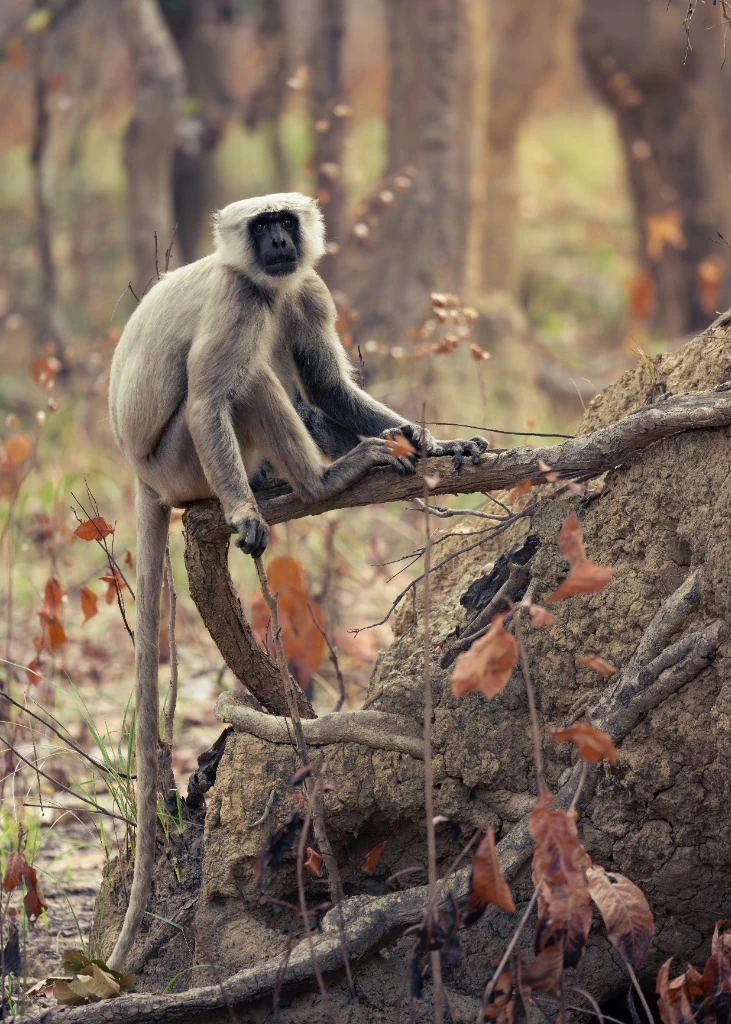
1. The Hanuman Langur / Grey Langur (Semnopithecus entellus)
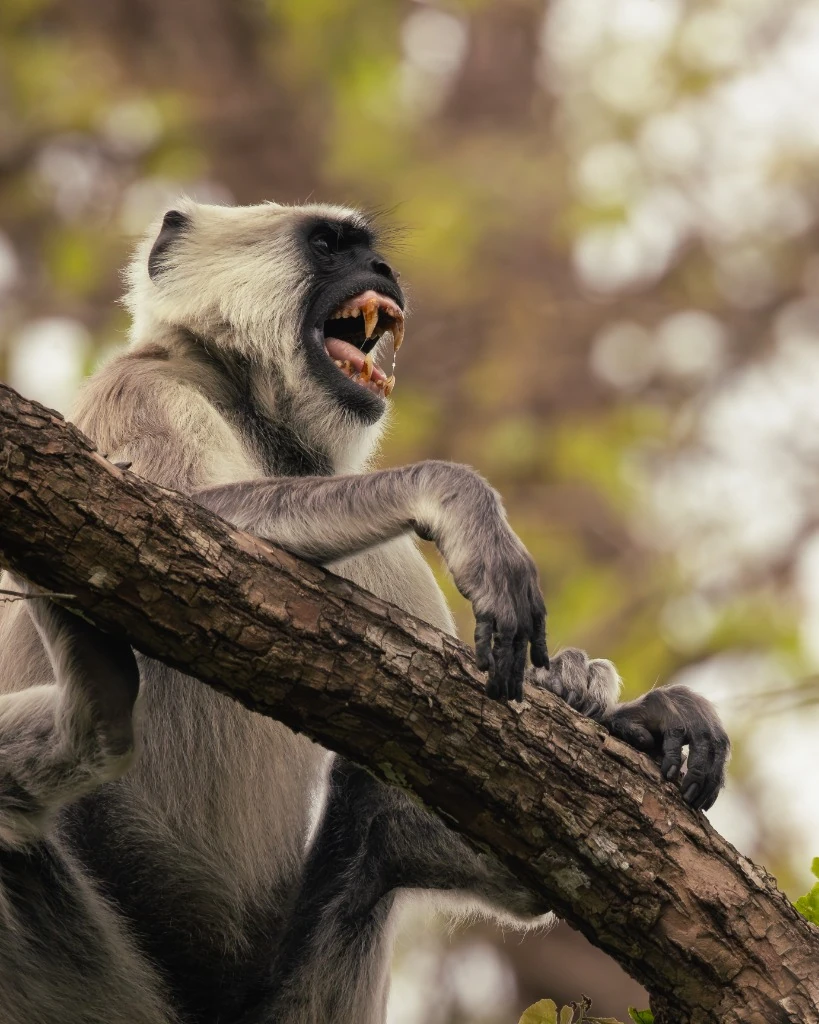
Revered in Hindu mythology as living embodiments of the warrior deity Hanuman (who according to the epic Ramayana singed his face and hands while carrying celestial fire to rescue Princess Sita), the grey langur is an animal of aristocratic grace. Featuring silvery-grey coats, charcoal-black faces framed by a pristine white fur ruff, and sweeping tails measuring upwards of three feet that provide aerial balance, they are peerless canopy leapers.
Langurs are obligate folivores: their specialized sacculated stomachs host symbiotic anaerobic bacteria capable of fermenting cellulose and neutralizing harsh plant tannins found in mature Sal and fig leaves.
2. The Rhesus Macaque (Macaca mulatta)
The Rhesus macaque represents the robust, adaptable generalist of Asian primates. Compact, muscular, and distinguished by golden-brown fur and a pinkish hindquarters, it is an omnivorous forager. Ripe figs, seeds, leaf buds, bird eggs, and soil invertebrates make up its varied diet. Equally agile on the ground as in trees, macaques live in complex multi-male, multi-female matriarchal clans numbering up to 80 members.
Comparative Morphological and Social Matrix
| Trait | Hanuman Langur (Semnopithecus entellus) | Rhesus Macaque (Macaca mulatta) |
|---|---|---|
| Morphology | Slender, silver-grey coat, black face, ultra-long tail | Stocky build, golden-brown coat, pink rump, medium tail |
| Dietary Profile | Strict folivore (mature leaves, tough seeds, shoots) | Opportunistic omnivore (fruits, insects, roots, eggs) |
| Arboreal Stratum | High forest canopy leaper (horizontal leaps up to 30 feet) | Semi-terrestrial, agile quadrupedal ground runner |
| Social Organization | Peaceful uni-male or multi-male bands (10 to 30 ind.) | Hierarchical multi-male matriarchal clans (30 to 80 ind.) |
| Tiger Alarm Call | Deep, rhythmic, coughing "Khok! Khok!" | High-pitched shrill shrieks and violent branch shaking |
2. Mutualism in Action: The Langur-Chital Defensive Partnership
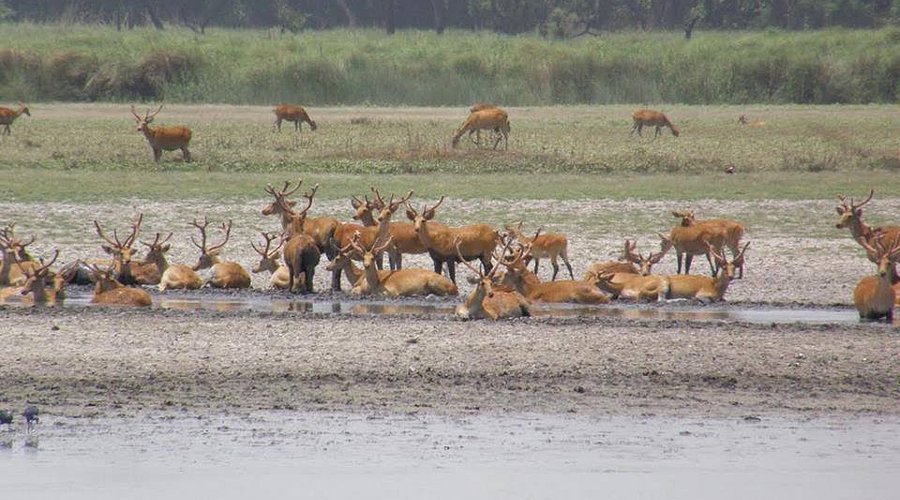
One of the most fascinating ecological partnerships in the natural world is the interspecies mutualism between Hanuman langurs and spotted deer (Chital). On the floor of the Sal forest, these two species form an integrated defensive alliance:
1. 360-Degree Sensory Overlap
Chital graze on the ground with acute senses of smell and hearing, but their field of vision is restricted by dense underbrush. Conversely, langurs perched 60 feet above in the canopy enjoy panoramic visual sightlines, but cannot smell a predator approaching downwind at ground level. Together, their combined sensory faculties create an impenetrable early warning network.
2. Canopy Forage Drops
As langurs forage through high fruiting trees, they dislodge thousands of fresh tender leaves, fig blossoms, and ripe fruits. Spotted deer gather beneath the monkey troop to browse on this continuous shower of nutritious food that would otherwise be entirely out of reach.
Explore Nepal's Untouched Jungle on Foot
Immersive naturalist walking safaris through the lush forests of Bardia National Park.
3. Reading Jungle Alarm Calls Like a Master Tracker
To the untrained ear, jungle sounds appear chaotic. To a master naturalist, acoustic variations reveal the precise movements of stealth predators:
- The "Tiger on the Ground" Call: A deep, resonant guttural bark: "Khok!... Khok!", spaced at measured intervals. The sentinel male stares fixedly in one direction, occasionally slapping heavy boughs with both palms.
- The "Leopard in the Tree" Call: Rapid, frantic chattering accompanied by the immediate retreat of the entire troop to the thinnest outermost canopy twigs where the heavy cat cannot follow.
- The Python / Raptor Warning: Muffled grunts with downcast gaze or skyward scans, signaling an airborne eagle or creeping rock python.
4. Sacred Primates and Urban Ecology in Nepal
Beyond wild jungles, primates hold sacred reverence across Nepal's heritage. In the Kathmandu Valley, Rhesus macaques have lived for centuries around the UNESCO-listed Swayambhunath Stupa (the world-famous Monkey Temple) and the sacred Hindu shrines of Pashupatinath along the holy Bagmati River.
Protected by religious beliefs and daily pilgrim offerings, these temple monkeys showcase astonishing urban adaptability and social intelligence, though visitors are advised to maintain respectful distances and avoid carrying loose food items.
5. Wildlife Photography Masterclass: Primates in the Canopy
- Metering for Black Faces in High-Contrast Canopy: Langurs possess deep charcoal facial skin surrounded by light fur and bright sky. Use Spot Metering on the eye to prevent underexposing crucial facial expressions.
- High Shutter Speeds for Aerial Leaps: Dial in at least 1/2000s to 1/3200s with continuous high-speed burst mode (15 to 30 fps) to freeze spectacular mid-air leaps between canopy branches.
- Backlit Morning Rim Light: Position your angle against the early morning sun to illuminate the delicate silver-white halo of fur around a langur's crown and shoulders.
6. Social Primatology: Troop Dynamics, Hierarchy and Allomothering in Langurs
The social architecture of the Hanuman Langur represents a cornerstone of Asian primatology. In classic uni-male harem troops (comprising one dominant breeding alpha male and 10 to 25 adult females and their offspring), dominance is perpetually contested by roaming bachelor bands.
When an outside challenger deposes the resident alpha following aerial canopy clashes, he may attempt to eliminate unweaned infants to induce reproductive estrus in the resident females. In response to this existential threat, female langurs demonstrate extraordinary cooperative defense: forming protective coalitions to physically shield infants and practicing widespread alloparental care—where related aunts and mothers share nursing, grooming, and babysitting responsibilities.
7. Dual Worlds of the Rhesus Macaque: Jungle Foragers vs Urban Temple Troops
The behavioral disparity between wild forest macaques in Bardia and urban troops residing in Kathmandu temples is remarkable. In pristine wilderness, macaques exhibit hyper-vigilance: foraging across the forest floor in coordinated dispersed formations, always poised to sprint up trunk lines at the first sentry alert.
Their wild forest diet encompasses over 90 native plant species, including flower buds of Bauhinia purpurea and hard forest seeds. By ingesting wild fruits and dispersing intact seeds across their wide foraging ranges, macaques function as vital reforestation agents across the Terai.
8. Field Etiquette & Safety Protocol When Encountering Primates
| Field Encounter Scenario | Correct Protocol | Prohibited Action |
|---|---|---|
| Langur troop on forest path | Maintain steady pace, observe quietly from 15 meters | Running forward or trying to corner a juvenile |
| Macaque staring at close range | Look slightly away, walk calmly past without sudden stops | Baring teeth or direct prolonged eye-contact (threat display) |
| Carrying snacks or water bottles | Secure all items inside closed zip compartments | Hand-feeding (causes habituation and aggressiveness) |
9. Altitudinal Stratification of Nepal's Primates
Nepal presents a world-class natural transect for primatological observation across distinct elevation zones:
- 60 to 1,000 meters (Terai & Siwalik Foothills): Core realm of the lowland Hanuman Langur and Rhesus Macaque inhabiting Sal forests and river corridors.
- 1,000 to 2,500 meters (Mid-Hills): Territory of the Assamese Macaque in steep oak-rhododendron cloud forests.
- Above 3,000 meters (Himalayan High Passes): The Central Himalayan Langur (Semnopithecus schistaceus) develops dense woolly coats, regularly foraging across snow-covered subalpine boughs.
10. Social Grooming & Political Alliances in Macaque Troops
Grooming among Rhesus macaques extends far beyond parasitic hygiene. It serves as essential political currency within the troop: lower-ranking individuals groom matriarchal matriarchs to secure feeding tolerance, diffuse social tension, and build defensive coalitions during dominance disputes.
11. Extended Primate Field FAQ
Do wild langurs drink from rivers or get water from leaves?
Langurs derive most of their moisture from succulent young leaves and dew. However, during the extreme heat of pre-monsoon summer (April-May), troops descend to sandy riverbanks in Bardia to drink in synchronized groups guarded by lookouts.
Can monkeys transmit diseases to humans?
Wild forest monkeys have no contact with tourists and pose zero health risks. For urban temple monkeys in Kathmandu, visitors should never touch or feed them to prevent scratches or bites.
Frequently Asked Questions (FAQ) — Monkeys of Nepal
Are wild jungle monkeys aggressive toward safari travelers?
No. In wild national parks like Bardia and Chitwan, monkeys are completely untamed and maintain a healthy, natural buffer distance high in the trees, showing zero aggression toward respectful quiet groups.
Can we see other monkey species in Nepal?
Yes. In the subtropical hill forests of eastern Nepal (Makalu-Barun, Kanchenjunga), travelers may encounter the rare Assamese Macaque (Macaca assamensis), adapted to steep forested ravines.
Why do safari guides rely so heavily on monkey calls?
Because langurs have elevated canopy views and detect stalking tigers or leopards long before they become visible at ground level. Their alarm calls provide live directional tracking for our walking safaris.
Explore our walking safaris in prime primate habitat on the Bardia Wilderness Explorer or browse our Chitwan Destination Guide.
12. Riparian Canopy Corridors and Forest Connectivity
The long-term conservation of Nepal's primate populations hinges upon maintaining contiguous high-canopy corridors along river networks. When forest patches are fragmented by infrastructure or agricultural clearance, monkeys are forced to traverse open ground, exposing them to predation by stray dogs and vehicular collisions.
Community forestry programs across the Terai Arc Landscape actively replant native fruiting trees (such as wild cluster figs and Indian blackberry) and establish natural canopy bridges, ensuring genetic exchange between isolated troops while sustaining natural seed dispersal throughout the jungle.
13. Field Chronicle: Tracking a Bengal Tiger via Primate Sentry Calls
It is 5:15 PM in the Khauraha sector of Bardia National Park. The evening air cools and rich amber light cuts horizontally across the towering Sal trunks. Our small naturalist group treads soundlessly along a dry riverbed. Suddenly, three hundred yards upstream, a sentinel male Hanuman langur perched high on a silk cotton bough erupts with a sharp, explosive cough: "Khok!". Within two seconds, the entire troop echoes the alarm in unison.
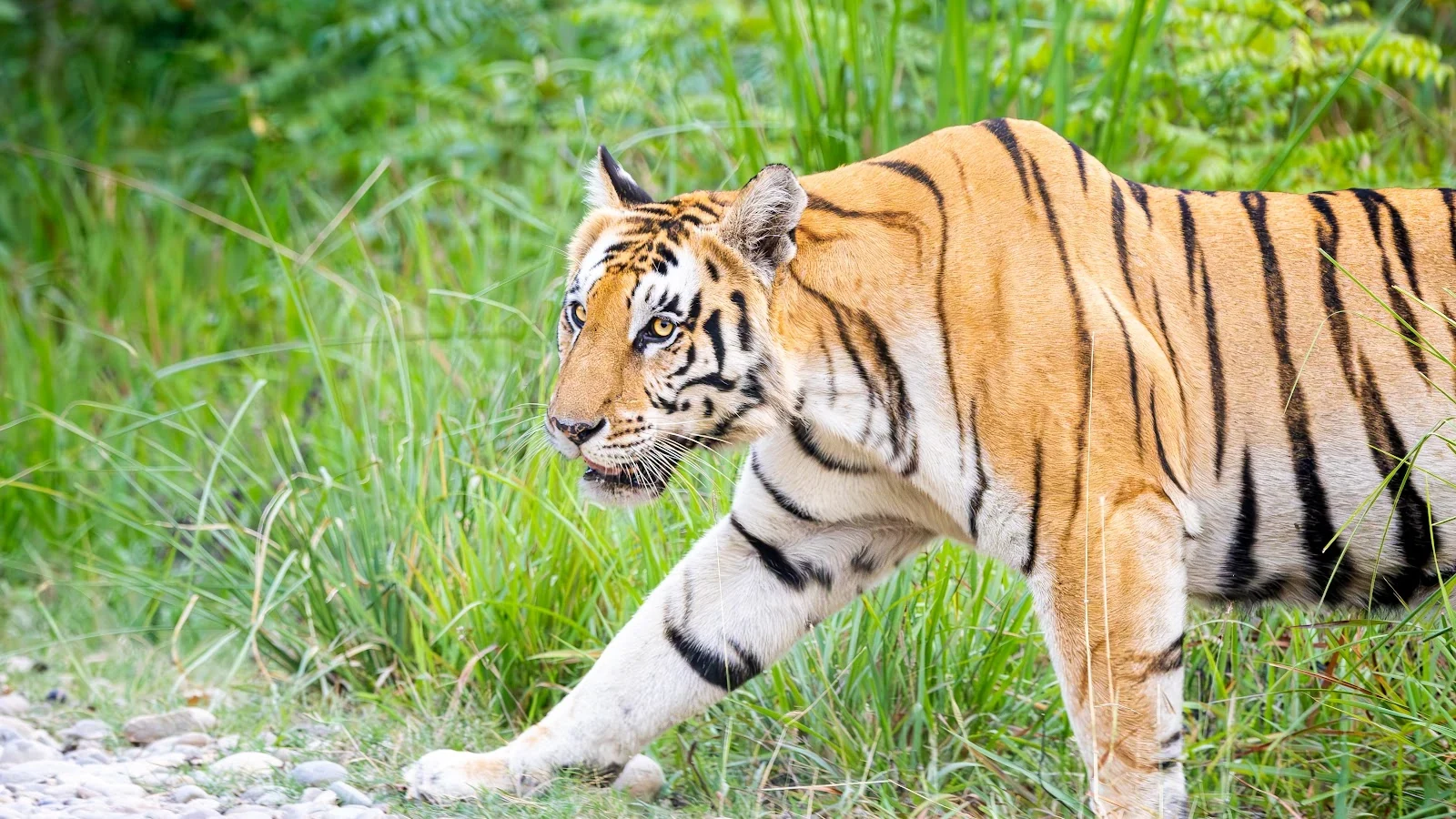
A grazing herd of spotted deer snaps to attention, orienting toward the dense understory. Our lead tracker signals everyone to crouch low behind a clump of tall elephant grass. After three breathtaking minutes of silent anticipation, a majestic tigress steps quietly out from the thicket into the open river channel, walking gracefully across the shallow rapids precisely where the canopy sentinels had tracked her approach. This magical moment captures the true essence of an authentic foot safari in Nepal.
14. Comparative Cognitive Intelligence: Langurs vs Macaques
Field studies conducted in Chitwan demonstrate distinct problem-solving methodologies between folivorous langurs and omnivorous macaques. While langurs rely on spatial memory to track seasonal leaf flushing across expansive forest territories, macaques exhibit advanced social manipulation, tool use, and cooperative foraging strategies. Understanding these cognitive nuances enriches your observation experience immensely during walking safaris through the Sal forest canopy.
15. The Role of Primates in Sacred Forest Groves
Throughout the Terai Arc Landscape, sacred temple forests and ancient community groves preserve isolated micro-habitats that act as crucial stepping-stone reserves for primate troops. Local cultural taboos against felling sacred trees have inadvertently created biodiversity oases where Hanuman langurs find year-round shelter, safe water access, and protected nesting boughs.
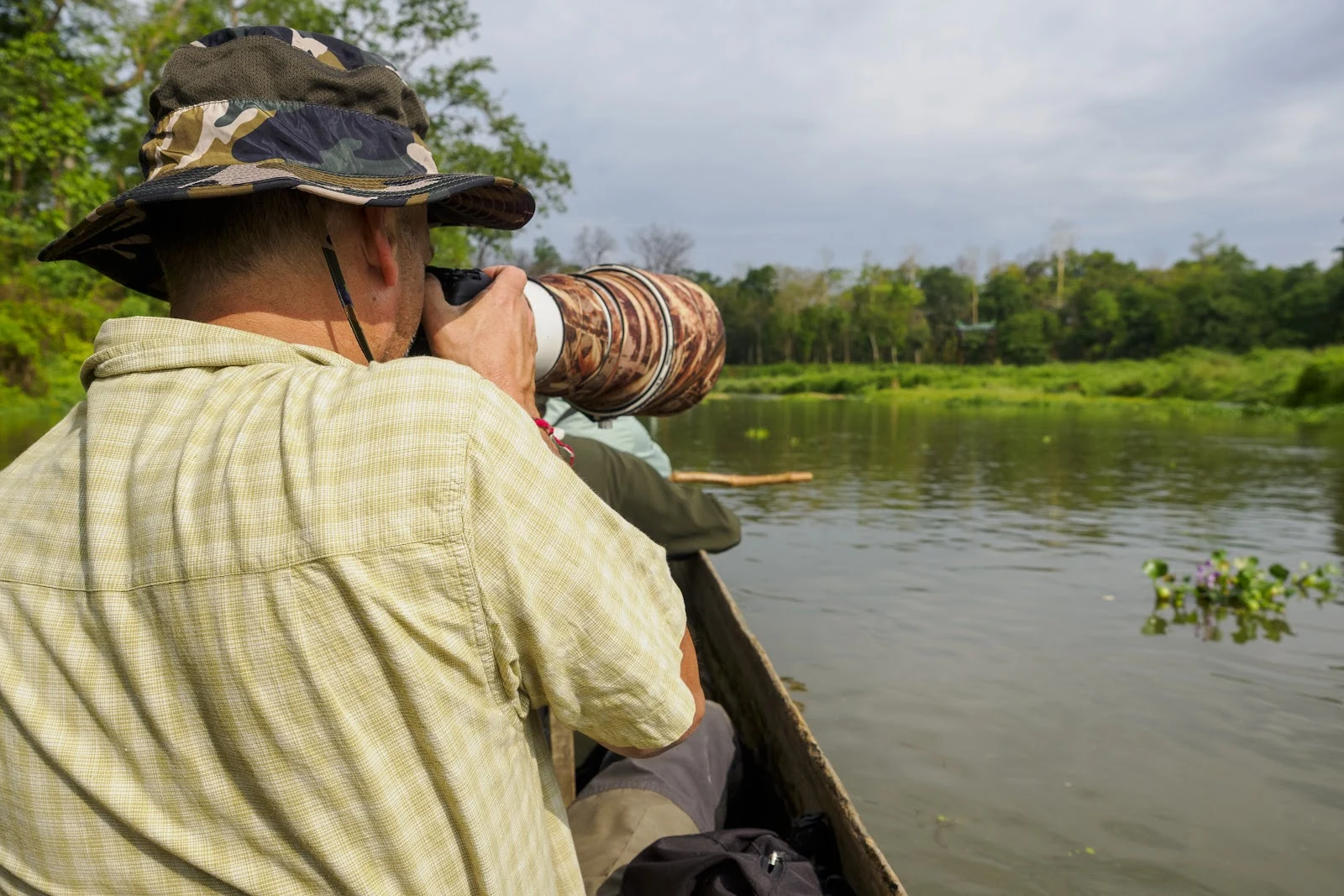
16. Responsible Wildlife Photography Guidelines for Primates
When capturing portraits of Hanuman langurs and Rhesus macaques, maintain quiet composure. Avoid pointing reflective objects or using flash illumination, which can startle animals and disrupt natural grooming or foraging interactions across the Sal forest.