
In the crisp dry leaf litter beneath an ancient Sal tree in Bardia, a sudden rustle reveals lightning-fast motion. A miniature prehistoric dinosaur measuring over five feet in length, clad in intricate marbled scales and flicking a deep midnight-blue forked tongue to sample the air, crosses the trail: the Bengal Monitor Lizard (Varanus bengalensis). Nearby on a mossy branch, an Oriental Garden Lizard (Calotes versicolor) raises its spiny dorsal crest, flushing vibrant crimson to intimidate a rival. Frequently overshadowed by big cats and megafauna, the reptiles and small carnivores of Nepal's subtropical jungles represent a realm of breathtaking evolutionary marvels.
This comprehensive herpetological and field ethology guide explores the biology, thermoregulation strategies, venom biochemistry, and secretive habits of giant monitor lizards, colorful agamas, Burmese pythons, King cobras, and their celebrated mammalian rival, the Indian Grey Mongoose, during an authentic naturalist safari in Bardia and Chitwan National Parks.
1. The Bengal Monitor Lizard (Varanus bengalensis): Dragon of the Lowlands
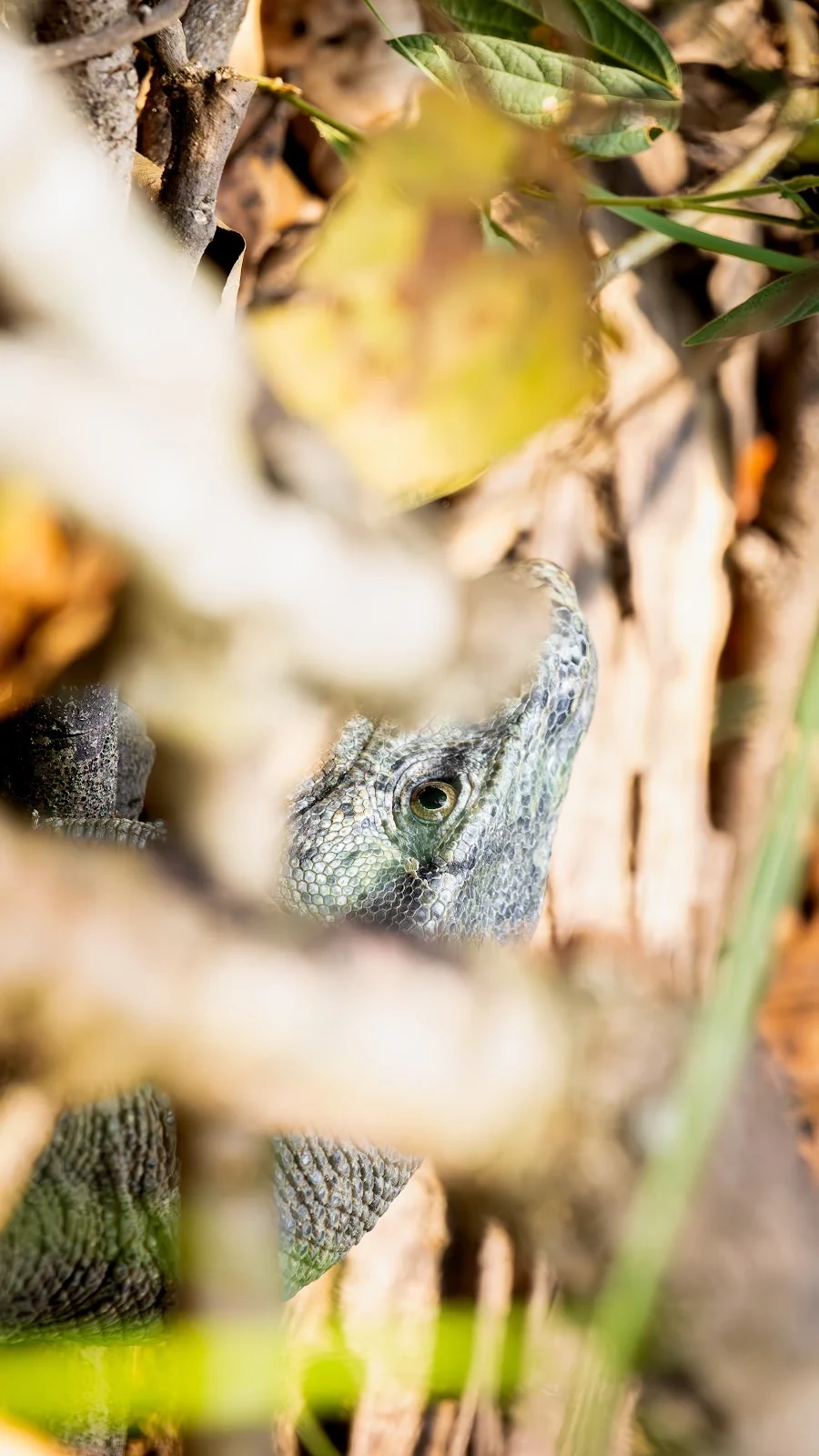
The Bengal monitor lizard is one of Asia's largest and most adaptable terrestrial saurian predators. Growing up to 1.75 meters (5.7 feet) in total length and weighing 10 to 14 kg in mature males, its muscular build and agility are formidable.
Advanced Chemical Scent Tracking (Jacobson's Organ)
Like snakes, the monitor lizard possesses an elongated forked tongue that continuously samples chemical molecules from the air and substrate. By retracting the tips into the vomeronasal Jacobson's organ located in the roof of its mouth, it detects subterranean bird nests, buried crocodile eggs, or decaying carcasses over 500 meters away.
Extraordinary All-Terrain Physical Capacities
The Bengal monitor is a versatile jungle athlete:
- Terrestrial Sprinter: Capable of explosive sprint speeds exceeding 30 km/h (18 mph) to escape wild dholes or leopards.
- Arboreal Climber: Curved, razor-sharp claws enable vertical ascents up smooth tree trunks into the high canopy to raid hornbill and parakeet hollows.
- Amphibious Diver: Can remain submerged for over 30 minutes, using its laterally compressed tail as an underwater paddle to cross wide, fast-flowing rivers.
2. The Oriental Garden Lizard (Calotes versicolor): The Forest Illusionist
Commonly called the "Changeable Lizard" or "Blood-sucker" (referencing the male's vivid crimson throat during breeding season rather than its diet, which is strictly insectivorous), this arboreal agamid measures 30 to 40 cm including its long tail.
Chromatophore Control: Rapid Color Morphing
Unlike true chameleons, the garden lizard shifts skin tones primarily for thermoregulation and social communication. During spring courtship, dominant males transform their head and shoulders into a striking blood-red hue set against a jet-black throat, performing rapid push-up displays (head-bobbing) from elevated boughs to establish territorial supremacy.
Comparative Matrix: Prominent Reptiles & Predators of the Terai
| Species (Scientific Name) | Length & Body Type | Diet & Ecological Behavior | Venom & Human Risk |
|---|---|---|---|
| Bengal Monitor Lizard (Varanus bengalensis) | 1.2 to 1.75 m, heavy muscular body, clawed digits | Carnivore/Scavenger (rodents, eggs, crabs, carrion) | Non-venomous (defensive bite if cornered) |
| Oriental Garden Lizard (Calotes versicolor) | 30 to 40 cm, spiny crest, crimson breeding display | Arboreal insectivore (grasshoppers, moths, ants) | Completely harmless to humans |
| Burmese Python (Python bivittatus) | 3.5 to 6.0 m, massive girth, brown blotched pattern | Nocturnal constrictor (deer, waterfowl, hares) | Non-venomous (herculean crushing power) |
| King Cobra (Ophiophagus hannah) | 3.0 to 4.5 m, flaring hood, chevron banding | Obligate ophiophage (exclusively hunts other snakes) | Lethal neurotoxic venom (very shy & elusive) |
| Indian Grey Mongoose (Herpestes edwardsi) | 40 to 55 cm, grizzled silver coat, bushy tail | Agile carnivore, renowned cobra predator | Genetically resistant to neurotoxins |
3. The Legendary Duel: Indian Grey Mongoose vs Venomous Cobras
Nepal's lowlands are the natural arena for one of the most famous predator-prey confrontations in biology: the battle between the Indian grey mongoose and venomous elapids (Spectacled Cobras and Russell's Vipers).
Biochemical Immunity and Lightning Reflexes
The mongoose defeats lethal snakes through an extraordinary biological dual-defense:
- Mutated Nicotinic Acetylcholine Receptors: The mongoose's muscular receptor sites feature genetic mutations that prevent snake alpha-neurotoxins from binding, conferring natural biochemical resistance to venom doses that would be fatal to other mammals.
- Superhuman Reflex Velocity: Puffing its thick fur to appear twice its size and disrupt the snake's strike trajectory, the mongoose baits repeated lunges before darting in to deliver a decisive crushing bite to the base of the reptile's skull.
Discover the Hidden Biodiversity of Nepal's Wilderness
Tailor-made naturalist expeditions led by passionate local wildlife specialists.
4. Vital Jungle Safety Protocols for Terai Foot Safaris
- Watch Your Step on Fallen Timber: Never step directly over a fallen log without inspecting what lies on the opposite side.
- High-Ankle Boots and Long Trousers: Sturdy hiking boots and rugged trousers provide essential protection against spiny vegetation and defensive forest invertebrates.
- Zero Physical Handling: Never attempt to catch or touch wild reptiles. Observe and photograph from a safe, non-invasive distance.
5. Photography Masterclass: Close-Up & Telephoto Techniques
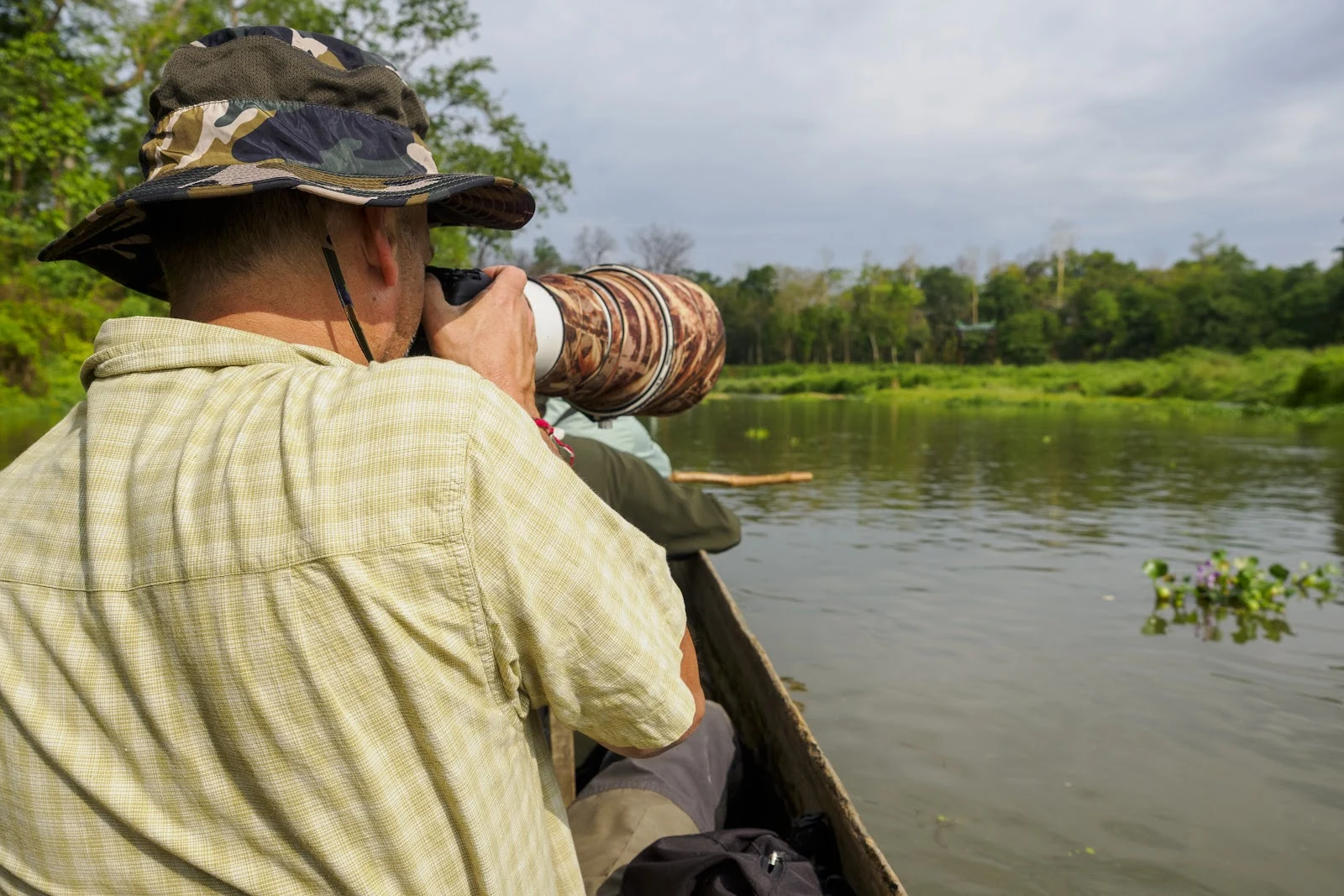
- Macro vs Telephoto: A 100mm macro or a 70-200mm f/2.8 lens captures the microscopic geometry of lizard scales and brilliant iris colors with stunning clarity.
- Filtered Jungle Canopy Lighting: Monitor skin patterns reveal rich tonal complexity under diffused forest light.
- Focus on the Eye: Pinpoint critical focus on the reptile's pupil and supraocular scales to create striking wildlife portraits.
6. Iconic Snakes of Nepal: From Burmese Pythons to the King Cobra
Nepal hosts over 80 species of serpents, of which fewer than twenty carry venom significant to humans. Iconic reptilian species encountered in our conservation reserves include:
- The Burmese Python (Python bivittatus): This giant non-venomous constrictor, exceeding 18 feet in length and 150 lbs, inhabits the marshes and riverine forests of Chitwan and Bardia. Capable of swallowing juvenile deer whole via flexible kinetic jaws, it spends weeks digesting silently inside hollow tree root cavities.
- The King Cobra (Ophiophagus hannah): The world's longest venomous snake (reaching up to 15 feet in Nepal). An obligate predator of other snakes, it is the only ophidian species where the female constructs a dedicated leaf-litter nest to incubate and fiercely guard her eggs.
- The White-lipped Pit Viper (Trimeresurus albolabris): A stunning fluorescent emerald-green arboreal viper with ruby-red eyes, hunting frogs and rodents in bamboo groves using infrared pit organs.
7. Evolutionary Sensory Biology: Infrared Pit Organs
Crotaline pit vipers feature bilateral loreal pit organs positioned between the eye and nostril. These specialized membranes detect radiant infrared thermal emissions with phenomenal sensitivity—registering temperature differentials as minute as 0.003°C! This enables the viper to construct a precise thermal target map of warm-blooded prey in absolute pitch-black darkness.
8. Field First-Aid & Wildlife Safety Matrix
| Emergency / Field Protocol | Medically Approved Response | Dangerous Prohibited Practice |
|---|---|---|
| Snakebite emergency response | Immobilize limb with splint, remain calm, rapid transfer | Applying tourniquets, cutting skin, or suction attempts |
| Night movement in camp | Use high-lumen headlamps pointed directly at footpaths | Walking barefoot or wearing open sandals in tall grass |
| Observing large monitor lizards | Maintain 5-meter buffer with open retreat line to water | Cornering against tree trunks or blocking burrow entrances |
9. Freshwater Turtles of the Terai: Guardians of the Wetlands
Drifting along the Rapti, Karnali, and Babai rivers reveals remarkable species of freshwater chelonians:
- Indian Softshell Turtle (Nilssonia gangetica): Lacking rigid bony scutes, it features a smooth leathery carapace and an elongated snorkel-like proboscis, enabling it to breathe while buried beneath the silt riverbed.
- Indian Roofed Turtle (Pangshura tecta): Frequently observed sunbathing in rows on floating driftwood logs alongside juvenile crocodilians in calm oxbow lakes.
10. Community Herpetological Conservation
Historically feared due to ancient superstitions, Nepal's reptiles are now actively protected through community conservation education. Farmers recognize monitors and non-venomous rat snakes as essential agricultural allies that naturally control destructive rodent populations in paddy fields.
11. Extended Herpetology FAQ
What should I do if I spot a python during a walking safari?
Stay calm and alert your naturalist guide. Pythons are docile, slow-moving non-venomous constrictors that pose zero risk when observed respectfully from a few paces away.
Are monitor lizards protected by law in Nepal?
Yes. Both the Bengal Monitor and Yellow Monitor are strictly protected under Schedule I of Nepal's National Parks and Wildlife Conservation Act, carrying severe legal penalties for hunting or disturbance.
Frequently Asked Questions (FAQ) — Reptiles of Nepal
Are Bengal monitor lizards dangerous to humans?
No. Monitor lizards are naturally shy and flee immediately into underground burrows or climb high into trees when humans approach. They only bite defensively if handled or cornered.
Are snake encounters common on walking safaris?
Very rare. Snakes detect seismic ground vibrations from footsteps and retreat long before travelers arrive. Encounters are occasional and expertly managed by guides.
Can we see chameleons in Nepal?
The Indian Chameleon (Chamaeleo zeylanicus) occurs in select dry forests of the Terai, but is exceptionally rare. The Changeable Garden Lizard is common and frequently observed.
To experience the full biological richness of Nepal's jungles, explore our Bardia Wilderness Explorer Tour or browse our Bardia Destination Guide.
12. Venom Biochemistry and Public Health Research in Nepal
The scientific study of snake venoms in Nepal represents a crucial nexus between wildlife ecology and tropical medicine. Research conducted across Terai health centers facilitates the development of advanced polyvalent antivenoms tailored to regional strains of the Spectacled Cobra (Naja naja), Common Krait (Bungarus caeruleus), and Russell's Viper (Daboia russelii).
Through community outreach promoting the universal use of bed nets, solar flashlights, and protective footwear during nighttime farming, Nepal has successfully reduced human envenomation while protecting these essential apex reptilian predators that maintain natural rodent equilibrium across the lowlands.
13. Secret Amphibian and Invertebrate Diversity of the Lowlands
The wetlands and forest understory of southern Nepal support an astonishing wealth of amphibians and invertebrates that sustain the rich reptile and avian food web:
- Indian Bullfrog (Hoplobatrachus tigerinus): A massive frog growing up to 7 inches in body length. During early monsoon rains, breeding males undergo a dramatic color transformation, turning bright canary-yellow with electric blue vocal sacs to serenade females.
- Indus Valley Toad (Duttaphrynus stomaticus): Emerging at twilight around seasonal forest pools, consuming thousands of nocturnal beetles and winged termites.
- Giant Forest Scorpion (Heterometrus swammerdami): A docile, heavy-bodied arachnid dwelling beneath rotting Sal logs, capturing large forest invertebrates with immense lobster-like pincers.
14. Extended Herpetological Travel Tips
When participating in our specialized herpetological safaris in Bardia, our guides provide UV blacklights during evening camp walks, allowing guests to observe the natural biofluorescence of scorpions and geckos against the forest leaf litter in complete safety.
15. Herpetological Biodiversity Conservation in the Terai
Reptiles represent an ancient evolutionary heritage that serves as a sensitive bio-indicator of freshwater wetland and forest soil health. Through collaborative research with Nepalese universities and international herpetological societies, our naturalist teams contribute to ongoing biodiversity inventories, documenting new localized records of geckos, skinks, and fossorial blind snakes across the undisturbed Sal woodlands of Western Nepal.
16. Seasonal Temperature Regimes and Reptilian Brumation Cycles
During the cooler winter months from late December to late January, night temperatures in the Terai can drop to 8°C (46°F). Lowland reptiles enter a state of physiological brumation, retreating deep inside abandoned termite chambers, hollow Sal root systems, and subterranean burrows. As morning solar radiation warms the sandy riverbanks, monitor lizards and pythons emerge to bask, providing photographers with extraordinary opportunities for extended, peaceful observation.
17. Micro-Habitat Conservation in Buffer Zone Wetlands
Preserving undisturbed dead wood, leaf litter layers, and natural oxbow pools is vital for the survival of Nepal's saurian and ophidian biodiversity. Sustainable ecotourism directly finances habitat protection initiatives that ensure these ancient reptile lineages thrive undisturbed across the Terai floodplains.
18. Conclusion: The Living Prehistoric Soul of Nepal
Encountering a giant monitor lizard or observing an agama's crimson courtship dance provides a breathtaking glimpse into Earth's ancient natural history, completing an unforgettable wilderness safari experience in Nepal.
By respecting safe observation distances and supporting certified naturalist guides, you help safeguard this irreplaceable reptilian wilderness for future generations of wildlife enthusiasts and researchers.
Thermoregulation and Activity Cycles of Terai Reptiles
Observing reptiles in a subtropical wilderness depends entirely on diurnal and thermal cycles. As ectothermic animals, monitor lizards, agamas, and snakes synchronize their movements and foraging behavior with the forest microclimate gradients. During the cooler winter months (November to February), Bengal monitor lizards patiently wait for the morning mist to dissipate before basking on fallen deadwood and sun-drenched sandbanks along river corridors. This provides ideal opportunities for wildlife photographers equipped with sharp telephoto lenses.
During the pre-monsoon heat (April to June), when temperatures frequently exceed 40°C across the plains of Bardia and Chitwan, reptiles shift their behavior: they seek the deep shade of gallery forests during midday hours and become active during dawn and twilight. Silent observational hides near residual waterholes and shaded riverbanks reveal the incredible herpetological richness of Nepal while strictly respecting wildlife tranquility.