
Quick Summary: Suklaphanta National Park & Swamp Deer
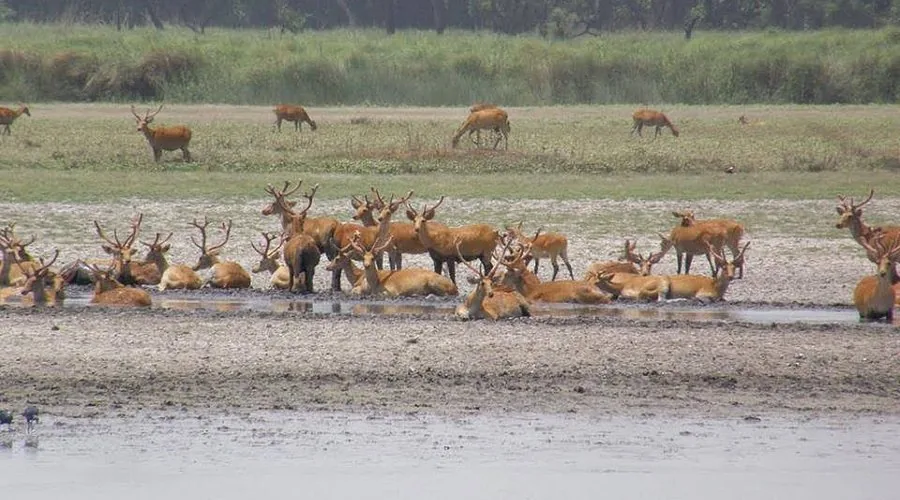
- The World's Largest Herd: Over 2,200 swamp deer (barasingha) gather across the 54 km² open grassland savannah—the largest single concentration on Earth.
- Serengeti of Nepal: Vast open floodplains surrounded by Sal forest along the Mahakali River on the far-western Indian border.
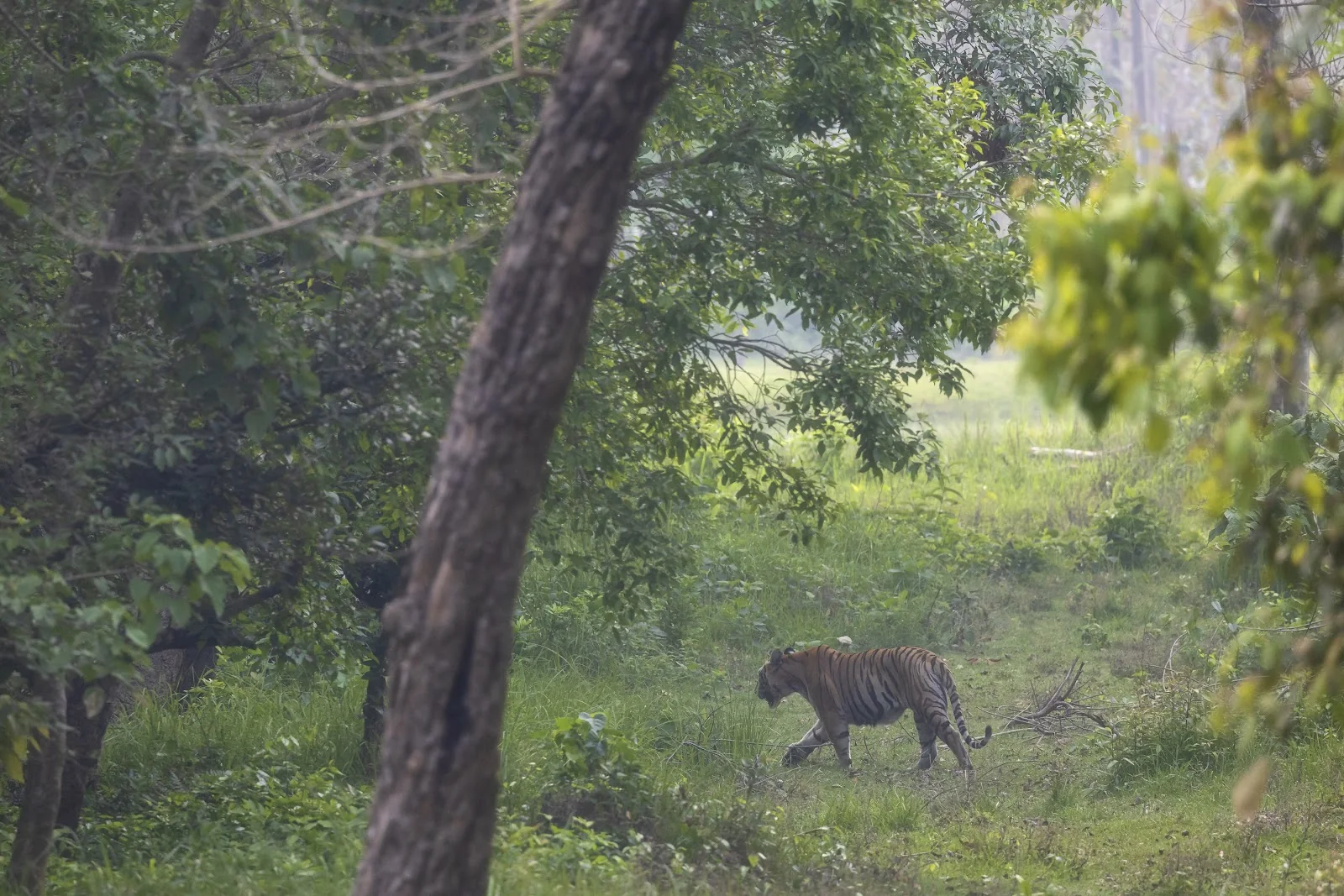
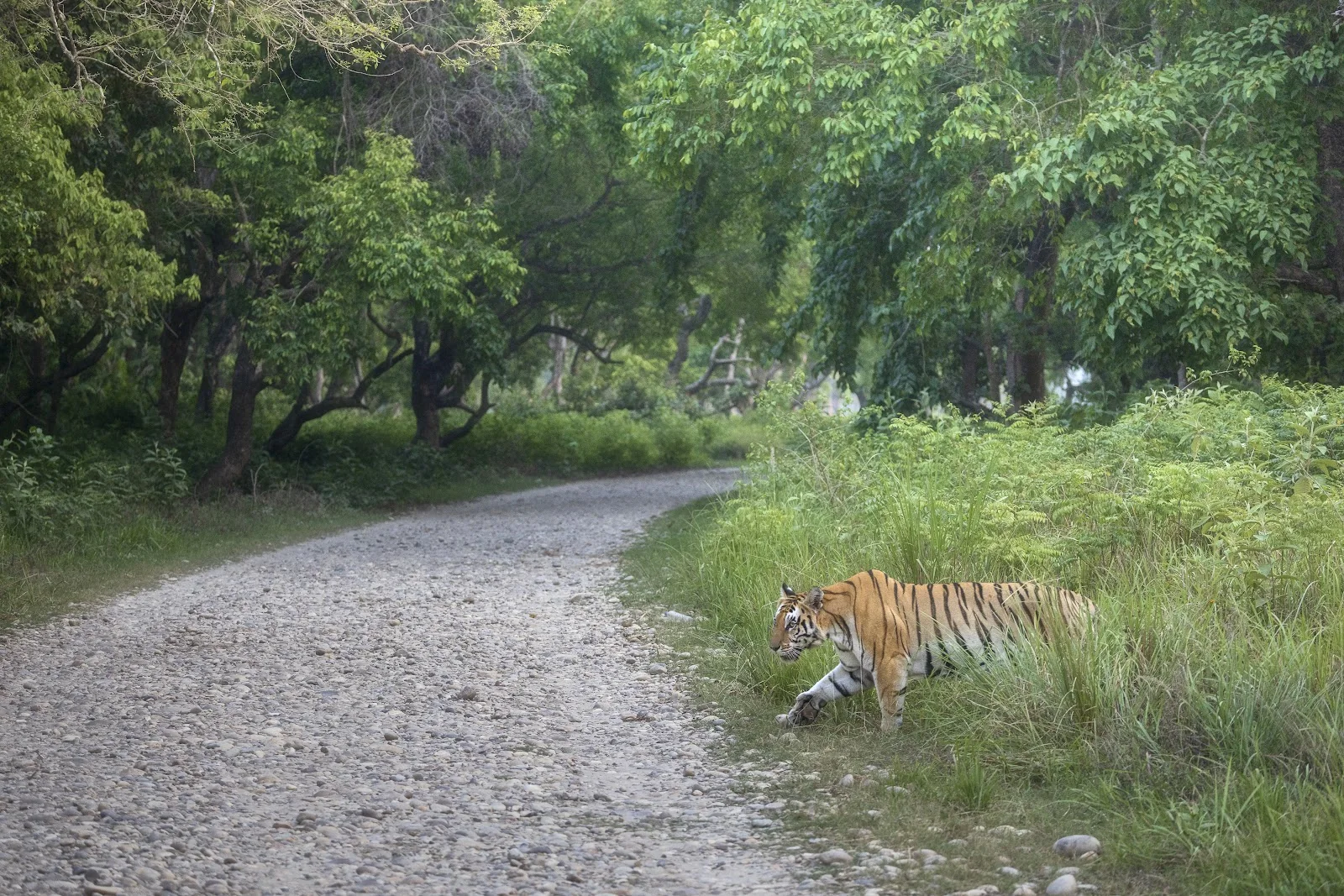
- Predator Dynamics: Thriving resident Bengal tiger population hunting in wide-open grassland terrain, alongside leopards and wild elephants.
- Critical Bird Sanctuary: Global stronghold for the critically endangered Bengal florican (Houbaropsis bengalensis) and over 420 bird species.
At the westernmost tip of Nepal, far beyond the standard tourist trails of Kathmandu and Pokhara, lies an untouched nature reserve that resembles the open plains of East Africa far more than dense Himalayan foothills: Suklaphanta National Park (Shuklaphanta National Park). Encompassing 305 km² along the Mahakali River bordering India, Suklaphanta protects the largest uninterrupted grassland in the entire Terai: a 54 km² phanta of towering grasses where the resonant bellows of the barasingha echo at dawn.
1. The Barasingha: The Twelve-Tined Lord of the Wet Grasslands
Known in Hindi and Nepali as Barasingha ("twelve-horned"), the swamp deer (Rucervus duvaucelii) is one of South Asia's most majestic ungulates. Mature stags boast spectacular multi-tined antlers with 10 to 14 points, sweeping back in graceful crowns.
- Morphology & Wetland Adaptations: Broad, splayed hooves with flexible joints allow them to bound effortlessly across treacherous marshlands, quagmires, and flooded riverbanks where heavier predators sink.
- The Spectacular Spring Aggregation: Between February and April, when seasonal fires clear the old dry grass, fresh emerald shoots carpet the Great Phanta. Over 2,000 swamp deer assemble in colossal herds that stretch to the horizon—a breathtaking spectacle unmatched anywhere else on the globe.
2. Suklaphanta Phanta: 54 km² of Pristine Grassland Habitat
The core jewel of the park is the Great Phanta, an immense savannah mosaic of alluvial grasses, oxbow waterholes (taal), and scattered patches of Sal and silk-cotton trees. Unlike the dense rainforests of Chitwan where visibility is restricted to a few meters, Suklaphanta offers sweeping vistas across open savannah plains:
- Predator-Prey Dynamics in the Open: Watching Bengal tigers patrol the open grasslands at dawn feels like watching African lions on the Serengeti. Here, stalking requires stealthy use of drainage ditches and tall grass cover.
- Rani Tal & River Systems: The pristine oxbow lake of Rani Tal serves as a vital watering refuge for wild Asian elephants, marsh muggers, and enormous herds of spotted deer (chital).
3. Exceptional Avifauna: Global Refuge of the Bengal Florican
For international ornithologists, Suklaphanta is sacred ground. The park is home to one of the world's most critical breeding populations of the critically endangered Bengal Florican (Houbaropsis bengalensis). During the spring mating season, males perform astonishing aerial courtship displays, leaping several meters into the sky with rhythmic wing-flaps. Other notable avian species include the swamp francolin, sarus crane, and great slaty woodpecker.
Rara Lake & Far-West Wildlife Expedition
Pioneer the ultimate wild frontier combining Suklaphanta's vast savannahs, Bardia's tiger tracking, and the alpine sapphire waters of Lake Rara.
Practical Expedition Guide: How to Visit Suklaphanta
- How to Reach: Fly from Kathmandu to Dhangadhi Airport (70 minutes on Buddha Air), followed by a 1.5-hour private road transfer to the park entrance at Majhgaon (near Mahendranagar).
- Best Season: November through April. January to April offers optimal grassland visibility following controlled winter burns.
- Safari Format: Open-top 4x4 jeep safaris and guided perimeter nature walks with senior local wildlife rangers.
To explore Suklaphanta's wild grasslands and track the world's largest swamp deer herds, discover our 15-day expedition Nepal Wildlife Safari 15 Days or our remote western circuit Rara Lake & Bardia Expedition.
Field Expertise from Pawan & Robin: How to Maximize Your Wildlife Sightings in Nepal
Spotting iconic megafauna in Nepal's Terai lowlands is never a matter of luck—it is the result of disciplined tracking and local ecological knowledge. Alongside Pawan—our master tracker born in Bardia, president of the local NAGA conservation association, and field collaborator for BBC wildlife film crews—we structure every safari day around the true biological rhythms of the Royal Bengal tiger (Panthera tigris tigris), the greater one-horned rhinoceros (Rhinoceros unicornis), and the Indian leopard.
1. Reading Fresh Pugmarks and Decoding Jungle Alarm Calls
During a walking safari in Bardia or a private 4x4 jeep track, the first 90 minutes after sunrise are critical. Our naturalist guides inspect the sandy riverbeds (sots) and the banks of the Karnali and Babai rivers to locate fresh pugmarks, judge track age by edge moisture, and check Sal tree trunks (Shorea robusta) for territory claw marks and scent-spraying. The moment a spotted deer (chital), sambar, or gray langur barks a sharp, repetitive alarm call, our trackers triangulate the prey's line of sight to position our small group silently at a natural river crossing.
2. Choosing the Right National Park for Your Schedule
- If you have 8 to 12 days: Head straight to Bardia National Park on our flagship 9-Day Tiger & Rhino Tracking Expedition. With 968 km² of pristine wilderness, roughly 125 adult tigers, and less than 3% of Chitwan's visitor numbers, Bardia delivers Asia's most authentic walking safari experience.
- If you are combining Kathmandu, Pokhara, and the jungle in 12 to 14 days: Chitwan National Park fits naturally between Kathmandu and the Annapurna foothills, as featured in our Chitwan Nature & Culture Safari and our 14-Day Grand Tour of Nepal.
- If you are a dedicated wildlife photographer or birder: Combining Suklaphanta and Bardia (12-Day Wild West Terai Expedition) unlocks the world's largest herds of swamp deer (Barasingha), the critically endangered Bengal florican, and Nepal's highest tiger density per square kilometer.
3. Uncompromising Ethics: Zero Captive Elephants & Direct Tharu Community Support
Unlike mass-market operators that still promote elephant-back rides in buffer zones, Jungle Nepal Adventure enforces a strict ethical charter: zero captive elephant activities, small groups capped at 4–10 travelers, family-run Tharu eco-lodges, and direct financial contributions from every booking to Bardia's Community-Based Anti-Poaching Units (CBAPU). To compare all our itineraries, transparent prices, and seasonal tiger sighting statistics, visit our comprehensive explore our ethical Nepal safari tours hub.