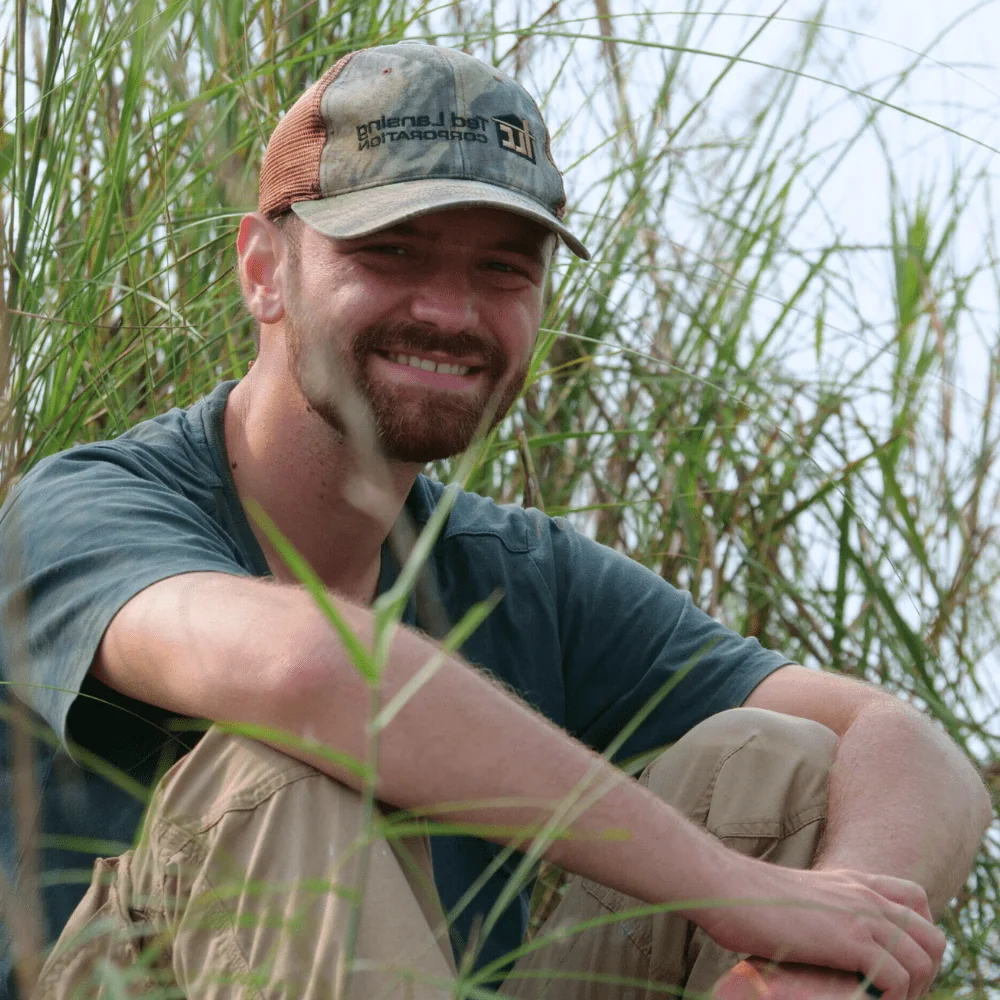
At a Glance: Standard Tour Groups vs. Authentic Micro-Groups
In modern travel marketing, big tour operators label groups of 16 to 24 travelers as "small groups." In Nepal's wilderness, this approach is disastrous: large crowds generate noise, scatter apex predators, and dilute personal safety. At Jungle Nepal Adventure, our expeditions are strictly capped at 4 to 10 travelers, guided by 2 dedicated native master trackers.
The Wildlife Reality: Why Big Groups See Less
Picture a conventional mass safari in Chitwan: three dozen tourists crammed into open buses or rumbling jeeps bumper-to-bumper. Slamming vehicle doors, loud chatter, and camera shutter bursts guarantee that tigers and elusive leopards stay deep in dense thickets.
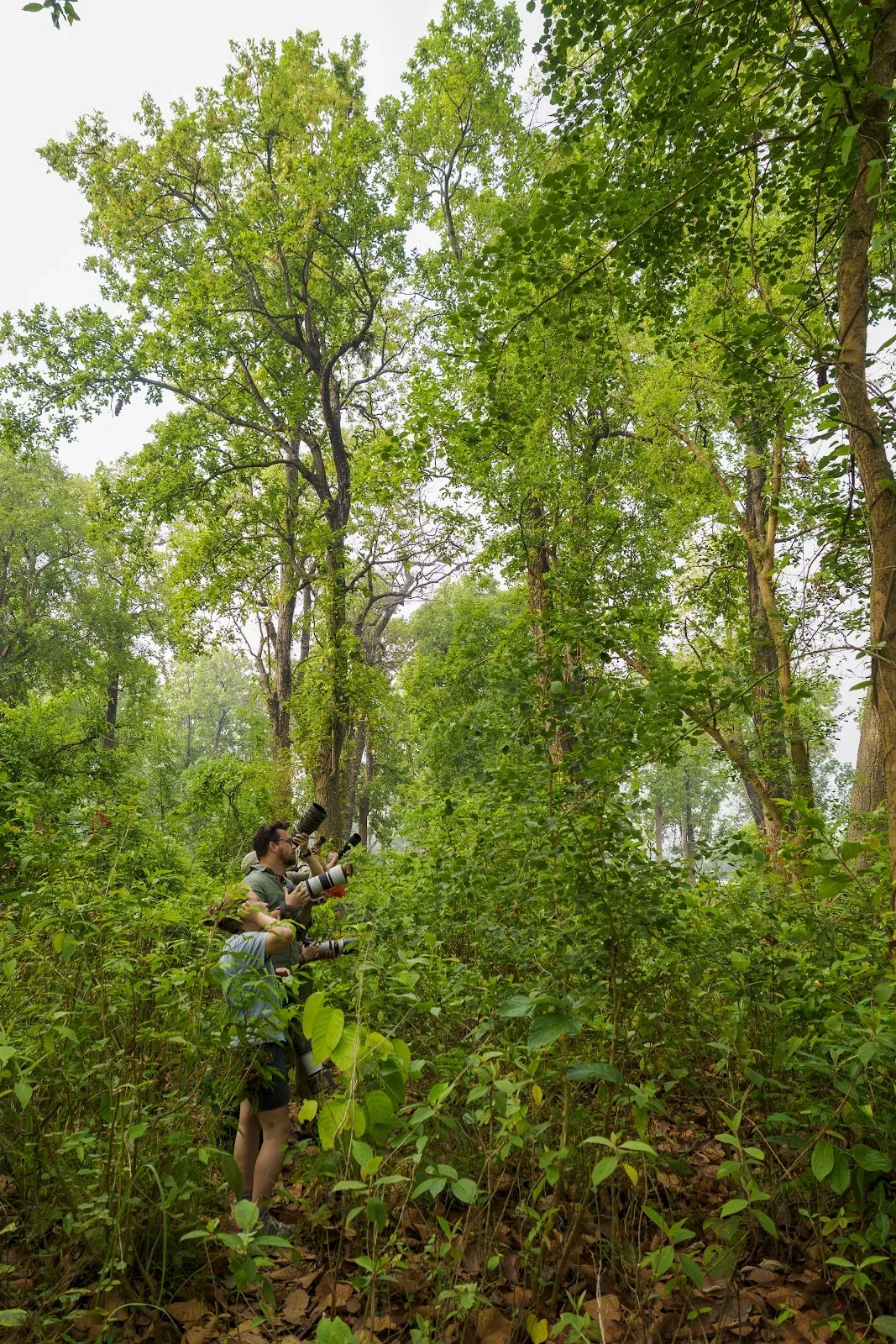
Tracking an apex predator requires absolute stealth. You need to hear the subtle snap of a twig, the sharp distress call of a spotted deer signaling a stalking feline, or the deep rumble of an elephant herd approaching a riverbank. Silence is your greatest tool, which is why all departures on tours like Bardia Explorer (5 Days) are strictly capped at 10 participants.
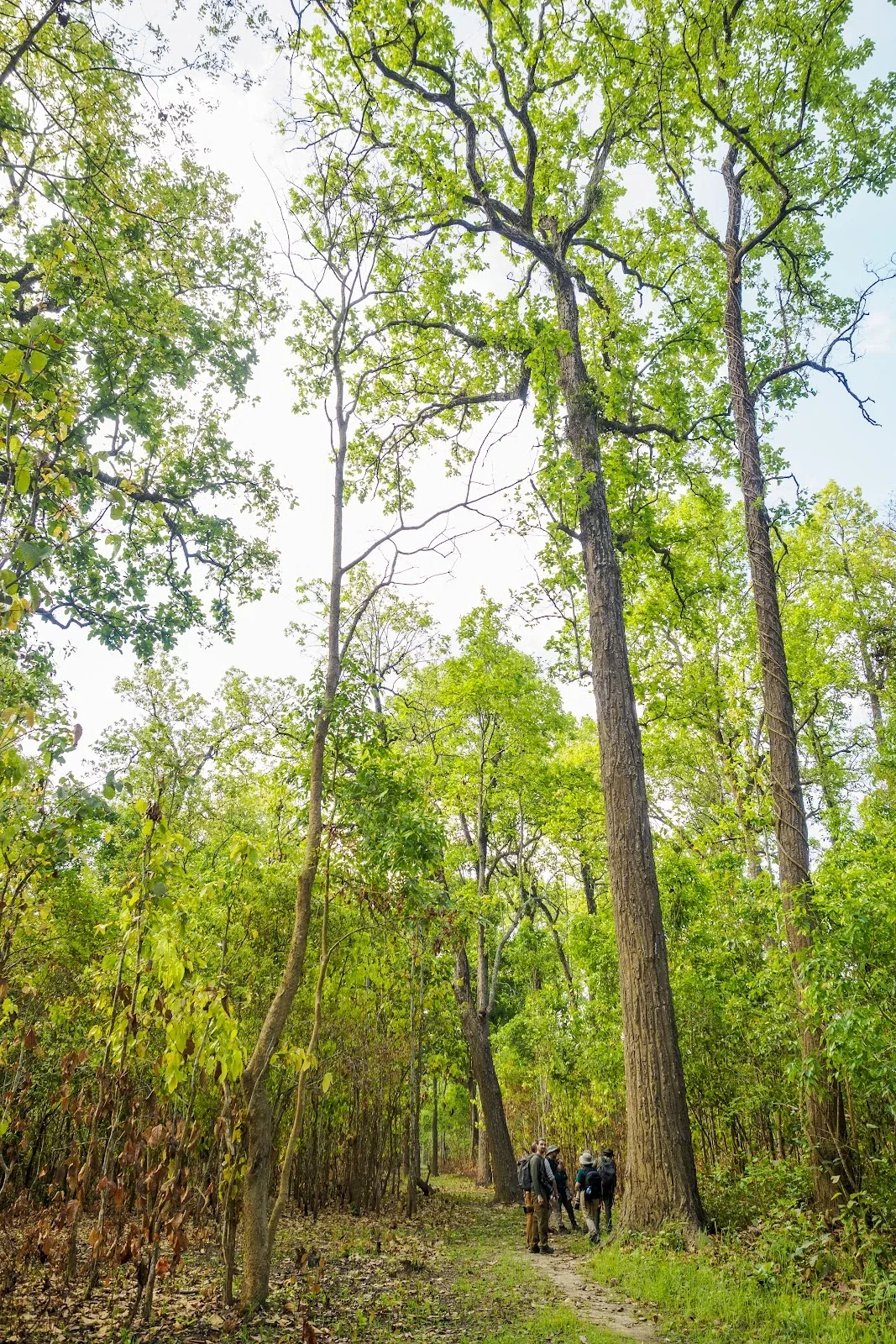
1. Safety First: The 2-Tracker Protocol for 4 to 8 Travelers
During on-foot walking safaris, safety is paramount. Managing 16 tourists on a forest trail is nearly impossible: the group strings out over 60 meters, directions get lost, and guide vigilance is compromised.
In our micro-groups, our safety framework is meticulous:
- Lead Tracker: Scans fresh ground tracks, reads wind patterns to keep human scent downwind, and inspects blind corners.
- Compact Marching Formation: All travelers remain within 10 meters of each other in a disciplined line.
- Tail Tracker: Guards the rear of the group, ensuring no one lags behind while watching flanks for wildlife movement, essential on immersive trips like Bardia Wild Night (3 Days).
2. Genuine Human Camaraderie by the Fire
Micro-group travel fosters authentic bonds that mass tours can never replicate. You aren't merely passive sightseers; you become an expedition team.
Evenings at our lodge or riverside camp (as experienced during Deep into the Wild: Babai Special 5 Days) are spent around a rustic wooden table or an open bonfire. Travelers review the day's wildlife photos, share laughs, and listen to Pawan and Kiran narrate Tharu folklore and tales from 20 years of bushcraft. This shared spirit also shines in our rich cultural journeys, like the Sacred Dashain Festival Special.
3. Optimal Value: Shared Costs Without Sacrificing Exclusivity
Embarking on a 100% private solo safari can be cost-prohibitive, as vehicle charters, park guide fees, and fuel costs fall entirely on one or two people.
Micro-groups of 4 to 10 travelers pool these fixed logistical expenses, delivering the competitive pricing of an organized tour alongside the intimacy, responsiveness, and privilege of a private safari.
Our Signature Small-Group Expeditions (4 to 10 Travelers):
Experience wild Nepal in an intimate, safety-focused micro-group:
- Bardia Explorer – 5 Days in the Wild Jungle: our top-rated wildlife tracking expedition.
- Bardia Wild Night (3 Days): authentic tented bush camping at the forest edge.
- Babai Special Experience (5 Days): deep tracking into the untouched river valley.
Field Expertise from Pawan & Robin: How to Maximize Your Wildlife Sightings in Nepal
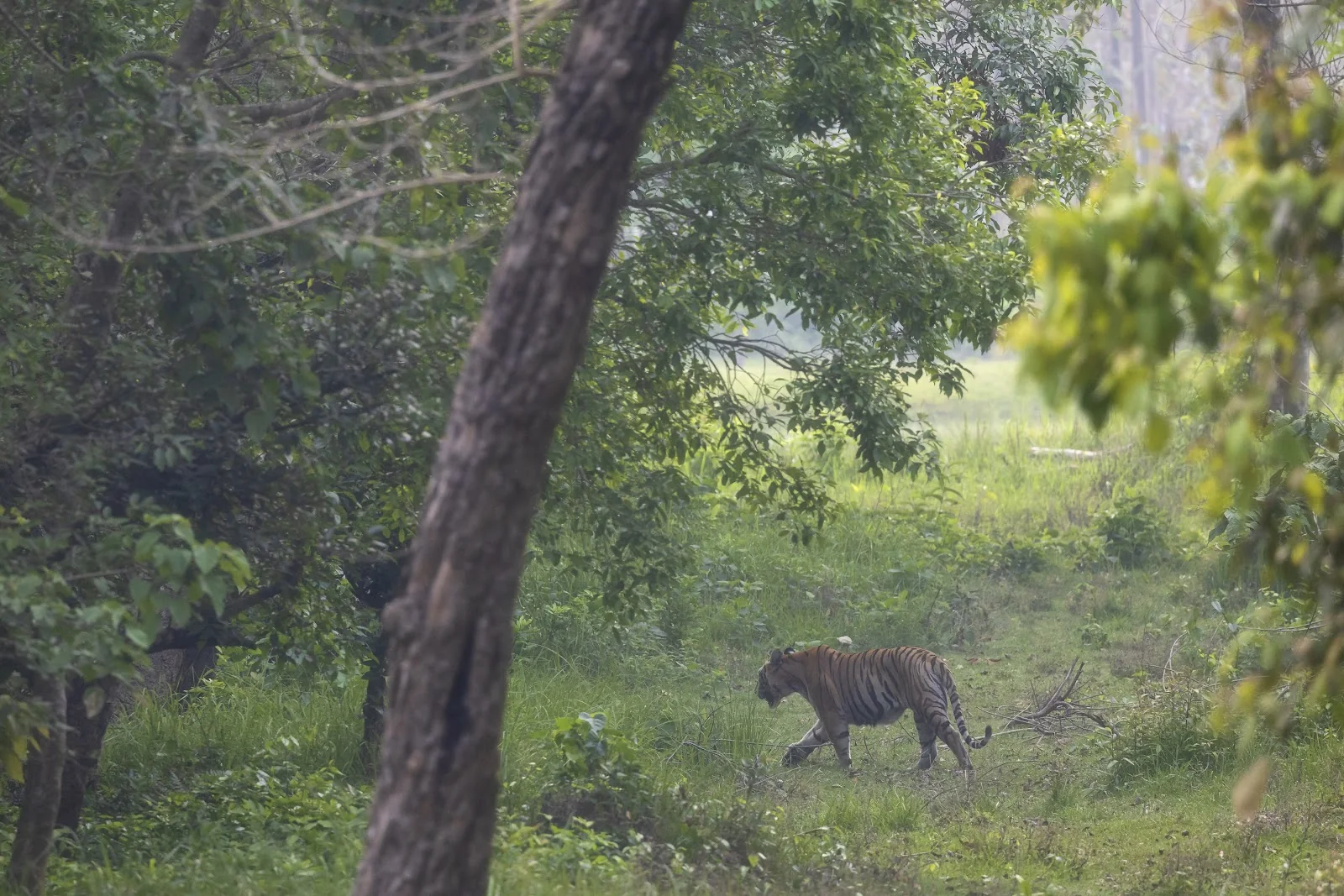
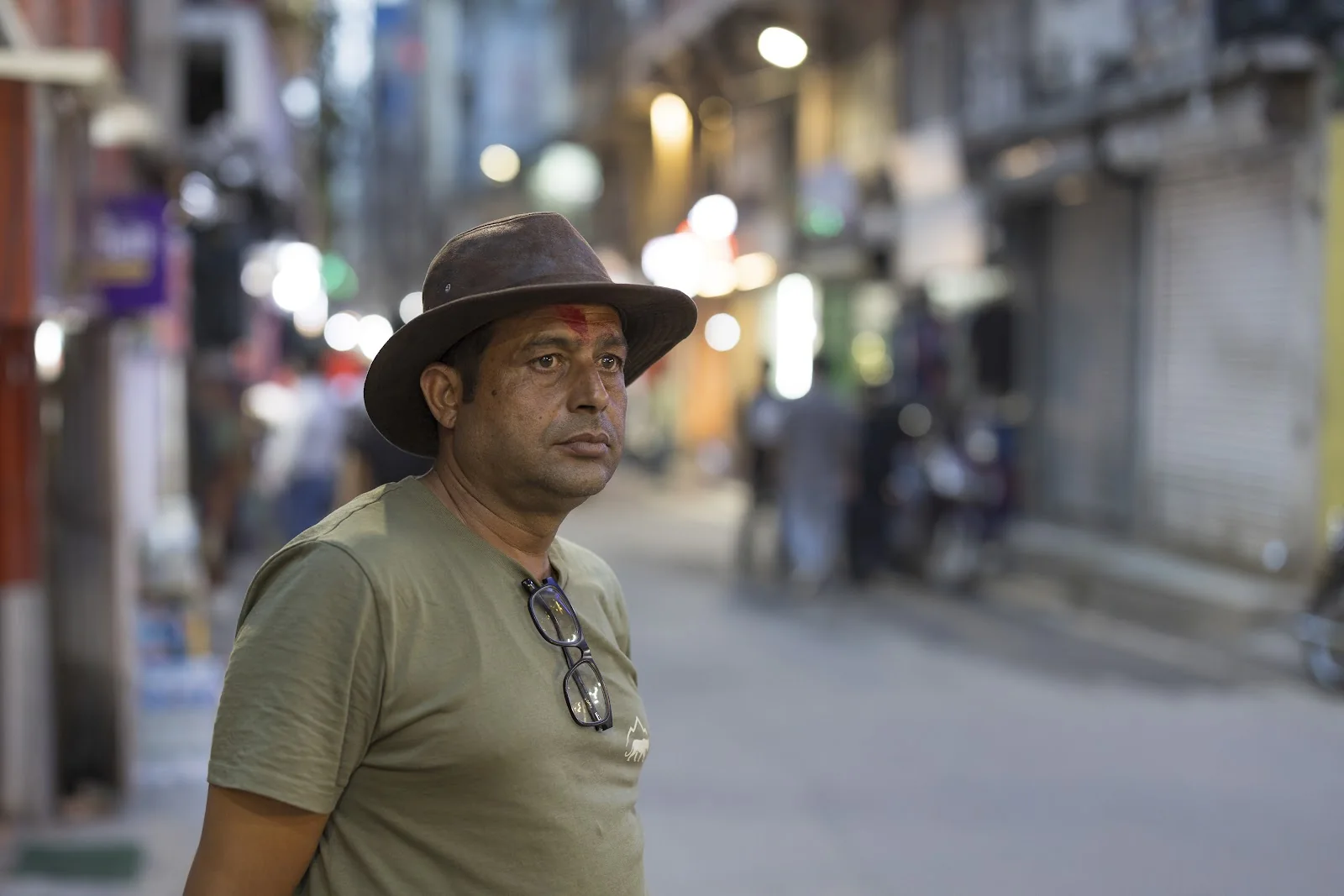
Spotting iconic megafauna in Nepal's Terai lowlands is never a matter of luck—it is the result of disciplined tracking and local ecological knowledge. Alongside Pawan—our master tracker born in Bardia, president of the local NAGA conservation association, and field collaborator for BBC wildlife film crews—we structure every safari day around the true biological rhythms of the Royal Bengal tiger (Panthera tigris tigris), the greater one-horned rhinoceros (Rhinoceros unicornis), and the Indian leopard.
1. Reading Fresh Pugmarks and Decoding Jungle Alarm Calls
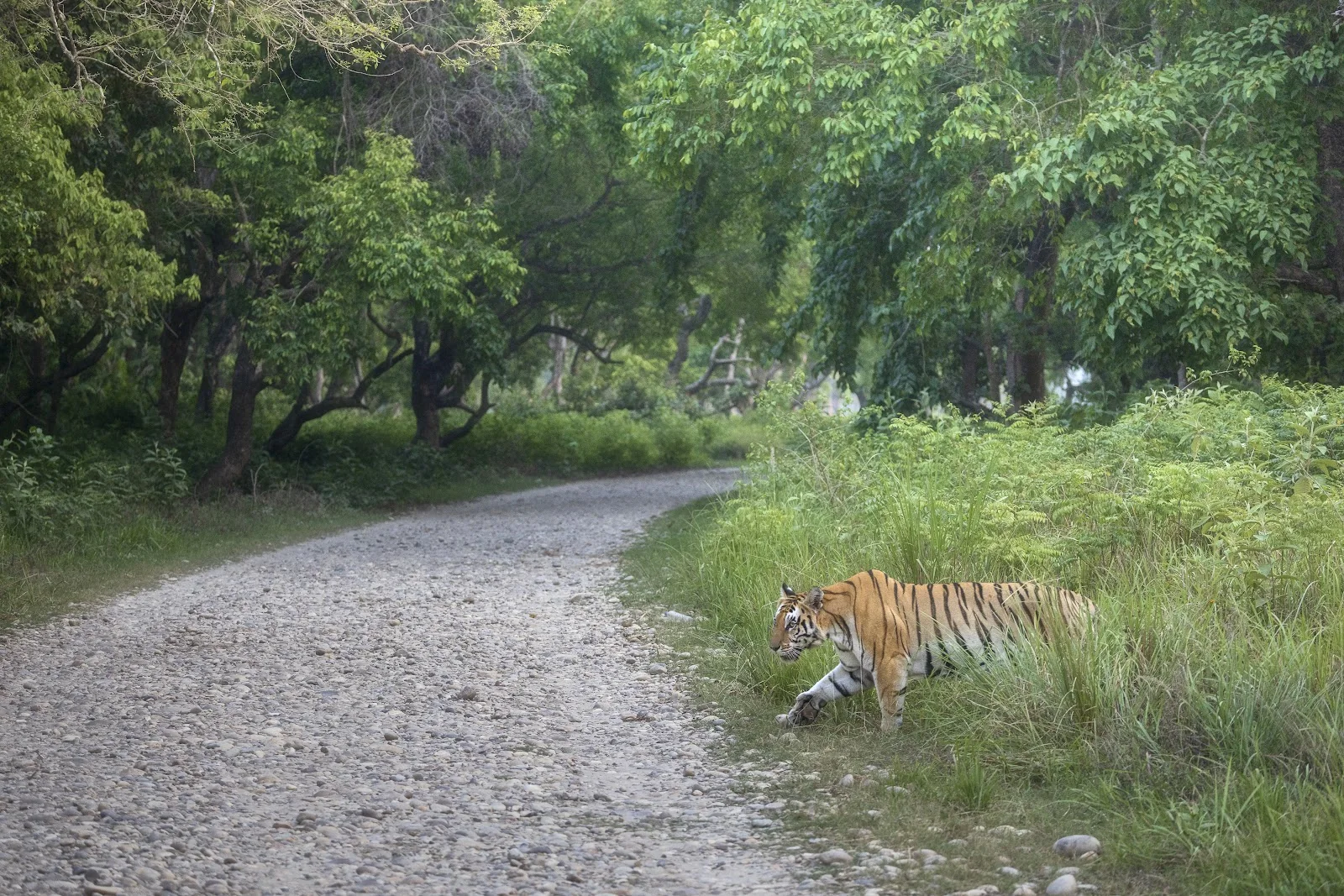
During a walking safari in Bardia or a private 4x4 jeep track, the first 90 minutes after sunrise are critical. Our naturalist guides inspect the sandy riverbeds (sots) and the banks of the Karnali and Babai rivers to locate fresh pugmarks, judge track age by edge moisture, and check Sal tree trunks (Shorea robusta) for territory claw marks and scent-spraying. The moment a spotted deer (chital), sambar, or gray langur barks a sharp, repetitive alarm call, our trackers triangulate the prey's line of sight to position our small group silently at a natural river crossing.
2. Choosing the Right National Park for Your Schedule
- If you have 8 to 12 days: Head straight to Bardia National Park on our flagship 9-Day Tiger & Rhino Tracking Expedition. With 968 km² of pristine wilderness, roughly 125 adult tigers, and less than 3% of Chitwan's visitor numbers, Bardia delivers Asia's most authentic walking safari experience.
- If you are combining Kathmandu, Pokhara, and the jungle in 12 to 14 days: Chitwan National Park fits naturally between Kathmandu and the Annapurna foothills, as featured in our Chitwan Nature & Culture Safari and our 14-Day Grand Tour of Nepal.
- If you are a dedicated wildlife photographer or birder: Combining Suklaphanta and Bardia (12-Day Wild West Terai Expedition) unlocks the world's largest herds of swamp deer (Barasingha), the critically endangered Bengal florican, and Nepal's highest tiger density per square kilometer.
3. Uncompromising Ethics: Zero Captive Elephants & Direct Tharu Community Support
Unlike mass-market operators that still promote elephant-back rides in buffer zones, Jungle Nepal Adventure enforces a strict ethical charter: zero captive elephant activities, small groups capped at 4–10 travelers, family-run Tharu eco-lodges, and direct financial contributions from every booking to Bardia's Community-Based Anti-Poaching Units (CBAPU). To compare all our itineraries, transparent prices, and seasonal tiger sighting statistics, visit our comprehensive explore our ethical Nepal safari tours hub.