
The rhythmic splash of a bamboo push-pole sinking into the riverbed, morning mist parting gently under the first golden rays of dawn, and suddenly, just thirty feet off your bow, a greater one-horned rhinoceros emerges from the riverbank mud to drink. Embarking on a canoe or rafting safari in Nepal means exploring the jungle via its most pristine, silent, and exhilarating pathway. Far from the roar of safari jeeps, the river becomes a living amphitheater revealing the untamed wildlife of the Terai lowlands.
This comprehensive expedition guide covers every dimension of aquatic safaris in Nepal: the technical differences between traditional dugouts and inflatable expedition rafts, the iconic waterways of Chitwan and Bardia, vital river safety protocols, and expert naturalist strategies for encountering tigers, elephants, gharials, and Gangetic dolphins from the water.
1. Traditional Dugout Canoe (Dunga) vs Expedition Rafting: Which Journey Suits You?
Aquatic safaris in Nepal offer two distinct yet complementary styles of wilderness travel. Understanding their specific operational profiles and landscapes will help you tailor the perfect adventure.
The Traditional Tharu Dugout Canoe (Dunga): Pure Stealth
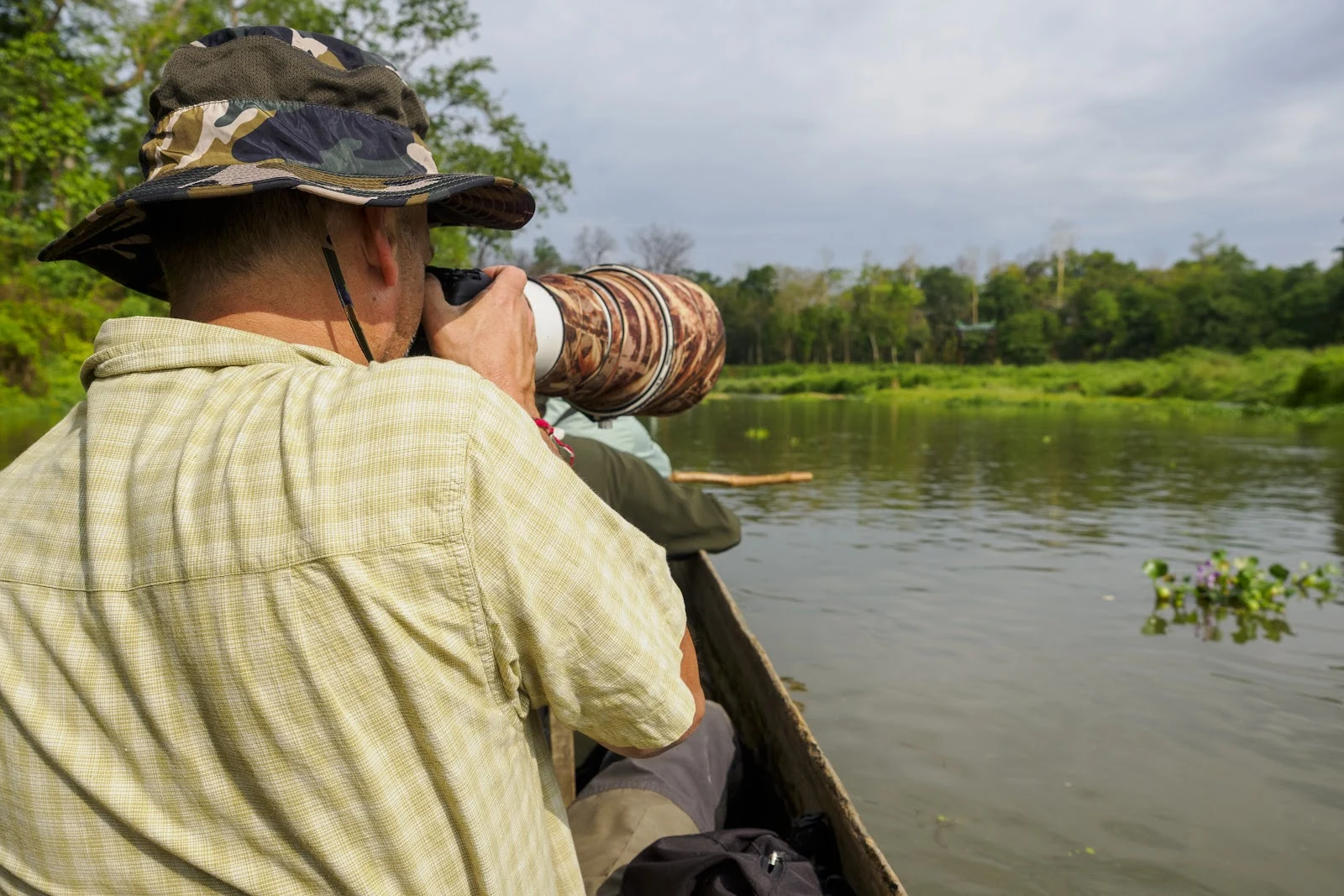
Hand-carved from a single massive tree trunk (typically Bombax ceiba, the silk cotton tree valued for its natural buoyancy and water resistance), the traditional canoe—called a Dunga in Nepali—is a masterpiece of indigenous craftsmanship. Guided by a skilled boatman using a single long bamboo pole (Lathi), it draws only a few inches of water.
The greatest advantage of the canoe is absolute silence. Without the slap of paddle blades or engine vibrations, you do not trigger the flight response of land mammals coming down to drink. It is the premier craft for low-angle photography of kingfishers, waders, spotted deer, and basking crocodilians.
The Inflatable Expedition Raft: Exploring Grand Wilderness Rivers
On larger, faster-flowing rivers like the mighty Karnali or the secluded canyons of the Babai in Bardia, heavy-duty self-bailing whitewater rafts are the craft of choice. Engineered to navigate Class I to III rapids with supreme stability, expedition rafts facilitate multi-day wilderness journeys with overnight camping on untouched river islands inaccessible by road.
Rafts provide ample storage capacity for dry bags, camping gear, fresh water supplies, and heavy telephoto lenses housed in waterproof Pelican cases.
Comparison Matrix: Canoe Drift vs Wilderness Raft Expedition
| Parameter | Traditional Dugout Canoe (Dunga) | Expedition Rafting Safari |
|---|---|---|
| Typical Duration | 1 to 3 hours (dawn or late afternoon) | 1 to 4 full expedition days with tented bivouacs |
| Primary National Park | Chitwan (Rapti and Narayani Rivers) | Bardia (Karnali, Geruwa & Babai Rivers) |
| Physical Requirement | Relaxed, seated on low wooden benches | Moderate adventure (wild jungle camping) |
| Key Wildlife Targets | Gharials, kingfishers, rhinos, storks | Bengal tigers, Gangetic dolphins, wild elephants |
| Camera Stability | Narrow hull; requires careful, slow body movements | Exceptionally stable platform; wide field of view |
2. Nepal's Premier River Safari Destinations
1. The Rapti River in Chitwan: The Great Rhino Highway
Forming the northern boundary of Chitwan National Park, the Rapti River is one of South Asia's most biodiverse freshwater ecosystems. Early in the morning, mystical fog banks hover above the water while golden dawn light illuminates the towering elephant grass (Saccharum ravennae). Greater one-horned rhinos frequently bathe in the shallows to cool their massive bodies and coat their skin in protective mud.
A typical Rapti canoe drift covers several scenic miles, often concluding near the confluence of the Narayani River where travelers disembark directly into guided walking safaris through Sal forest canopies.
2. The Karnali River in Bardia: The Wild Realm of Dolphins and Tigers
Originating in the glacial plateaus of Western Tibet near sacred Mount Kailash, the Karnali is Nepal's longest and most powerful river. As it enters Bardia's alluvial plains, it braids into multiple secluded channels flanking pristine riverine islands. This untamed labyrinth is one of the last global habitats for the endangered Gangetic River Dolphin (Platanista gangetica), a functionally blind freshwater cetacean that hunts using ultrasonic echolocation.
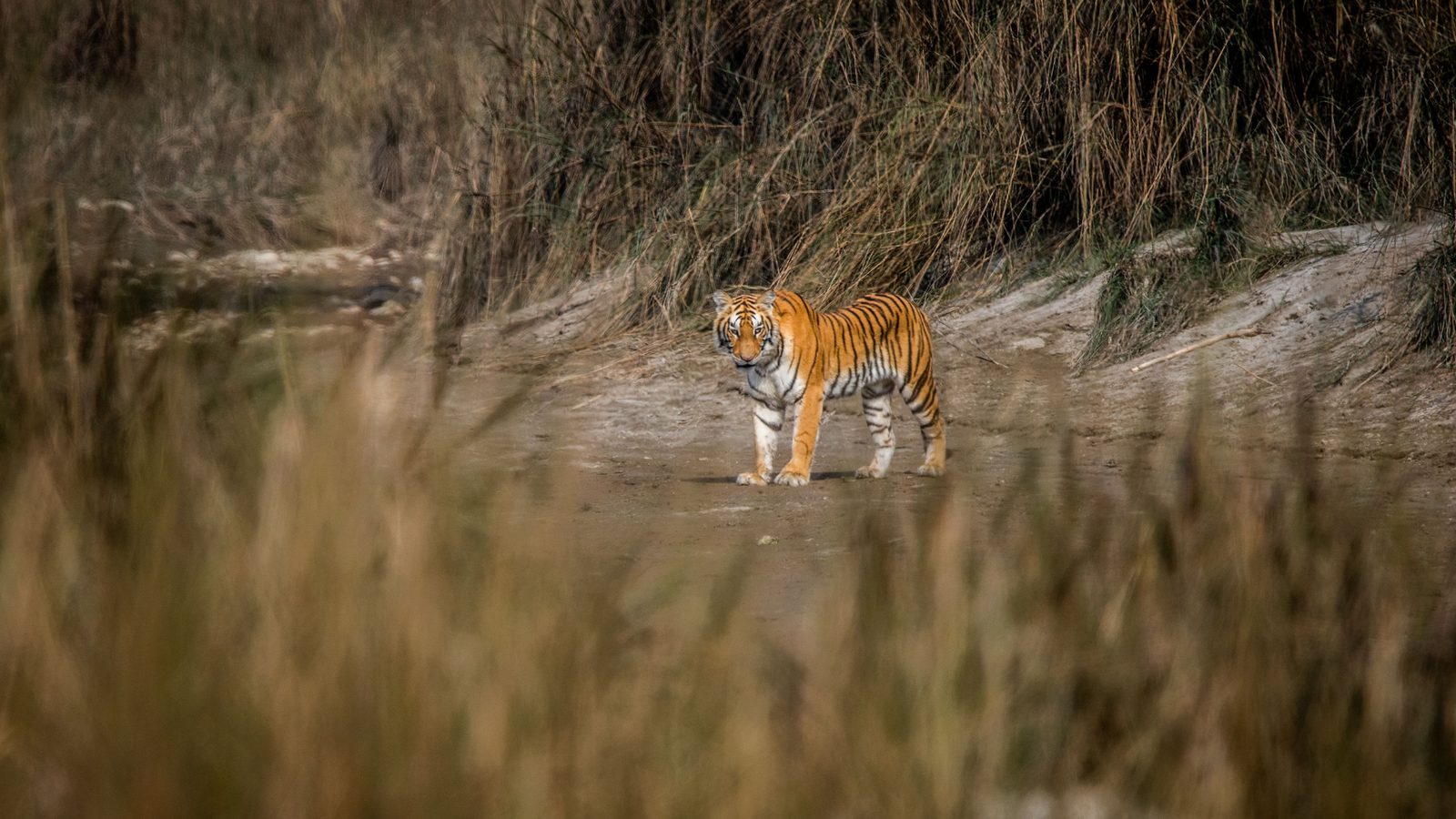
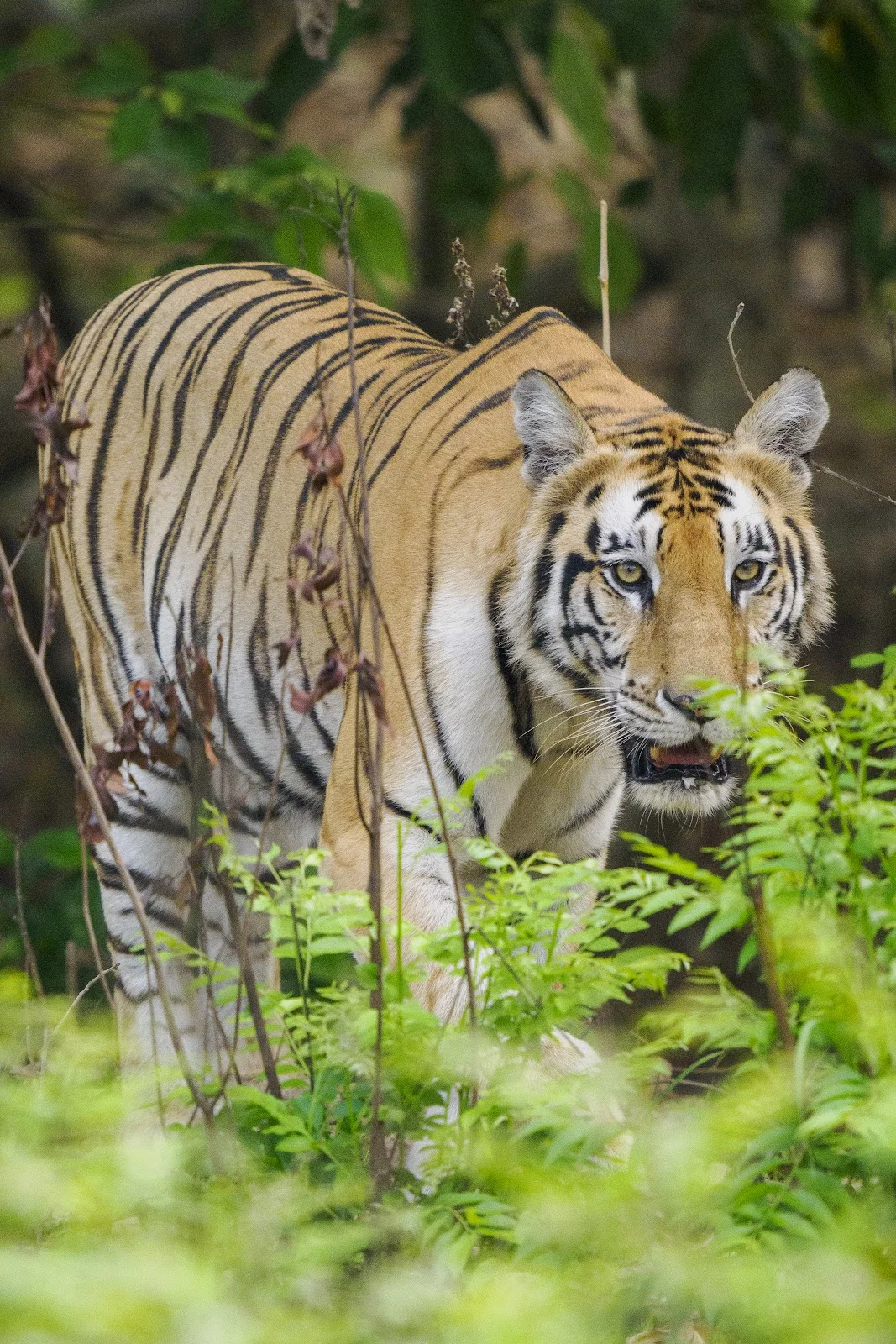
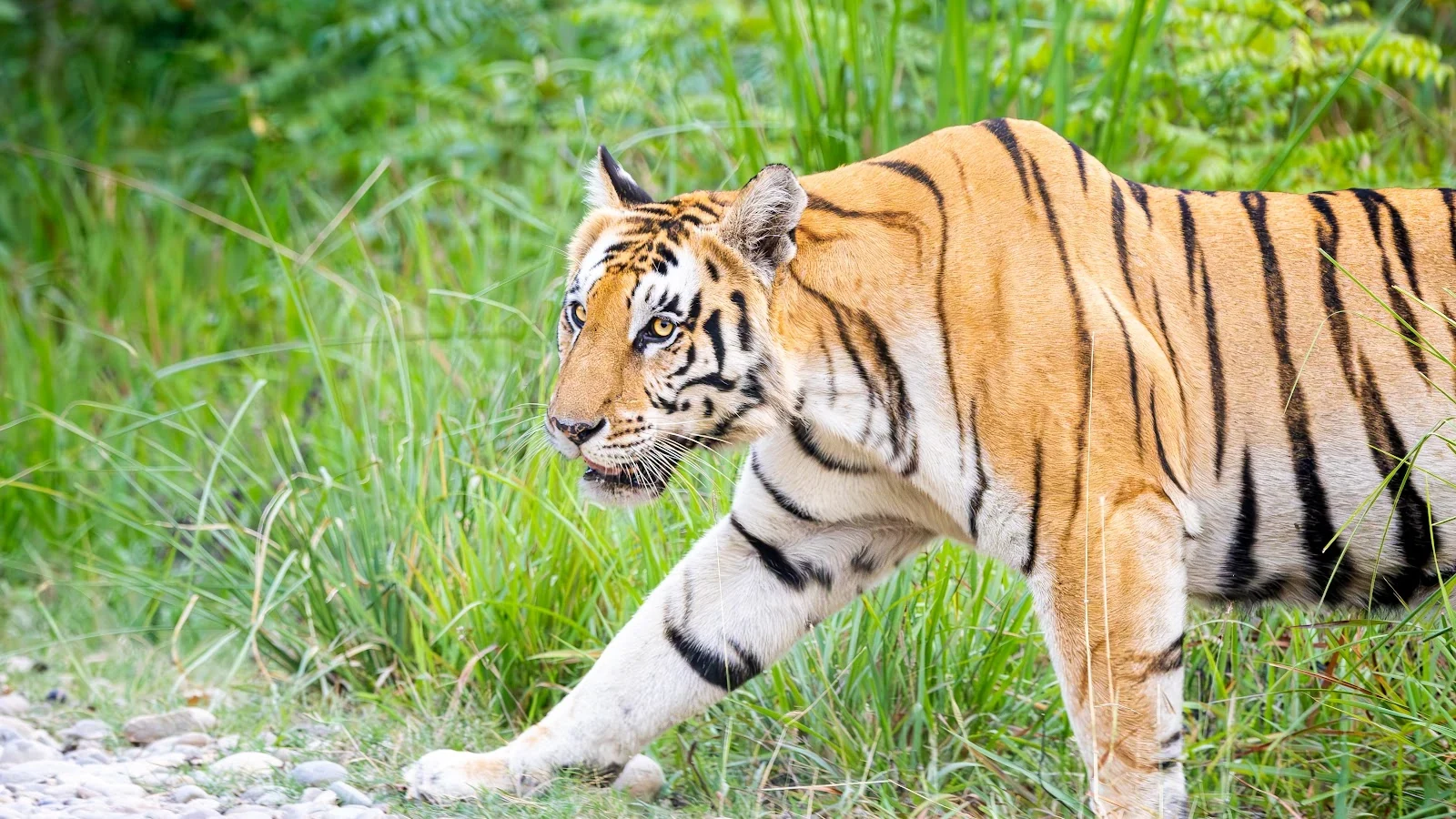
Drifting down the Karnali also provides exceptional opportunities to spot Royal Bengal Tigers crossing between forested river islands at twilight.
3. The Babai River Valley: A Forgotten Wilderness Canyon
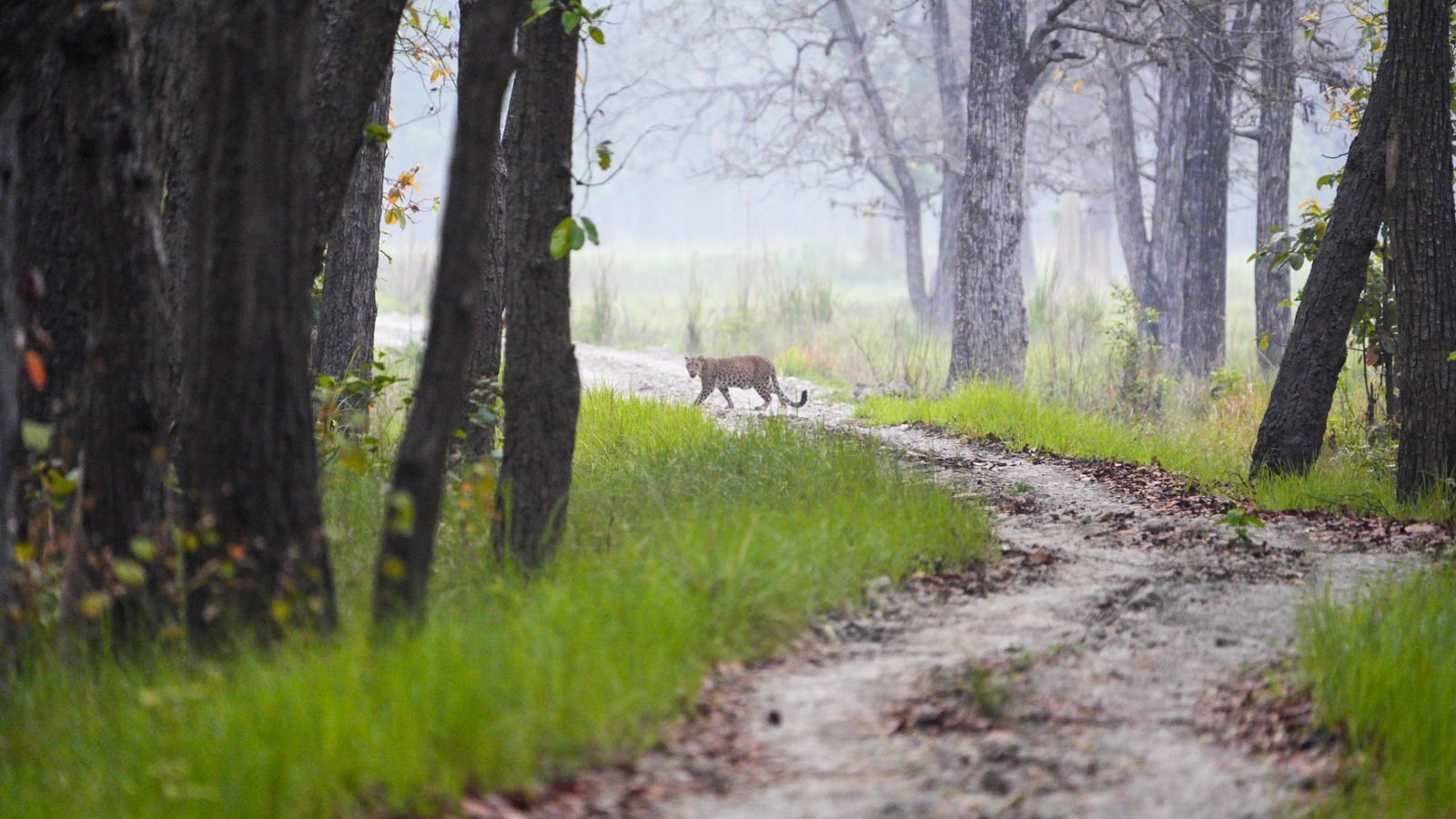
Tucked away in eastern Bardia, the Babai River Valley was completely preserved following the relocation of human settlements in the 1980s. A 2 to 3-day rafting expedition down the Babai winds through dramatic sandstone gorges and opens onto pristine gravel bars marked with the fresh footprints of leopards, sloth bears, and sambar deer herds.
Experience a River Expedition in Wild Nepal
Silent river rafting and canoe safaris down the Karnali with expert local naturalist guides.
3. River Ecology: Why Wildlife Converges on the Waterways
In the Terai ecosystem, rivers function as vital wildlife corridors and biological lifelines:
Thermal Regulation and Mineral Mud
From March through May, daytime temperatures frequently exceed 38°C (100°F). Large pachyderms like elephants and rhinos lack efficient sweat glands, spending up to six hours daily immersed in cool waters. The rich alluvial clay along the banks acts as a soothing shield against biting flies and harsh solar radiation.
Natural Movement Corridors (TAL Corridors)
Gravel shoals and open river margins provide big cats like tigers and leopards with quiet, unobstructed travel routes through dense jungle. The natural rush of water helps mask the sound of their footsteps as they stalk prey resting along the banks.
Abundant Aquatic Avifauna
Over 150 species of birds depend on Nepal's river networks, including Pied Kingfishers, Stork-billed Kingfishers, Grey-headed Fish Eagles, Cinnamon Bitterns, Black-headed Ibises, and the critically endangered Bengal Florican inhabiting adjacent alluvial grasslands.
4. Vital River Safety Protocols and Field Regulations
Navigating alongside wild apex predators and megafauna requires strict adherence to park guidelines set by the DNPWC:
- Mandatory Life Jacket Use: Life vests must be fastened at all times on both calm canoe floats and active river rafting stretches.
- Maintain Low Center of Gravity: Never make sudden vertical movements or stand up in wooden dugouts. Adjust your upper torso slowly when aiming camera lenses.
- Respect Wildlife Safe Distances: Guides maintain a minimum distance of 15 meters from swimming rhinos and basking crocodilians. If an animal enters the channel ahead, the craft stops to grant right of way.
- Waterproof Storage Protection: Keep camera bodies, lenses, and mobile phones secured in certified dry bags clipped to the boat's interior rigging.
5. Wildlife Photography from Watercraft: Pro Tips
- Image Stabilization: Activate lens stabilization (Mode 1 or Sport Mode) to compensate for water drift and paddle vibrations. Monopods or handheld shooting are vastly superior to rigid tripods in moving watercraft.
- Fast Shutter Speeds: Set shutters between 1/1250s and 1/2000s to freeze water spray as birds take flight or rhinos splash through shallows.
- Circular Polarizer (CPL): Cut surface water glare during midday hours to reveal submerged crocodilians and underwater vegetation.
6. Anatomy of a Wild River Day in Bardia & Chitwan
To fully visualize what a river expedition in Nepal feels like, here is a detailed operational overview designed by our veteran naturalist guides:
Dawn (06:00 - 08:30): The Awakening River
The expedition begins as early light filters through thick morning mist hovering over the water. In Chitwan, we step into the handcrafted wooden dugout at Sauraha or Kasara. The morning chill keeps the jungle quiet, creating ideal conditions for spotting spotted deer coming down to drink. Pied Kingfishers hover motionless above swirling eddies before plunging downward like arrows.
Mid-Morning (09:00 - 12:00): Crocodilian Basking Hours
As ambient temperatures climb, Gharials and Mugger crocodiles emerge from deep pools to position themselves on gravel bars and sand islands. On the Karnali in Bardia, we lift the paddles and let the gentle current steer the raft. Drifting silently at a respectful 20-meter distance provides photographers with unparalleled low-angle compositions.
Midday Break (12:30 - 14:30): Sandbar Bush Picnic & Pugmark Tracking
We pull ashore on a high, secure sandbar featuring open sightlines in all directions. While our team prepares a fresh Nepalese bush lunch (traditional Dal Bhat or vegetable rolls), our expert trackers inspect damp sand along the water's edge. This reveals fresh nighttime tracks: leopard claw marks, massive elephant foot depressions, or the playful slide tracks of Smooth-coated Otters (Lutrogale perspicillata).
Afternoon (15:00 - 18:00): Megafauna River Crossings & Sunset
Under the afternoon heat, Asian Elephants and Rhinoceroses emerge from the dense Sal forests to bathe and forage in shallow rapids. Watching a wild elephant herd swim across a wide river channel from the vantage point of an expedition raft is an unforgettable natural spectacle. As the sun dips behind the Siwalik foothills, copper reflections on the water mark the time to set up riverside camp or return to the eco-lodge.
7. Comprehensive Field Packing Checklist for River Safaris
- Certified Waterproof Dry Bags (IPX6/IPX8): A 20-liter roll-top dry bag keeps telephoto cameras, spare batteries, and memory cards safe and instantly accessible.
- Eco-Friendly Sun & Glare Protection: Mineral biodegradable sunscreen, polarized sunglasses (Category 3 to cut surface reflection), and a wide-brim safari hat with a chin strap.
- Quick-Drying Jungle Attire: Long-sleeve ripstop shirts and convertible trousers in natural earth tones (khaki, olive, muted brown). Avoid bright blues and pure whites.
- Amphibious Footwear: Rugged strap sandals or water shoes with high-traction soles for safe embarkation on muddy, slippery riverbanks.
8. In-Depth River Avifauna and Birdwatching Field Identification Guide
For dedicated ornithologists and birdwatchers, river safaris in the Terai offer an unrivaled showcase of resident and migratory species. Here are the premier avian species tracked along the waterways:
- Kingfisher Diversity: Six distinct kingfisher species inhabit the riverbanks, including the Common Kingfisher, Pied Kingfisher (frequently hunting in active hovering flight), White-throated Kingfisher, Stork-billed Kingfisher (with its massive scarlet bill), Crested Kingfisher, and the elusive Blyth's Kingfisher in shaded river forest gullies.
- Raptors and Fish Eagles: The Lesser Fish Eagle (Ichthyophaga humilis) and Grey-headed Fish Eagle (Ichthyophaga ichthyaetus) perch prominently on dead tree snags overlooking deep river pools, diving with formidable talons to snatch surface-feeding carp.
- Endangered Waders and Storks: Sandbars provide critical foraging grounds for the Black-necked Stork, Woolly-necked Stork, and the globally vulnerable Lesser Adjutant Stork (Leptoptilos javanicus).
- Winter Migrants from the Tibetan Plateau: Between November and February, rivers host thousands of migratory waterfowl including Bar-headed Geese, Ruddy Shelducks (Brahminy Ducks), Northern Pintails, and Great Crested Grebes resting on their southward flyway across the Himalayas.
9. Comprehensive Environmental Ethics for River Safaris
Preserving fragile aquatic biomes requires strict non-invasive ecotourism standards:
- Zero Single-Use Plastics: We prohibit single-use plastic bottles on all our river craft, providing travelers with filtered water in stainless steel canteens.
- Leave No Trace Sandbar Camps: All expedition waste from overnight island camps is packed out completely. Campfires use only driftwood and are thoroughly doused and buried before departure.
- Acoustic Discipline: We avoid loud conversations and maintain quiet reverence while drifting near nesting sandbars to avoid disturbing breeding bird colonies and basking crocodilians.
Frequently Asked Questions (FAQ) — River Safari in Nepal
Is there any danger of canoes capsizing near crocodiles?
Local boatmen have navigated these waters since childhood and understand every sandbar and current. The wooden dugouts are remarkably stable when passengers remain seated, and both gharials and muggers naturally dive away into deeper waters when approached.
Do I need swimming skills to take a river safari?
Swimming ability is not required for calm Rapti River canoe floats in Chitwan, as certified life jackets are provided and waters are generally shallow. For multi-day rafting expeditions in Bardia, basic water confidence is helpful.
When is the best season for river rafting in Bardia?
October through April is ideal. Autumn offers crystal-clear water and vibrant green landscapes, while spring (February to April) lowers water levels to expose magnificent sandbars for island bivouacs and concentrates wildlife along the shores.
Can we see Bengal tigers during a river safari?
Yes! The Karnali and Babai river islands in Bardia are prime tiger hunting corridors. Encountering a tiger swimming between sandbars or drinking at dusk is one of the ultimate safari highlights in Asia.
Explore our dedicated river tour package Wild River & Rafting Safari or view our complete multi-park adventure Chitwan & Bardia Complete Expedition.