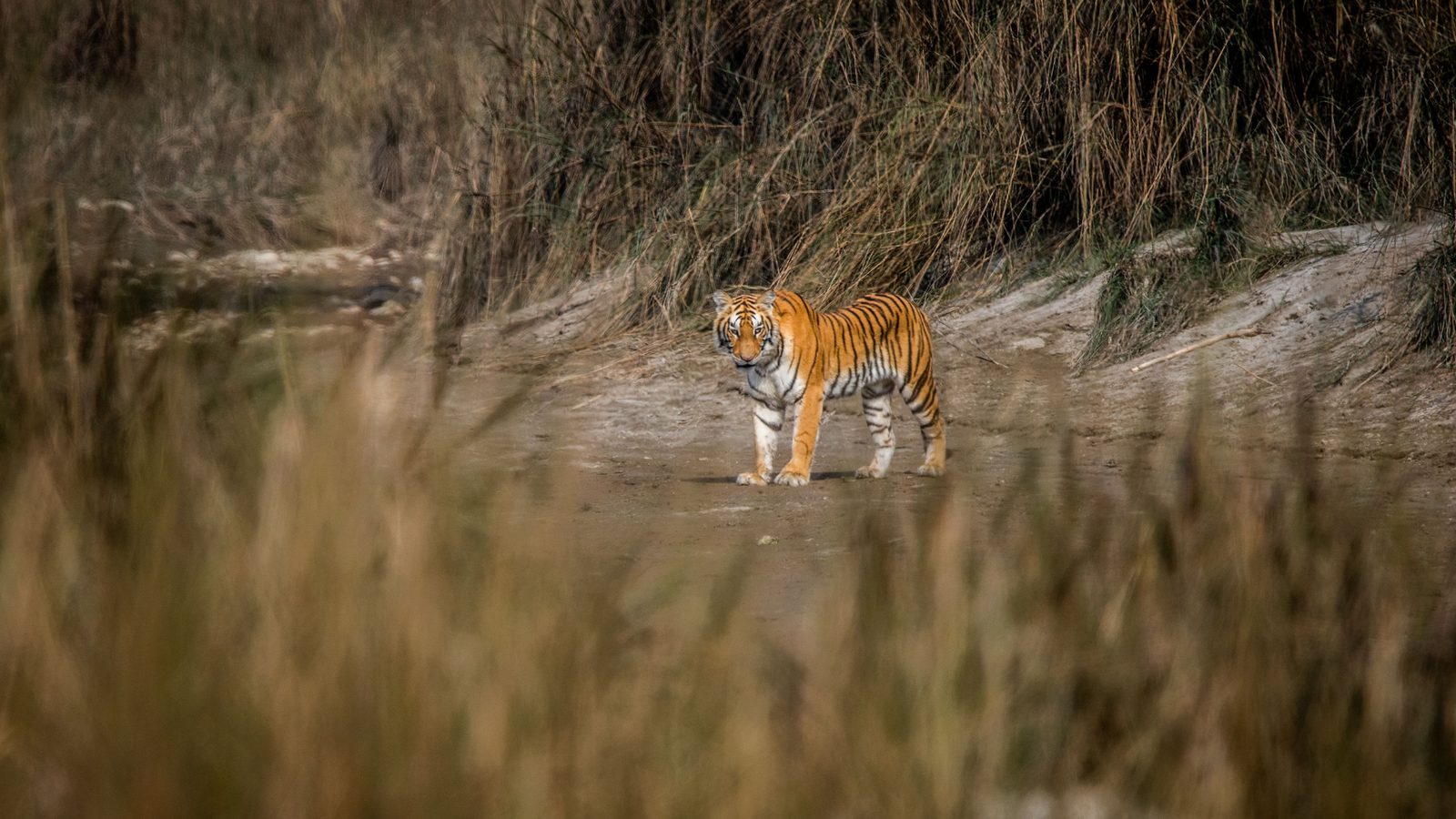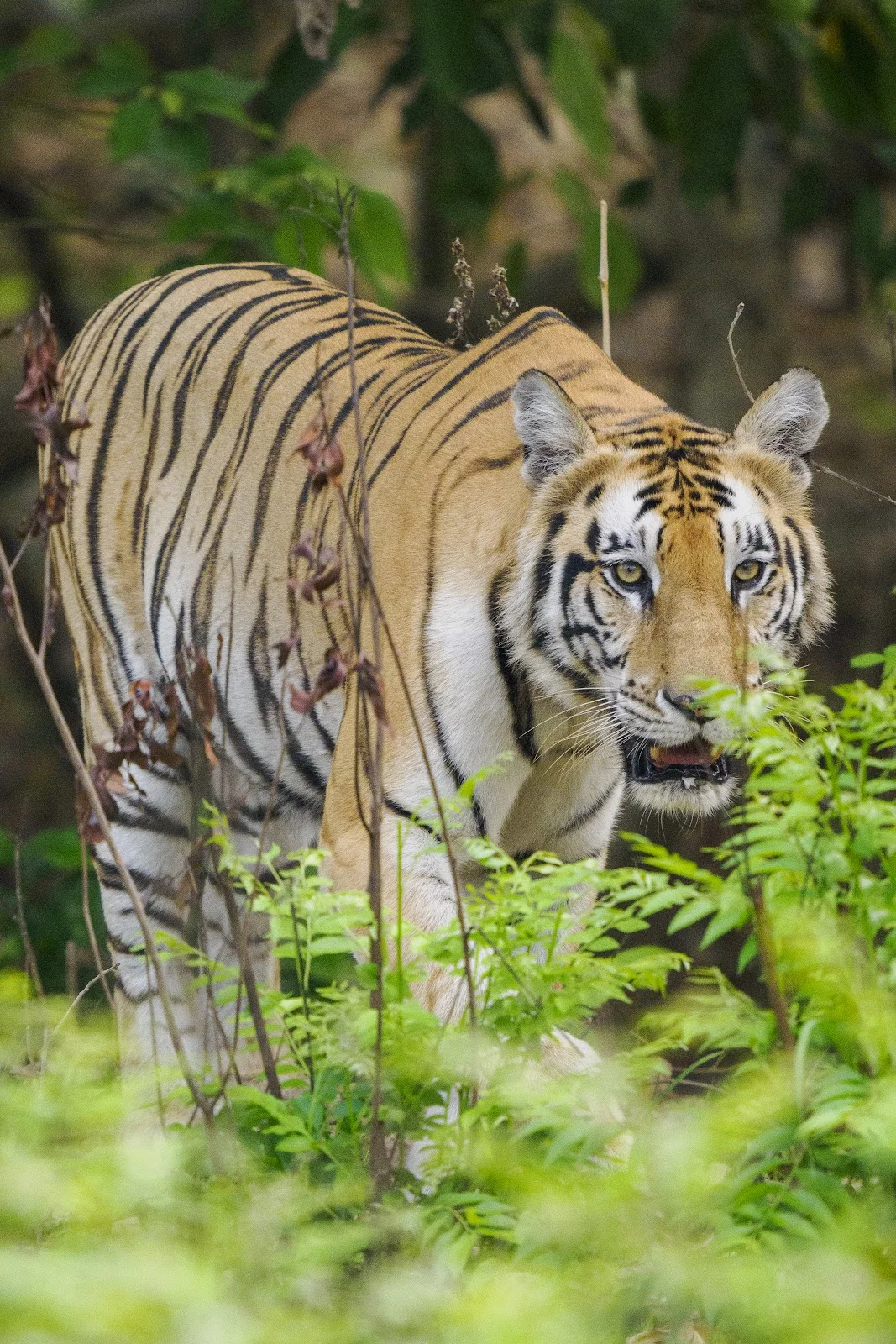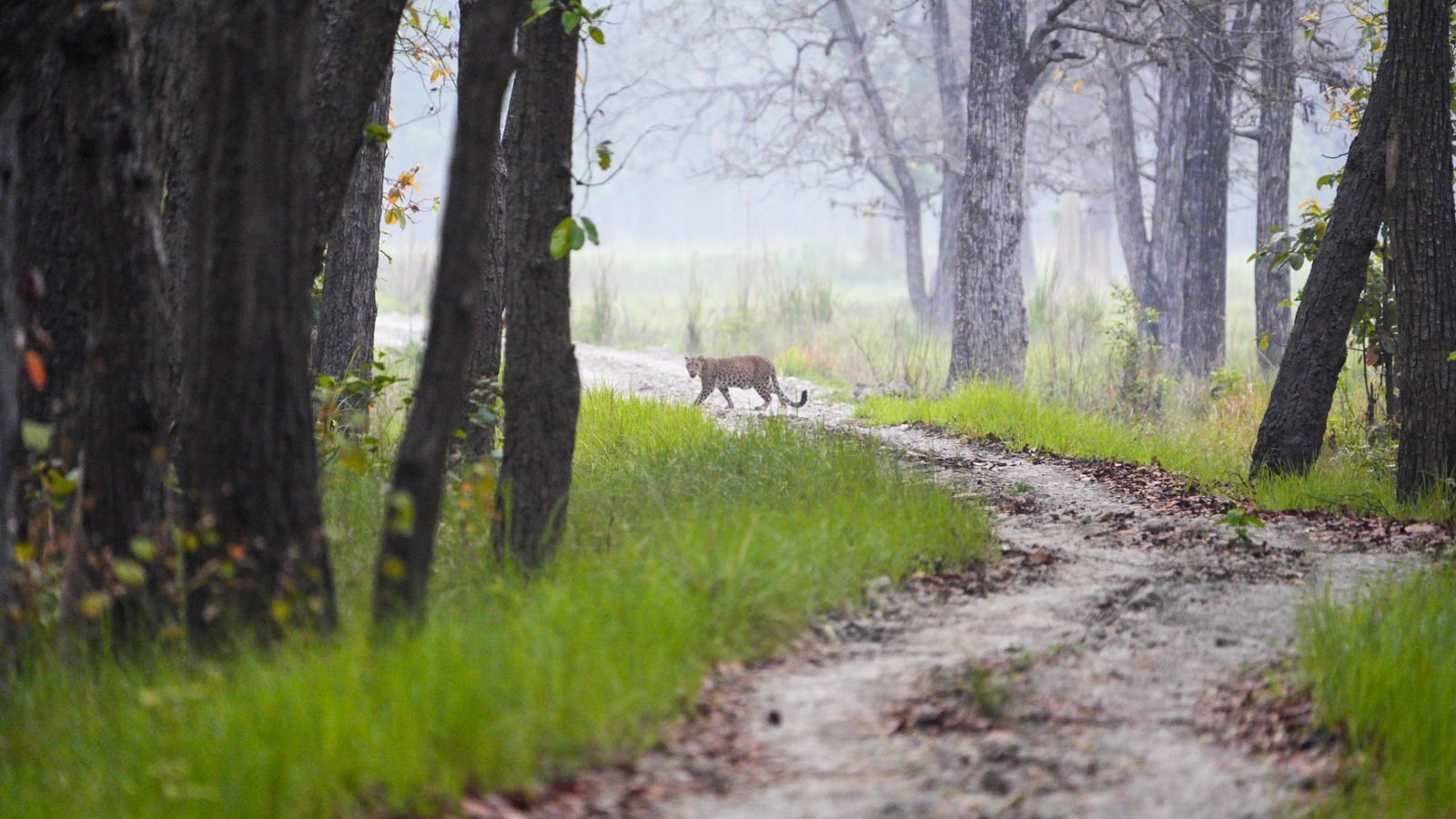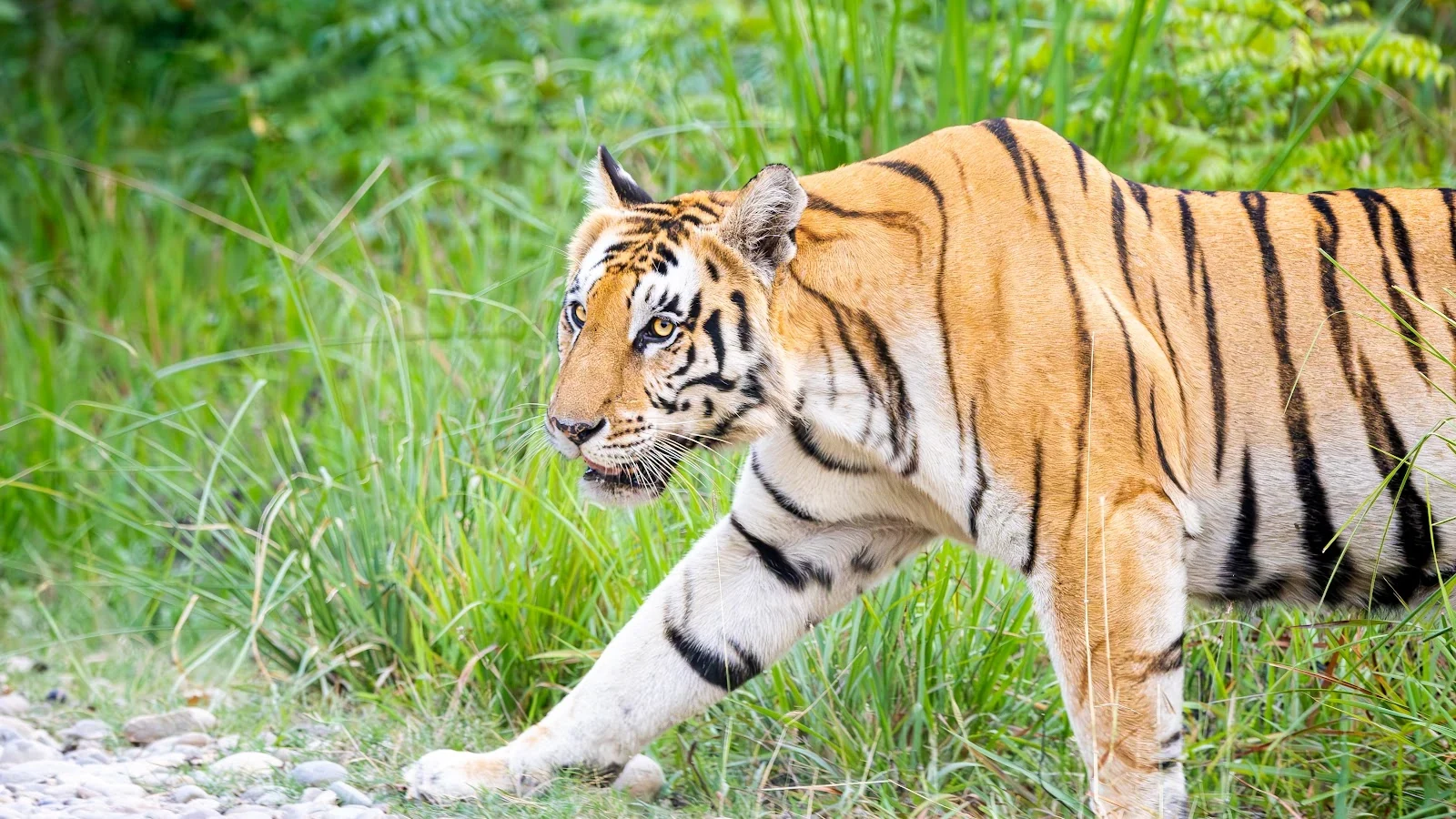

When travelers think of Bardia National Park, their minds immediately conjure images of majestic terrestrial apex predators: the silent stride of the Bengal tiger, the prehistoric armor of the greater one-horned rhinoceros, or the ancient power of wild Asian elephants. Yet, the moment dawn breaks through the sal forest mist and illuminates the jungle canopy, an entirely different kind of enchantment takes flight. The treetop canopy vibrates with the rhythmic thunder of giant hornbills, open grasslands erupt in electric turquoise flashes as rollers hunt, and dim, shaded understories host the ghost-like ribbons of paradise flycatchers.
Boasting over 500 recorded bird species across its riverine corridors, alluvial floodplains, and dense tropical hardwood forests, Bardia stands among South Asia's premier avian havens. In this in-depth field guide, our resident local naturalist guides share their top favorite species, field tracking secrets, and intimate encounters with the three most iconic winged treasures of the Nepalese Terai.
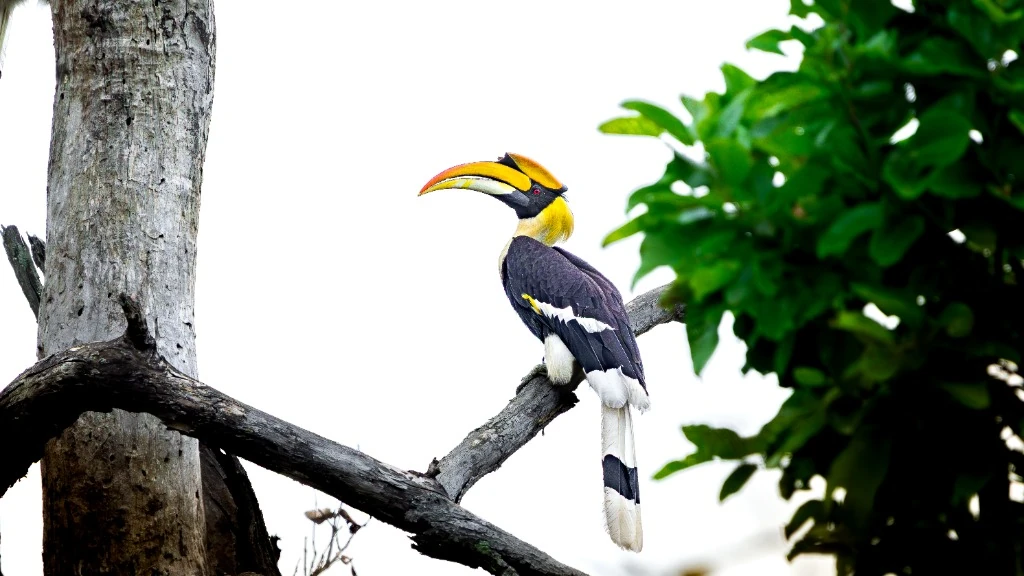
1. The Great Hornbill (Buceros bicornis): prehistoric monarch of the canopy
Hearing a Great Hornbill before sighting it is an unforgettable milestone of any foot safari in Nepal. Its heavy, deliberate flight produces a deep, rhythmic whooshing resonance akin to a low-altitude steam locomotive or a vintage radial propeller engine. This acoustic signature is due to its specialized feather structure: unlike most birds whose plumage muffles air friction, the flight feathers of the Great Hornbill lack basal coverts, forcing air through the open primary quills and generating a low-frequency hum audible over half a kilometer away.
Measuring up to 1.3 meters (4.3 feet) in length with a commanding wingspan surpassing 1.6 meters (5.2 feet), the Great Hornbill (Buceros bicornis) is the undisputed heavyweight ruler of the Terai treetops. Its most striking feature is the enormous golden-yellow casque resting atop its massive curved bill. Contrary to popular belief, this casque is not solid bone; it is an ultra-light honeycombed keratin structure that acts as a resonating chamber for deep, resonant territorial barks, an optical cue for courtship displays, and a functional tool for chiseling soft wood.
In Bardia's ecosystem, hornbills serve as the vital "chief foresters" of the tropical canopy. As obligate frugivores with a voracious appetite for wild figs (Ficus benghalensis, Ficus religiosa), they ingest fruits whole and disperse viable seeds across vast distances during their cross-canopy journeys. Without their daily dispersal services, the natural regeneration of major hardwood and fruit-bearing trees would suffer catastrophic declines.
Their reproductive biology is one of the most astonishing marvels in the animal kingdom. In spring, the breeding female voluntarily seals herself inside a natural tree cavity 15 to 30 meters above the forest floor. Aided by the male, who delivers pellets of mud, fruit pulp, and droppings, she bricks up the nest entrance until only a slender vertical slit remains. Throughout the entire 3 to 4-month incubation and brooding cycle, the male single-handedly delivers food, making up to 15 daily roundtrips to regurgitate hundreds of wild figs and protein-rich insects directly to his cloistered family.
2. The Indian Roller (Coracias benghalensis): the electric turquoise flash of the savannas
The moment you emerge from the shadowy sal woodland into the expansive alluvial grasslands (phantas) bordering the Karnali River, a sudden burst of brilliant azure and turquoise commands your gaze. The Indian Roller (Coracias benghalensis) is the undisputed master of optical contrast in the Nepalese lowlands.
At rest upon a dead branch, fence post, or thorny acacia bush, the roller appears deceptively modest: its back displays muted cinnamon-brown, dull olive, and sandy-buff tones that blend seamlessly against parched tree bark. However, the instant it launches into the air to ambush a terrestrial insect, a breathtaking metamorphosis unfolds: its wings reveal brilliant bands of ultramarine, radiant turquoise, and glowing cyan that shimmer brilliantly beneath the subtropical sun.
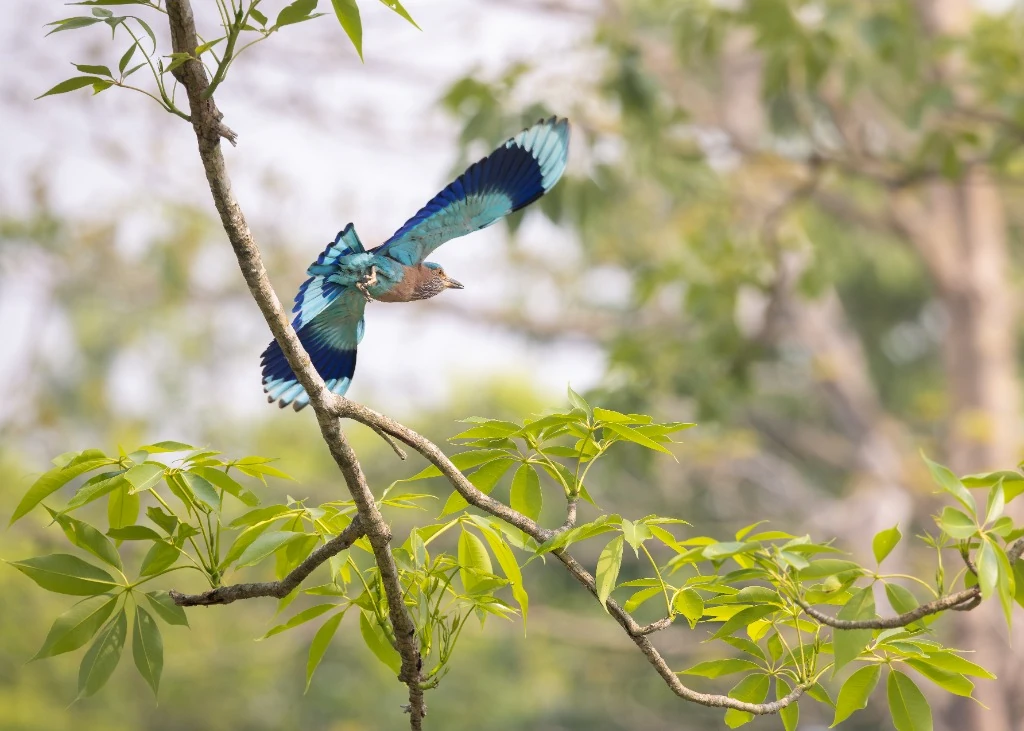
The name "roller" derives from its acrobatic courtship displays during breeding season between March and May. Courting males execute dramatic aerial performances: steep vertical rocket ascents followed by dizzying tumbling dives, lateral barrel-rolls, and twisting somersaults, all accompanied by harsh, grating territorial calls that carry across open meadows.
As a sit-and-wait predatory specialist, the Indian Roller feeds upon an eclectic menu of terrestrial invertebrates: heavy ground beetles, locusts, mantids, scorpions, and small agamid lizards. Dropping from its elevated perch with pinpoint accuracy, it snaps up prey in its stout hooked beak and returns to batter the victim against the wood before swallowing it whole. In Nepalese and Hindu folklore, the Indian Roller (revered as Nilkanth and associated with Lord Shiva) is cherished as a sacred herald of good fortune and safe travels.
3. The Asian Paradise Flycatcher (Terpsiphone paradisi): the spectral dancer of the understory
Among all the songbirds and insectivores inhabiting Bardia's lush riparian jungles, the Asian Paradise Flycatcher (Terpsiphone paradisi) inspires the most profound wonder. This bird possesses an ethereal elegance reminiscent of classical Asian silk paintings.
Breeding adult males exhibit extraordinary morphological dimorphism. They develop two extended central tail streamers (rectrices) that can stretch up to 30 to 40 centimeters (12 to 16 inches) in length—more than three times their entire body length! As the male flits through dim, dappled understories and hanging lianas in pursuit of flying insects, these ribbon-like plumes twist, flutter, and flow behind him like the silk ribbons of a rhythmic gymnast.
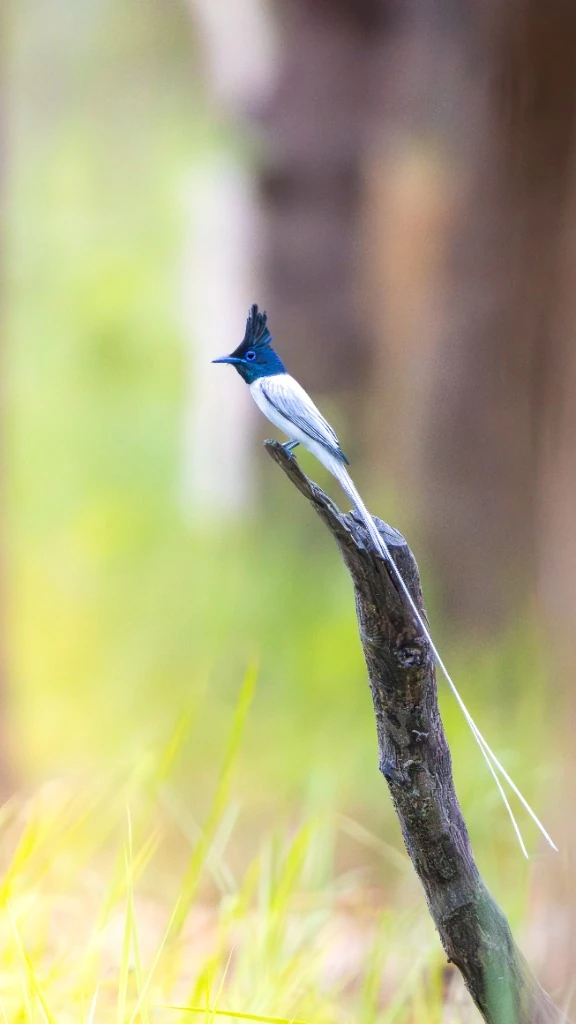
Furthermore, males display remarkable color polymorphism: younger adult males sport a vibrant rufous-chestnut plumage with a glossy blue-black crest, while mature males transition into a striking pure white morph, featuring snowy white bodies, glossy crests, and vivid cobalt-blue orbital eye rings and beaks. Females consistently retain the rufous morph with standard-length tail feathers.
Paradise flycatchers thrive in humid riverine galleries alongside the Babai River and shady jungle tributaries. As summer breeding migrants arriving in Bardia between April and August, they build tiny, exquisite cone-shaped cup nests in low tree forks, carefully bound with sticky spiderwebs and camouflaged with fresh green moss.
4. Other must-see feathered treasures in Bardia National Park
Beyond the iconic trio of hornbills, rollers, and flycatchers, Bardia hosts an extraordinary variety of avian wonders:
- Oriental Pied Hornbill (Anthracoceros albirostris): Smaller, highly vocal, and frequently spotted in lively flocks of 4 to 8 individuals foraging along buffer zone orchards and Tharu village outskirts.
- Stork-billed Kingfisher (Pelargopsis capensis): A giant among kingfishers boasting a massive crimson dagger-bill capable of spearing fish, freshwater crabs, and frogs along quiet river oxbows.
- White-throated Kingfisher (Halcyon smyrnensis): Electric turquoise-blue wings with chocolate-brown plumage, widely seen perching near wetlands, paddy fields, and irrigation canals.
- Plum-headed Parakeet (Psittacula cyanocephala): A vividly colored parrot whose males sport an extraordinary purplish-pink head resembling an exotic jungle flower.
- Little Green Bee-eater (Merops orientalis): Elegant aerial acrobats darting from exposed twigs to catch dragonflies and bees in mid-air over sandy riverbanks.
- Red-headed Trogon (Harpactes erythrocephalus): A shy, reclusive gem of dense primary canopies, displaying deep crimson-red underparts and golden-olive backs.
Comparative field guide: morphology, habitat & prime viewing seasons
| Species | Length / Wingspan | Primary Habitat | Best Viewing Season | Rarity Status |
|---|---|---|---|---|
| Great Hornbill | 120 - 130 cm / 160 cm | Sal forest canopy, emergent wild fig trees | November to May | Vulnerable (healthy in Bardia) |
| Indian Roller | 30 - 34 cm / 65 cm | Open alluvial grasslands (phantas), scrub borders | Year-round (courtship displays March-May) | Very common |
| Asian Paradise Flycatcher | 20 cm (+ 35 cm streamers) | Shaded riverine galleries, dense understory | April to September (summer breeding) | Fairly common but secretive |
| Stork-billed Kingfisher | 35 - 38 cm / 60 cm | Riverbanks, quiet oxbow lakes, Karnali backwaters | October to June | Common resident |
| Plum-headed Parakeet | 33 - 35 cm / 45 cm | Fruiting trees, open woodlands, canopy edges | October to May | Abundant resident |
5. Premier birdwatching locations inside Bardia National Park
Birding in Bardia is unlike anywhere else in South Asia. Thanks to the park's exclusive focus on guided walking safaris, birdwatchers can explore prime bird habitats on foot without noisy engine rumble:
- Baghaura Phanta Watchtower: Essential at dawn to observe rollers, parakeets, nightjars, and raptors perching on dead snags across the open grassland.
- Geruwa Riverbanks (Eastern Karnali Branch): A dynamic aquatic highway hosting pied kingfishers, lapwings, black-headed ibises, and great thick-knees along gravel bars.
- Babai Valley Primary Hardwood Forests: The most untouched sector of the park, where massive old-growth fig trees attract large congregations of Great Hornbills and green pigeons.
- Tharu Village Buffer Corridors: Ideal for gentle afternoon walks to spot sunbirds, drongos, Asian koels, and munias among flowering hedges and orchards.
6. Expert bird photography tips & camera settings in tropical forests
Capturing sharp bird photographs in dense subtropical jungles requires technical precision to balance deep tree shadows against bright canopy skylight:
- Focal length recommendation: A 400mm to 600mm telephoto lens (full-frame equivalent) is vital for small passerines. High-quality 100-400mm or 150-600mm zooms offer the optimal balance between reach, portability, and walking endurance.
- Shutter speed thresholds: To freeze the explosive flight of a roller or the fluttering streamers of a flycatcher, shoot at 1/2000s to 1/3200s. For a perched hornbill in the canopy, 1/800s provides excellent stability.
- ISO handling: Do not hesitate to shoot at ISO 3200 or 6400 under heavy canopy cover. Modern camera sensors and AI noise-reduction software handle high-ISO grains effortlessly.
- Autofocus modes: Enable Bird-Eye AF tracking on modern mirrorless systems (Sony, Canon, Nikon) or use pinpoint single-point AF to focus through dense jungle foliage without hunting.
Ready for a tailored birdwatching safari in Bardia?
Our expert naturalist guides track bird calls and take you to private viewing blinds away from tourist crowds.
Plan my Bardia bird safariFrequently Asked Questions (FAQ) — Bardia birdwatching
When is the best time of year for birdwatching in Bardia?
The prime season runs from November through April. Resident species are active, and the park welcomes thousands of Palearctic migratory waterfowl and raptors from Siberia and the Tibetan Plateau. From April to June, summer breeding migrants like the Asian Paradise Flycatcher and cuckoos arrive.
Do I need to be an expert birder to enjoy a bird safari?
Not at all! The striking colors of the Indian roller, the giant presence of the Great Hornbill, and the beauty of kingfishers captivate every nature lover. Our guides share premium binoculars and bring bird behavior to life through engaging field storytelling.
Can tiger tracking and birdwatching be combined during the same safari?
Yes! That is the defining magic of Bardia. While walking along river channels and waiting at wildlife hides for tigers or rhinos, bird activity is continuous. Furthermore, bird alarm calls (such as from lapwings and drongos) are essential clues our trackers use to pinpoint big cat movements.