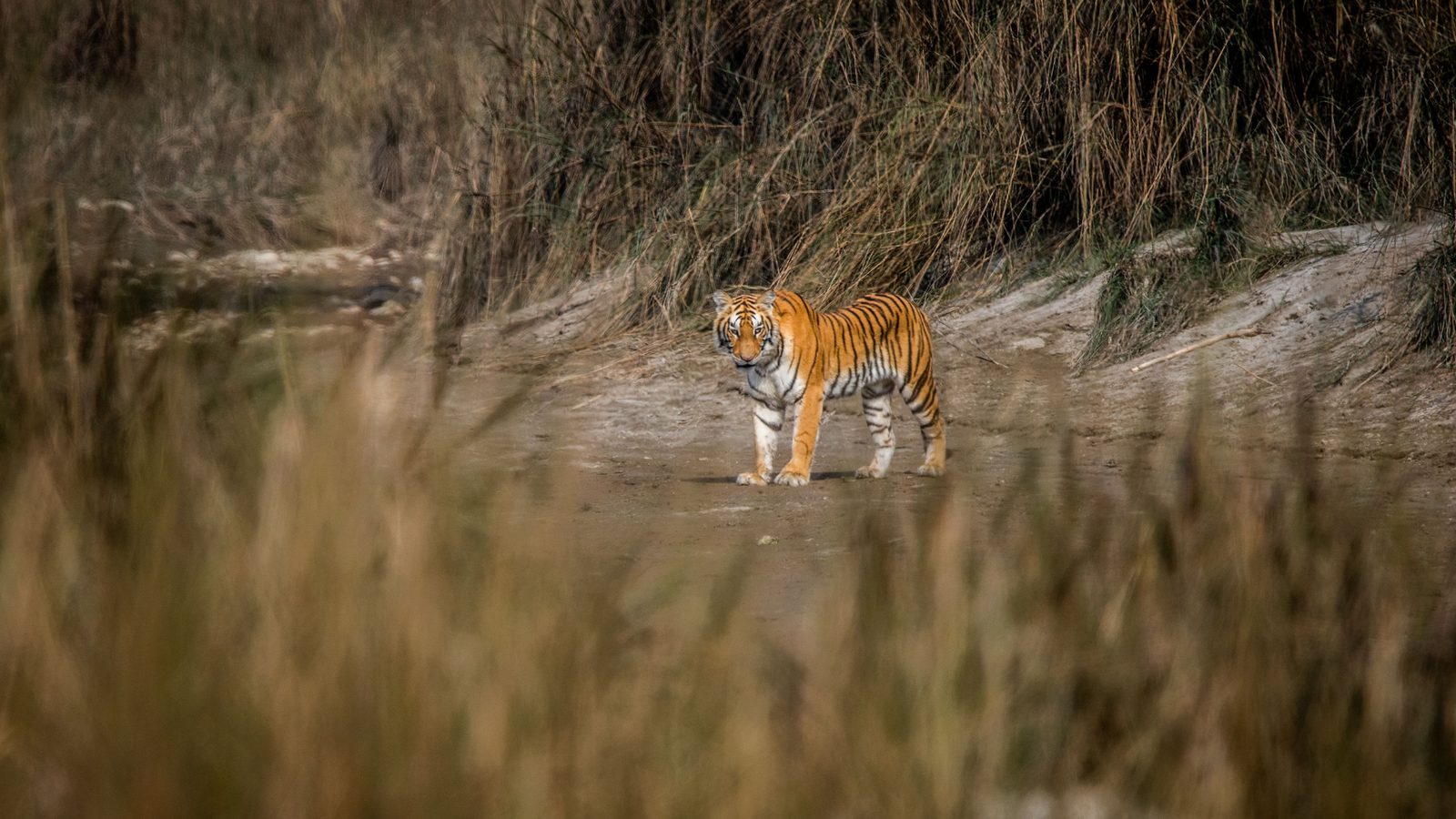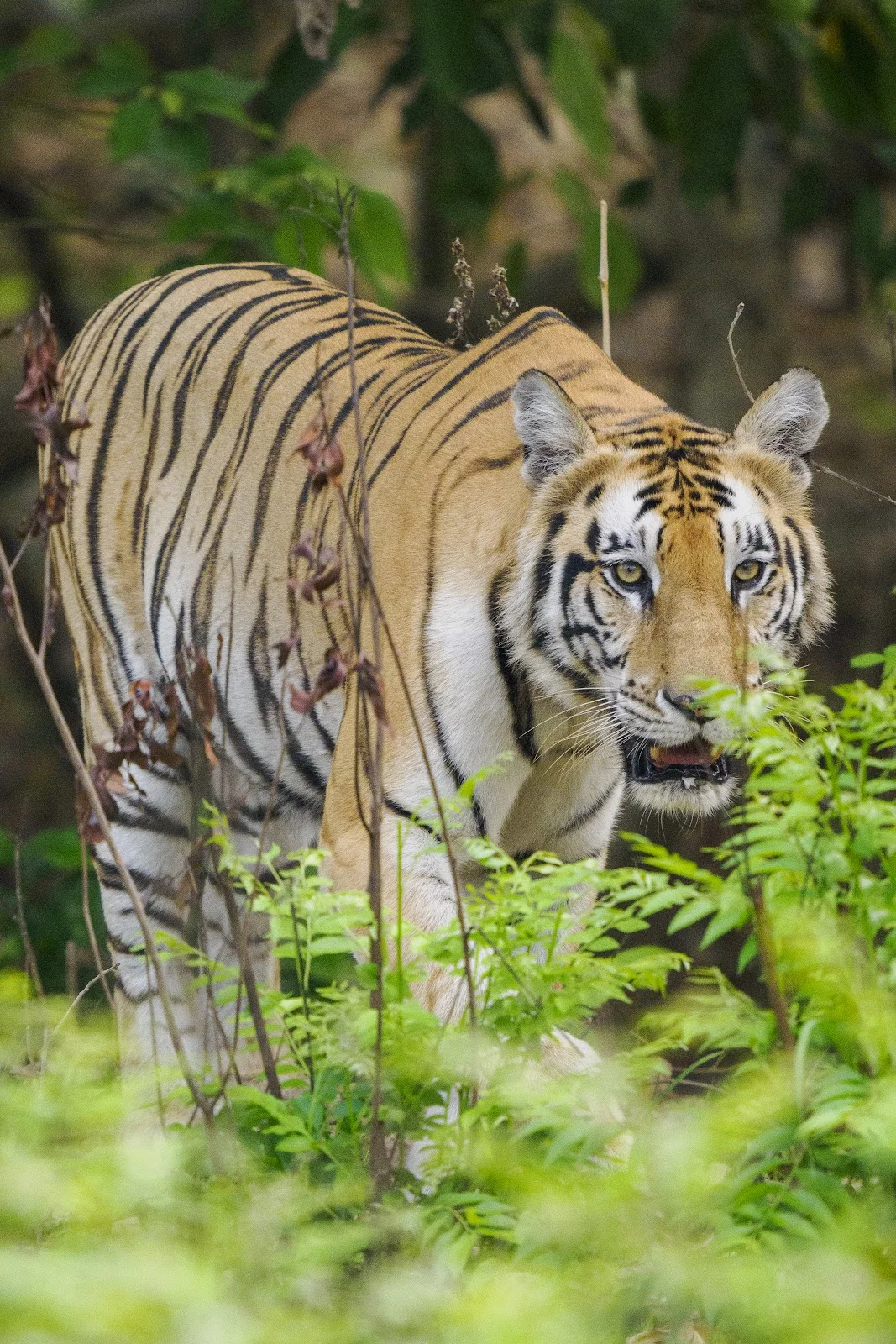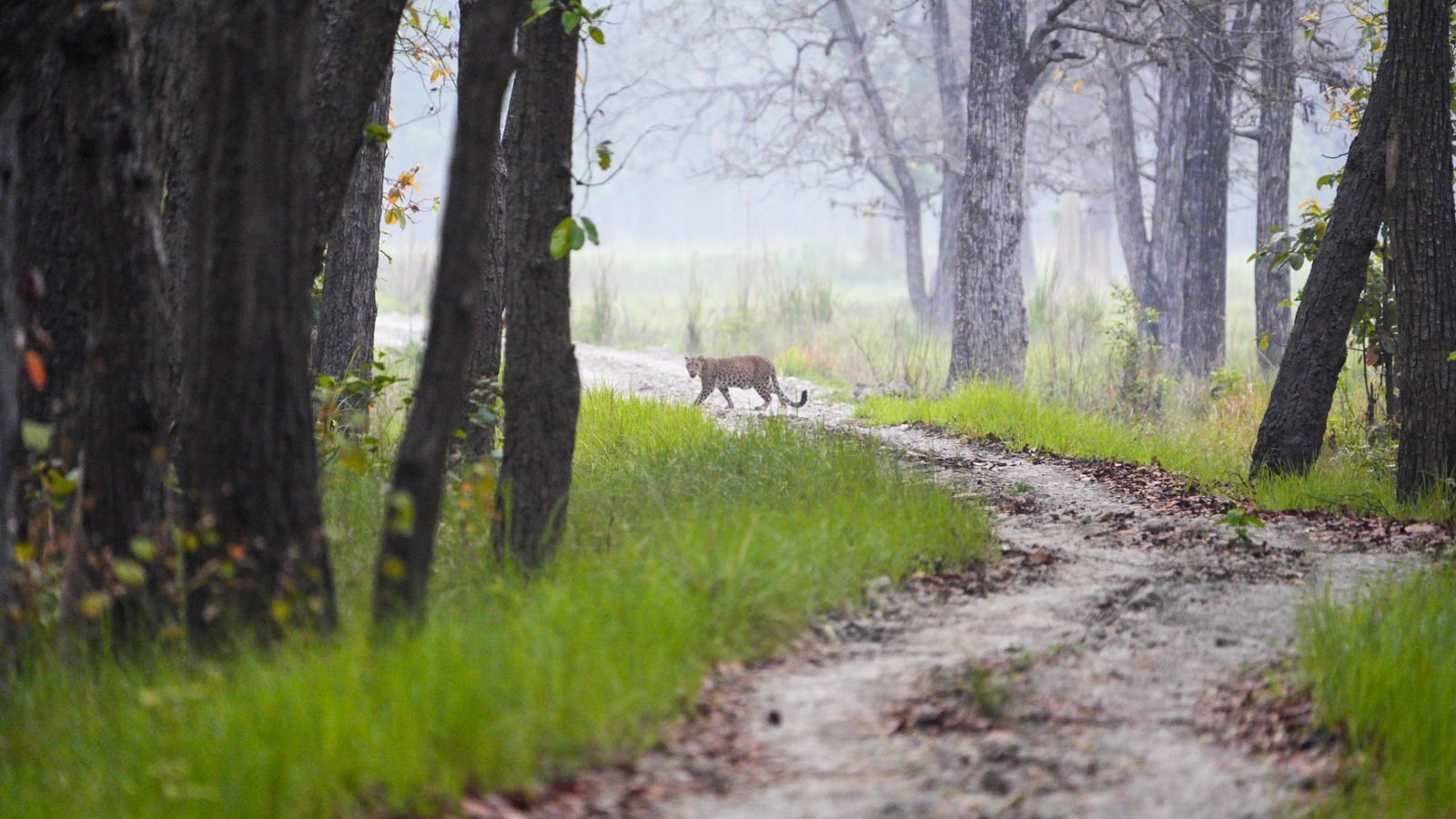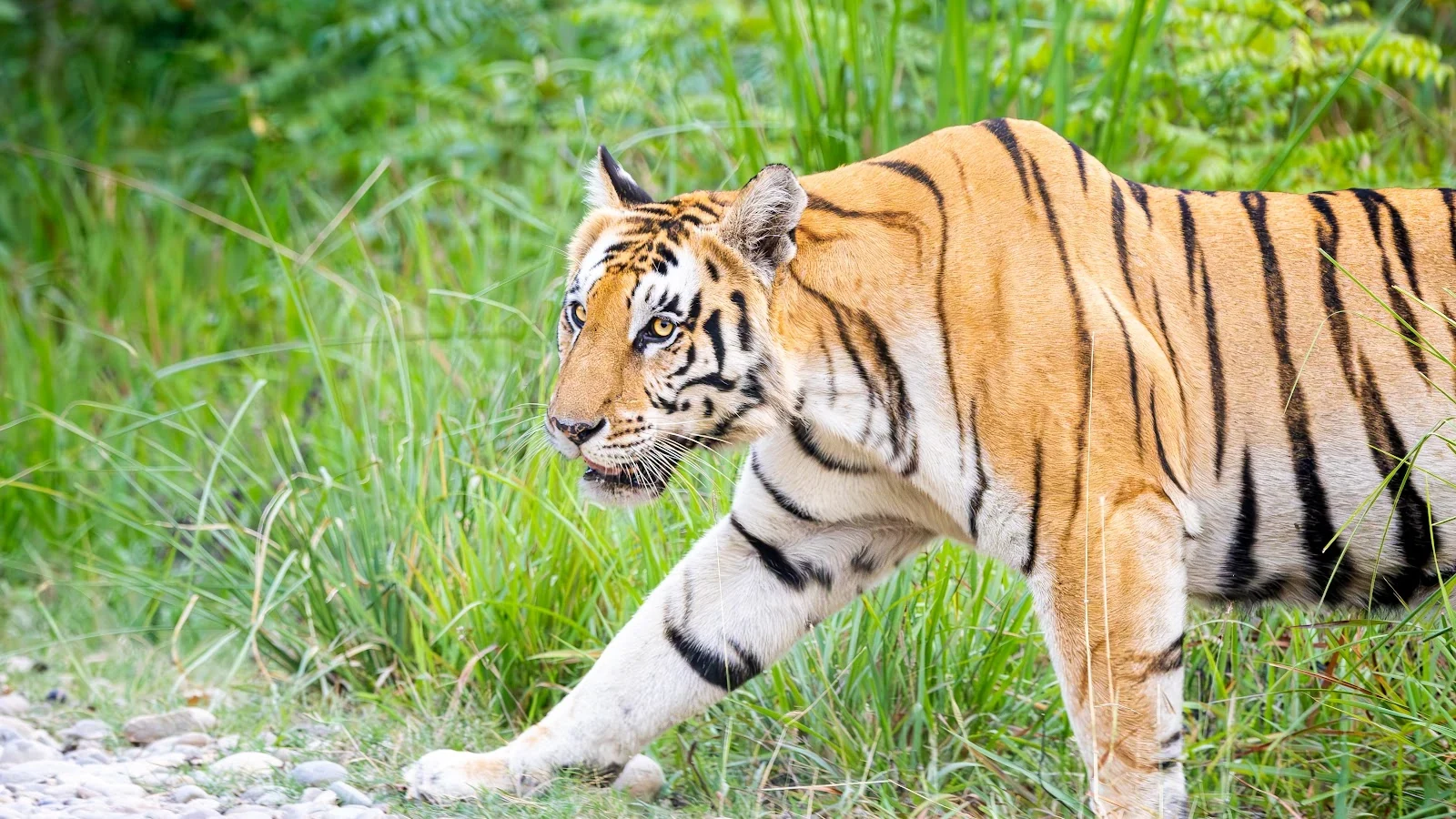

In the minds of travelers embarking on a wildlife safari in Nepal, the majestic Bengal Tiger often takes center stage. Yet across the lush subtropical forests of the Terai lowlands and the rugged Churia foothills, lives another extraordinary apex predator of breathtaking elegance and supreme intelligence: the Indian Leopard (Panthera pardus fusca). The undisputed ghost of the forest canopy, master of camouflage, and phenomenal climber, the leopard has developed fascinating behavioral strategies to thrive alongside the dominant tiger. Spotting an Indian leopard draped over the bough of an ancient fig tree in Bardia or gliding through tall elephant grass in Chitwan remains one of the ultimate privileges in Asian wildlife exploration.
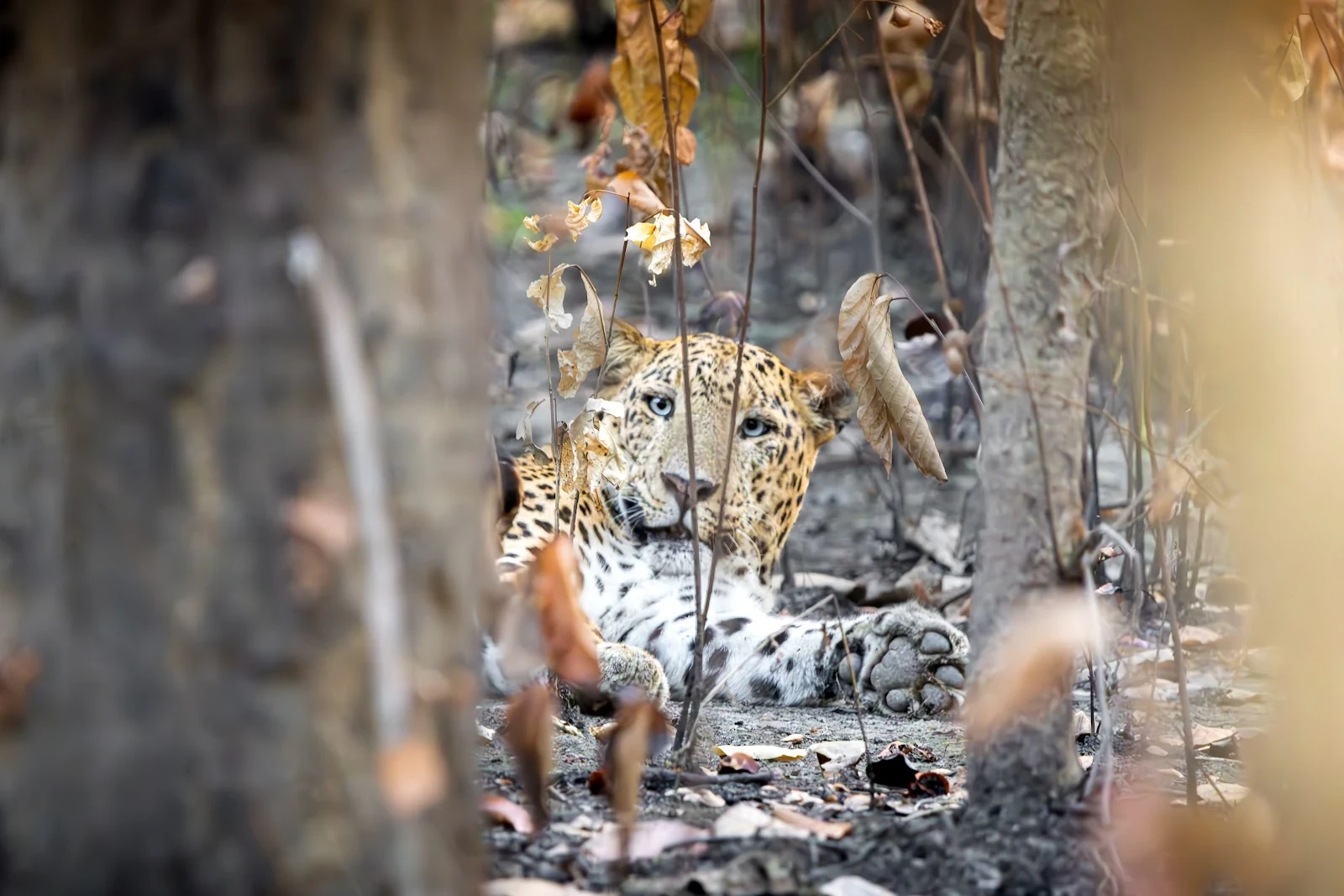
1. Morphology and Adaptations: The Perfect Canopy Hunter
The Indian leopard exhibits a compact, muscular, and exceptionally agile anatomy. While an adult male Bengal tiger readily surpasses 220 kg with a total length over 3 meters, an adult male leopard weighs between 50 and 75 kg (females averaging 35 to 50 kg). Far from being a disadvantage, this smaller frame is the cat's greatest evolutionary superpower.
A Rosetted Coat Designed for Dappled Sunlight and Dense Sal Shade
The leopard's coat is a masterclass in optical concealment. Set against a warm golden-tawny base, its dense, dark rosettes mimic the shifting patterns of sunlight filtered through broad subtropical leaves (adaptive crypsis). At just ten meters away, a motionless leopard pressed against mossy tree bark or crouching in low ferns is virtually invisible to the untrained eye.
Prodigious Vertical Strength and Climbing Biomechanics
With specialized shoulder mechanics, flexible clavicles, and powerhouse scapular muscles, the leopard generates tremendous vertical climbing power. It can hoist a spotted deer carcass matching its own body weight over six meters up into the fork of a tree, safely caching its meal away from ground scavengers like tigers, striped hyenas, and packs of Asiatic wild dogs (dholes).
| Attribute | Indian Leopard (Panthera pardus) | Bengal Tiger (Panthera tigris) |
|---|---|---|
| Average Male Weight | 55 to 75 kg | 190 to 250 kg |
| Preferred Habitat | Canopy boughs, forest edges, rocky Churia hills | Alluvial floodplains, deep Sal forests, riverbanks |
| Arboreal Prowess | Elite climber, rests, hunts, and caches prey in high forks | Occasional climber when subadult; 100% terrestrial as adult |
| Relationship with Water | Drinks regularly, avoids prolonged immersion or swimming | Exceptional swimmer, bathes daily during midday heat |
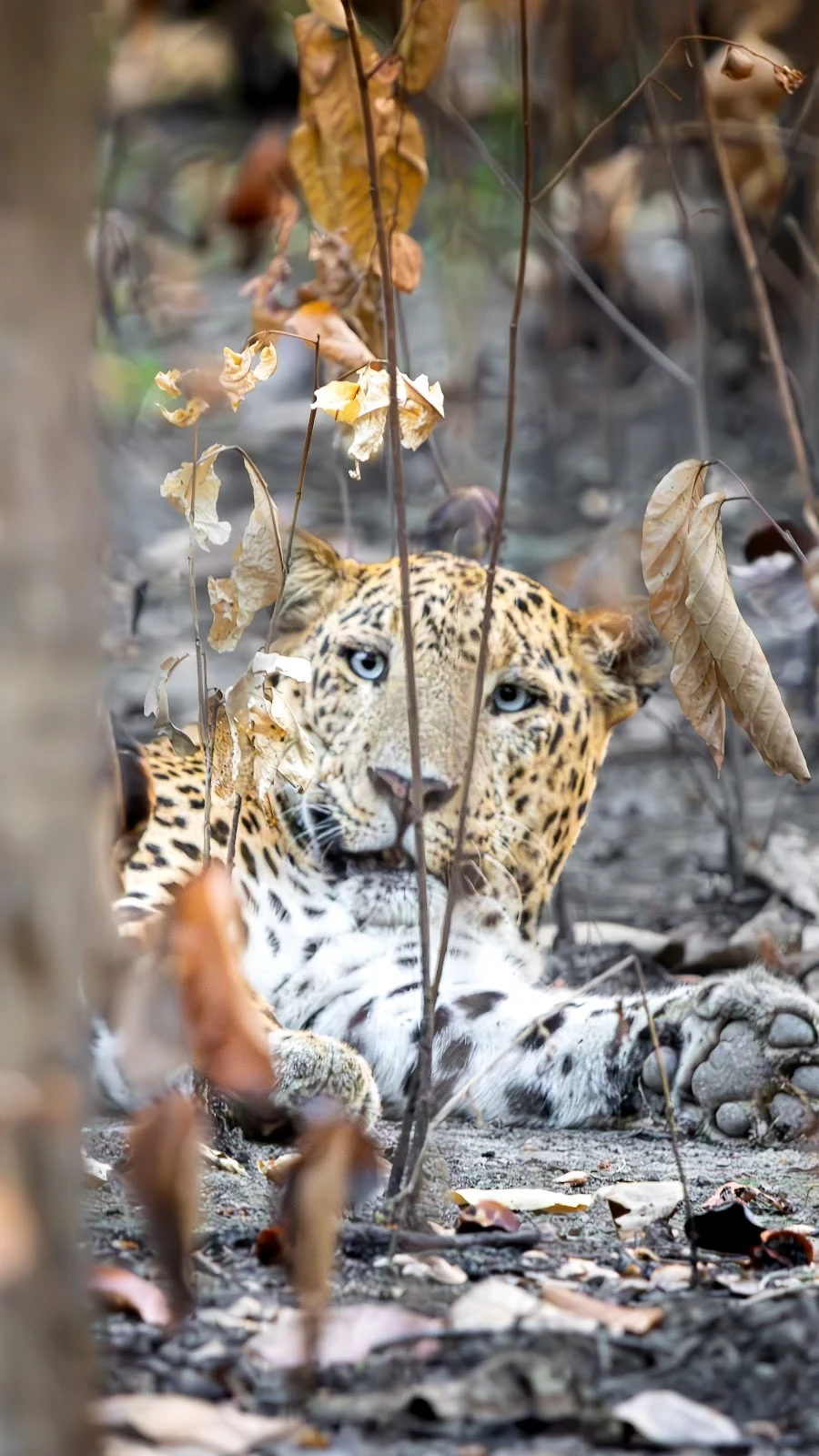
2. Coexisting with the Tiger: The Art of Ecological Partitioning
How do two formidable apex carnivores share the exact same territory without eliminating each other? In national parks like Bardia, Chitwan, and Suklaphanta, coexistence between tigers and leopards is a classic textbook study in spatio-temporal and trophic niche partitioning:
1. Spatial Partitioning (Habitat Separation)
The Bengal Tiger commands the most prey-dense prime habitats: expansive alluvial grasslands and fertile river valleys where large sambar deer and chital herds concentrate. To avoid dangerous direct conflicts with its larger cousin, the leopard strategically establishes its home range:
- Along the periphery, buffer zones, and boundary ecotones of the protected parks.
- Across the rugged, steep sandstone ridges of the Churia Hills (the Siwaliks), where the tiger's heavy mass hampers stalking efficiency.
- Within the vertical dimension of the forest, spending much of daylight resting safely in the mid-to-high canopy.
2. Temporal Shift (Activity Scheduling)
Camera trap research in Nepal confirms that where tiger density is exceptionally high (such as core Bardia), leopards adjust their peak activity hours: they move and hunt earlier in late afternoon or during midday lulls when tigers rest in dense shady wallows near water.
3. Trophic Partitioning: Distinct Prey Spectra
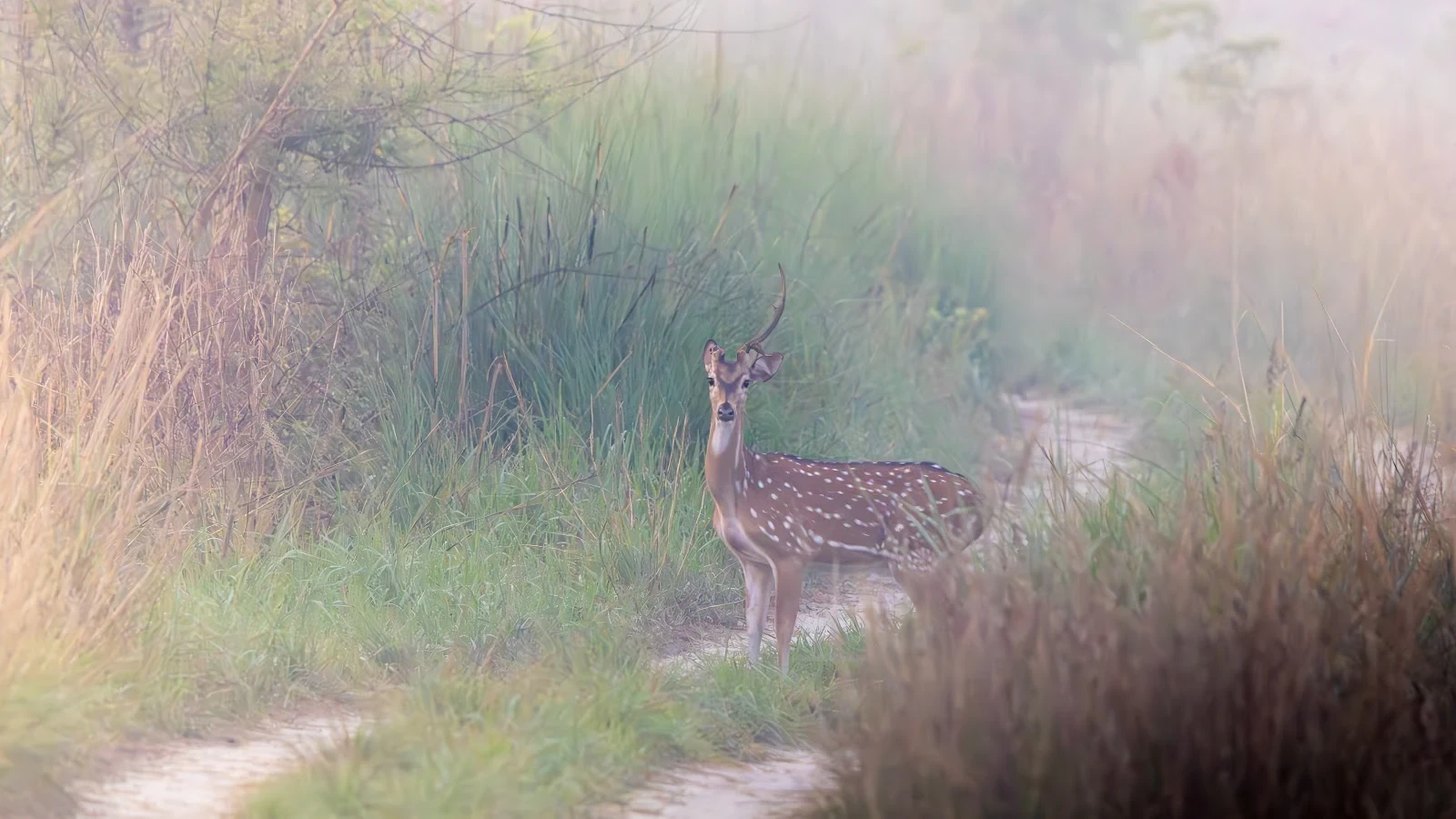
While tigers overwhelmingly target prey over 150 kg (mature sambar stags, wild water buffalo, and subadult rhinos), leopards focus primarily on small-to-medium ungulates: adult female and fawn chital, barking deer (muntjac), juvenile wild boar, and Indian hares. This division minimizes direct resource competition across shared forest acreage.
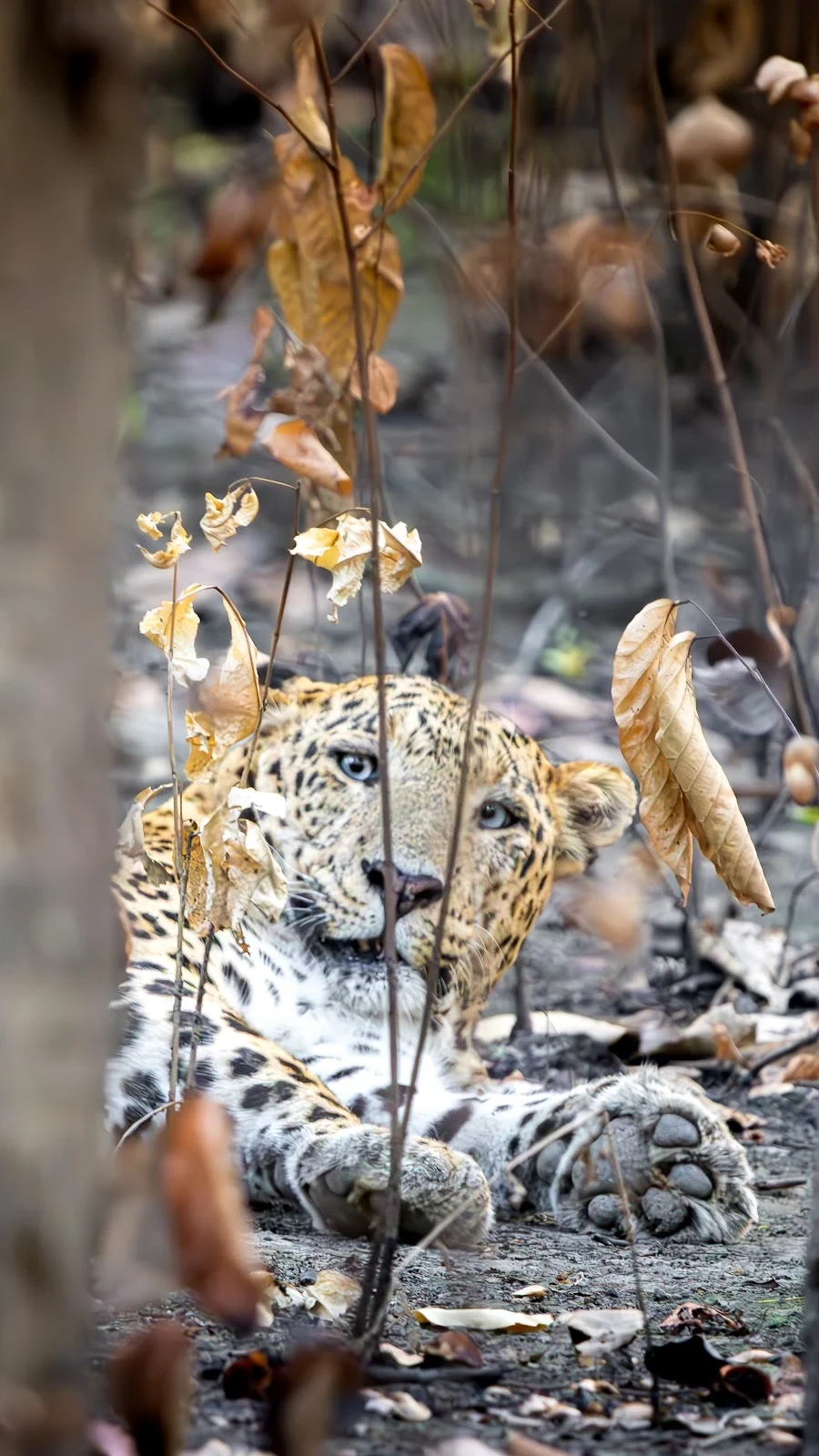
3. Diet and Hunting Tactics: Extreme Versatility
The leopard is an opportunistic predator endowed with extraordinary dietary flexibility. In Nepal, its prey spectrum exceeds thirty species:
- Primary Prey: Spotted deer (chital), barking deer (muntjac), subadult sambar, wild boar piglets, and sacred langurs.
- Small Game & Supplements: Indian hare, peafowl, crested porcupines, large monitor lizards, and even fish trapped in shallow river pools.
- Canopy Hunting: The leopard is the only big cat capable of ambushing langurs directly within tree crowns through breathtaking six-meter leaps between boughs.
Track Nepal's big cats on foot with our expert guides
Exclusive walking safaris and strategic observation hides deep in Bardia and Chitwan National Parks.
4. Where and How to Spot Indian Leopards in Nepal
Given the cat's secretive nature, sighting a wild leopard requires patient hide work and seasoned local tracking knowledge. Here are Nepal's premier sanctuaries and field guidelines:
1. Bardia National Park (Babai Valley & Baghaura Sectors)
The remote wilderness of the Babai River Valley and the rocky northern hills of Bardia harbor exceptional leopard densities. During walking expeditions and guarded bivouac stays, our naturalists scan large wild fig trees and rocky bluffs above waterholes at twilight.
2. Suklaphanta National Park
Less frequented by crowds, Suklaphanta features ideal grassland-forest ecotones and sandy tracks where leopards are frequently encountered hunting at dawn.
3. Chitwan National Park (Madi Sector & Churia Slopes)
The rugged sandstone ravines south of the Rapti river provide natural cave dens where female leopards raise cubs safe from annual monsoon floods.
5. Reproduction, Cub Rearing, and Litter Dynamics
Reproduction among Indian leopards in Nepal is characterized by remarkable maternal dedication. Following a gestation period of 90 to 105 days, females give birth to a litter of 2 to 4 cubs in thoroughly concealed dens: rocky caves in the Siwalik hills, hollow root caverns of ancient Sal trees, or impenetrable thickets of wild bamboo.
During the first three critical months, the mother frequently relocates her cubs to prevent scent accumulation from attracting roving male tigers, hyenas, or sloth bears. Young leopards stay with their mother until they reach 18 to 24 months of age, mastering arboreal acrobatics, silent feeding, and the complex scent-map of the surrounding wilderness.
6. Field Photography Advice for Wildlife Shooters
Capturing clean imagery of a wild leopard in low forest light is a celebrated achievement for wildlife photographers:
- Fast Telephoto Primes: Employ fast lenses (e.g. 300mm f/2.8, 400mm f/2.8 or zoom 100-400mm f/4-5.6). Light levels drop rapidly beneath the dense Sal canopy at dawn and dusk.
- Controlled High ISO: Do not hesitate to shoot at ISO 3200 or 6400 to maintain a minimum shutter speed of 1/500s, ensuring crisp rendering of the leopard's eyes and rosettes despite swaying foliage.
- Spot Single-Point Eye Focus: In dense vegetation, dynamic multi-point autofocus easily snags on foreground leaves. Lock focus directly onto the cat's amber eye.
- Patience at Observational Hides: Vehicle drives rarely yield extended leopard sightings. Patient hide work on foot behind natural camouflaged blinds near established roost trees delivers the most unforgettable encounters.
Conclusion: The Timeless Phantom of the Jungle
While the tiger remains the undisputed sovereign of the forest floor, the leopard stands as the eternal ghost of the canopy. Its legendary adaptability, quiet grace, and piercing gaze peering through foliage embody the true spirit of wild Nepal. A sighting of this master feline leaves an indelible mark on every wilderness traveler.
7. Ethology and Social Organization: Solitary Sovereignty
The Indian leopard is one of the most resolutely solitary mammals in the animal kingdom. Except for fleeting courtship periods (lasting only 3 to 5 days) and the intensive maternal bond between a mother and her cubs, each individual lives entirely independently within an established home range.
Home Range Dynamics Across the Terai
The spatial extent of a leopard's territory fluctuates based on prey density, water access, and tiger dominance:
- Dominant Males: Maintain expansive home ranges spanning 30 to 55 km². A single male's territory typically overlaps the smaller ranges of two to four resident females.
- Adult Females: Defend core territories of 15 to 25 km², prioritizing dense Sal thickets, waterhole access, and secure rock crevices in the Siwaliks for cub rearing.
- Vocal Repertoire: The leopard communicates boundaries through a distinctive nocturnal call known as sawing. This raspy, coughing cadence resembles a coarse hand-saw cutting through hard wood and carries over a kilometer through the night air to deter roaming intruders without bloodshed.
8. Nepal's Three Spotted Cats: A Vertical Biodiversity Miracle
Nepal holds the unique biogeographical distinction of harboring three distinct leopard species across a dramatic vertical gradient spanning over 5,000 meters in elevation:
- The Indian Leopard (Panthera pardus): Sovereign of the tropical Terai floodplains and forested Churia foothills (from 100 m to 2,000 m altitude).
- The Clouded Leopard (Neofelis nebulosa): Arboreal specialist with cloud-like rosettes and disproportionately long canines inhabiting mid-elevation montane evergreen forests (1,500 m to 3,000 m).
- The Snow Leopard (Panthera uncia): Legendary ghost of the high alpine screes and glacial valleys of the Great Himalaya range (3,500 m to 5,500 m).
9. Conservation Corridors and Community Coexistence
Leopard conservation in modern Nepal thrives on the protection of regional transboundary wildlife corridors (such as the famed Khata corridor linking Bardia National Park to India's Katarniaghat Sanctuary). In buffer zone villages, community-managed livestock insurance programs and predator-proof corrals built with local Tharu forest committees have drastically minimized human-wildlife friction, ensuring the lasting future of this magnificent spotted master.
10. Premier Seasons and Optimal Hours for Leopard Sightings
Successful leopard observation in Nepal is governed by the distinct seasonal and hydrological rhythms of the Terai:
- February to May (Dry Season and Pre-Monsoon Heat): This is the prime window for big cat sightings. The dense forest undergrowth is dry and cleared by the annual traditional thatch-grass harvesting by Tharu villagers, dramatically enhancing visibility. Interior forest streams evaporate, compelling resident leopards to visit perennial channels along the Babai and Karnali rivers daily.
- November to January (Cool Winter Window): Winter brings crisp morning temperatures (around 8 to 10°C) and atmospheric morning mists. Leopards emerge at mid-morning to bask in open sunlight on large river boulders or thick horizontal branches, providing extraordinary photographic conditions.
- Golden Hours: The windows between 6:00 to 8:30 AM and 4:30 to 6:30 PM account for over 80% of direct encounters. Midday hides positioned near isolated forest waterholes also yield excellent results as cats come to drink.
11. Identification Matrix: Distinguishing Adult Leopard vs Subadult Tiger Tracks
Novice trackers often confuse the pugmark of a large adult male leopard with that of a juvenile subadult tiger. Naturalists rely on precise biometric criteria:
| Biometric Metric | Adult Male Indian Leopard | Juvenile Subadult Tiger |
|---|---|---|
| Main Pad Contour | Compact trapezoidal pad with soft rear indentation | Very broad pad displaying three pronounced, deep rear lobes |
| Interdigital Spacing | Closely grouped oval toe pads | Widely spaced spherical toes with heavy ground pressure |
| Tree Scratch Marks | Narrow, fine claw grooves reaching up to 1.8 meters | Deep, widely gouged claw channels reaching over 2.2 meters |
12. Responsible Field Ethics During Leopard Encounters
Observing a wild leopard demands strict adherence to ethical wilderness protocols:
- Preserving Safe Natural Distance: Never crowd a leopard resting in a tree. Always maintain a minimum observation perimeter of 30 to 40 meters.
- No Artificial Calling or Luring: Jungle Nepal Adventure strictly forbids audio playback or baiting. Encounters are 100% wild and unmanipulated.
- Quiet Observational Discipline: Silence and slow movement allow the cat to continue its natural hunting or resting behavior undisturbed.
13. Summary Checklist: Planning Your Leopard Expedition in Nepal
To maximize your chances of encountering a wild Indian leopard on foot in Nepal, keep these strategic guidelines in mind:
- Choose Dedicated Walking Safaris: Opt for walking itineraries in Bardia's Babai Valley and Baghaura sector, where trackers can follow fresh prints into quiet riverine glades inaccessible to jeep tracks.
- Combine Morning and Twilight Hides: Dedicate early morning hours to tracking fresh pugmarks on sandbars, and late afternoons to stationary tree-canopy hides overlooking proven game corridors.
- Rely on Multi-Day Immersion: A minimum of 4 to 6 full days in the field dramatically increases your probability of witnessing big cat hunting behavior and interaction with resident deer herds.
- Pack Neutral Matte Clothing: Earth tones (olive green, beige, dull khaki) are essential to prevent breaking your silhouette against the subtropical forest backdrop.