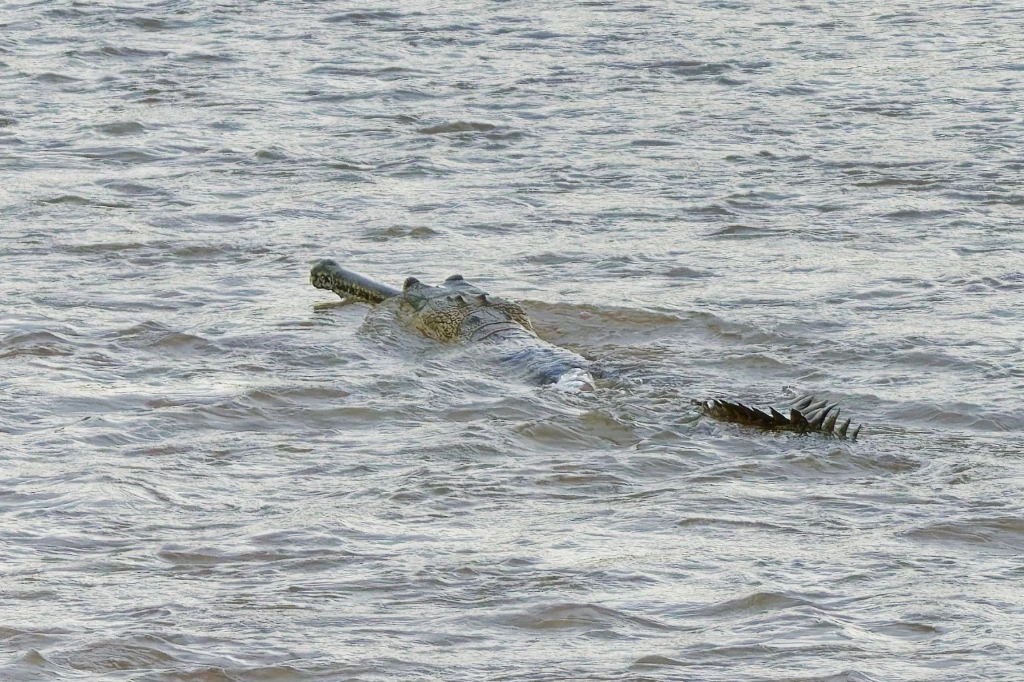
Gliding silently across the turquoise currents of the Karnali or Rapti rivers, an elongated snout armed with over one hundred interlocking needle-like teeth pierces the water's surface. You are not witnessing an ordinary reptile, but one of the planet's most extraordinary living prehistoric relics: the Gharial (Gavialis gangeticus). Alongside its robust cousin, the Mugger crocodile (Crocodylus palustris), it represents the ancient aquatic soul of Nepal's Terai lowlands. Encountering these riverside rulers in their pristine wild habitat is one of the most exclusive wildlife privileges in Asia today.
This comprehensive naturalist field guide covers the biology, evolution, behavioral ethology, conservation status, and best safari practices for tracking and photographing crocodilians in Bardia and Chitwan National Parks.
1. Evolutionary Morphology: Two Ancient Reptiles, Two Distinct Ecological Niches
While often sharing the same river systems across southern Nepal, Gharials and Mugger crocodiles have evolved along radically divergent paths over millions of years. Every facet of their morphology reflects specialized adaptations to distinct aquatic environments and dietary strategies.
The Gharial (Gavialis gangeticus): The Ultimate Piscivore
The Gharial is the sole surviving member of the ancient Gavialidae lineage. Capable of growing up to 5 to 6 meters (16 to 20 feet) in length for adult males and weighing upwards of 900 kg, its slender silhouette is unmistakable. The most distinctive feature is its extremely narrow, elongated rostrum containing 110 razor-sharp interlocking teeth. This hydrodynamic design offers virtually zero water resistance, allowing the Gharial to sweep its head sideways underwater with lightning speed to snap up freshwater fish such as the iconic Golden Mahseer (Tor putitora).
Mature dominant males develop a bulbous cartilaginous growth at the tip of their snout named the "Ghara" (derived from the Nepali and Hindi word for an earthenware water pot). This unique organ serves multiple evolutionary functions: it acts as a resonating chamber producing deep underwater hums and loud popping sounds that carry for over a kilometer during mating displays, while generating visible acoustic bubble geysers to signal dominance to rivals and attract females.
The Mugger Crocodile (Crocodylus palustris): The Apex Ambush Predator
In contrast, the Mugger crocodile features a heavy, broad snout and massive crushing jaws. Typically measuring between 3.5 and 4.5 meters, this true crocodilian is a generalist apex predator. Instead of specializing in fish, the Mugger hunts by silent ambush along river margins. Its diet encompasses wading birds, freshwater turtles, monkeys that come to drink, spotted deer (Chital), wild boar, and large fish.
Unlike the Gharial, which requires clean, deep, fast-flowing river channels with undisturbed sandbanks, the Mugger thrives in sluggish oxbow lakes (Tals), seasonal swamps, roadside marshes, and quiet forest wetlands.
Morphological and Ecological Comparison Matrix
| Feature | Gharial (Gavialis gangeticus) | Mugger Crocodile (Crocodylus palustris) |
|---|---|---|
| IUCN Red List Status | Critically Endangered (CR) | Vulnerable (VU) |
| Primary Diet | Exclusively piscivorous (freshwater fish, crustaceans) | Broad carnivore (mammals, birds, reptiles, fish) |
| Snout Anatomy | Ultra-slender, elongated with 110 needle-sharp teeth | Broad, heavy U-shaped skull with bone-crushing power |
| Terrestrial Locomotion | Cannot stand or high-walk; belly-slides on sand | Performs agile "high-walk" on land; fast sprinter |
| Preferred Biome | Deep, free-flowing rivers with expansive sandy bars | Still waters, jungle lakes, marshes, river backwaters |
| Human Risk Factor | Zero (jaws anatomically incapable of dismembering large prey) | Caution required (territorial ambush predator along muddy shores) |
2. The Science of Thermoregulation: Deciphering Basking Behavior
As ectothermic reptiles, crocodilians rely entirely on environmental heat sources to maintain optimal body temperatures, digest large meals, and synthesize vital metabolic enzymes. This behavior—known as basking—is the single most important factor for wildlife photographers and safari travelers.
During the cooler winter mornings in Chitwan and Bardia, river water temperatures drop significantly. As morning mist lifts over the Rapti and Karnali rivers around 8:30 to 9:00 AM, Gharials haul their massive bodies out of the water onto sun-drenched sandbanks. They orient their torsos perpendicular to the sun's rays. By midday, when ambient temperatures peak, they open their jaws wide in a posture known as mouth gaping. This evaporative cooling mechanism regulates brain temperature while allowing the thick dorsal osteoderms to continue absorbing vital solar radiation.
💡 Field Observation Note: Webbed Hind Feet
Gharials feature extraordinarily large webs between their hind toes, giving them unmatched stability and maneuverability in heavy river currents. However, because their pelvic muscles cannot support their weight off the ground, they slide on their bellies when moving on land, leaving a wide, smooth track bordered by claw marks.
3. Prime Locations and Seasonal Tracking Guide in Nepal
Nepal remains one of the last global bastions for wild breeding populations of Gharials, alongside select river reserves in northern India.
1. Bardia National Park (Karnali and Babai Rivers)
Bardia is the premier destination for genuine wilderness crocodilian safaris. Along the braided channels of the Karnali River and the Geruwa branch, visitors can observe massive solitary males basking peacefully without crowds. The remote Babai Valley, accessible via multi-day expedition safaris, hosts pristine sandbars where wild nesting occurs under the protection of park rangers and the Nepal Army.
2. Chitwan National Park (Rapti and Narayani Rivers)
Chitwan offers effortless, highly rewarding encounters. Drifting down the calm Rapti River in a traditional dugout wooden canoe (Dunga) provides close-range, low-angle photographic vantage points. At the Narayani confluence near Kasara, visitors can also tour the internationally acclaimed Gharial Conservation & Breeding Center, which rescues vulnerable river nests, raises hatchlings to juvenile maturity, and releases hundreds back into the wild.
Best Time of Year for Crocodile Safaris
- October to December (Peak Clarity): Post-monsoon waters run crystal clear. Crisp morning air encourages long, uninterrupted basking sessions on sandbars throughout the day.
- January to March (Breeding Season): Courting rituals take place. Male Gharials display their Ghara acoustic pops, and river levels drop to their annual low, maximizing exposed sandbank areas.
- April to May (Nesting Period): High daytime temperatures push reptiles into shaded waters during noon, with active basking in early morning and late evening. Females dig deep egg chambers in sandy riverbeds.
- June to September (Monsoon Season): High-volume seasonal flooding submerges sandbars and creates heavy silt conditions, rendering canoe safaris challenging and limited.
Observe Gharials and Crocodiles in Wild Nepal
Silent river rafting safaris and scenic boat expeditions in Bardia National Park.
4. Critical Threats and Conservation Efforts in Nepal
With fewer than 900 mature individuals left across the globe, the Gharial is listed as Critically Endangered on the IUCN Red List. Conservation initiatives spearheaded by the Department of National Parks and Wildlife Conservation (DNPWC) and WWF Nepal combat several ongoing challenges:
- Gillnet Entanglement: Unmonitored fishing nets pose the greatest immediate danger. A Gharial's long, tooth-lined snout easily catches in nylon mesh, causing drowning within minutes.
- Sand Mining and Habitat Loss: Mechanized extraction of gravel and sand from riverbanks destroys critical nesting and basking micro-habitats.
- Dams and Water Diversion: Hydropower barriers fragment populations, disrupting fish spawning migrations and isolating resident breeding groups.
- Water Quality and Depletion: Agricultural runoff and overfishing directly diminish the freshwater fish stocks essential for Gharial nutrition.
Thanks to head-starting programs at Kasara and anti-poaching patrols across Bardia and Chitwan, Nepal's river ecosystems continue to support a steadily growing population of wild crocodilians, serving as an inspirational benchmark for global river conservation.
5. Wildlife Photography Techniques & Safety Protocols
Recommended Camera Gear and Field Settings
- Focal Length: 300mm to 600mm telephoto lenses (e.g., 100-400mm or 200-600mm) ensure intimate framing while maintaining a respectful safety distance outside the animal's alert zone.
- Shutter Speed: Maintain at least 1/1000s when photographing from drifting canoes to counteract water movement and gentle paddle oscillations.
- Perspective: Shooting low from water level isolates the subject beautifully against the glistening river background, emphasizing the prehistoric texture of dorsal scutes.
Essential River Safety Rules
- Keep Safe Distance from Muddy Margins: Mugger crocodiles are stealth ambush predators. Always maintain at least a 5-meter buffer from deep, murky river edges.
- Never Block Water Escape Routes: Always ensure a basking reptile has an unobstructed path back to the river channel.
- Follow Guide Instructions Immediately: Naturalist guides read river ripples and animal body language long before potential hazards become obvious.
6. A Day on the River: Step-by-Step Naturalist Expedition Breakdown
To truly grasp how river wildlife observation unfolds in the Terai, here is a detailed breakdown of a standard expedition day on the Karnali or Rapti rivers:
- 06:00 - Dawn Briefing & River Reading: Your guide checks the river mist and wind direction. Crocodiles and Gharials are extremely sensitive to vibrations and sound carrying over still water.
- 07:30 - Boarding the Wooden Dunga or Raft: Pushing off silently from the silt shores. The boatman uses a single long bamboo pole (Lathi) to glide downstream without splashing.
- 09:15 - First Basking Encounters: As the sun warms the sand islands, the first Gharials emerge from deep river pools. We drift past at a steady distance of 15 to 20 meters, allowing breathtaking eye-level photography.
- 12:30 - Sandbar Bush Lunch & Animal Track Analysis: We moor on a secure, high sandbank. While enjoying a traditional packed Tharu lunch, our trackers identify pugmarks of Royal Bengal Tigers and Asian Elephants that crossed the river at night.
- 15:30 - Confluence Exploration & Birdwatching: Drifting toward deeper river junctions where Golden Mahseer feed. Kingfishers, Ospreys, and Lesser Adjutant Storks circle above the aquatic predators.
- 18:00 - Sunset Return & Debrief: Sunset casts a copper glow across the water while mugger eyes reflect the twilight from the reedy banks.
7. Complete Wildlife Gear and Packing Checklist for River Safaris
Preparing the right equipment ensures both personal comfort and pristine photographic opportunities in remote aquatic environments:
- Optics: Binoculars with 8x42 or 10x42 magnification and waterproof coating (essential for identifying snouts in distant heat haze).
- Camera Dry Bags: Heavy-duty roll-top waterproof dry bags (10L to 20L) to safeguard telephoto bodies against river spray and unexpected boat shifts.
- Attire: Neutral, muted earth tones (olive, khaki, stone). Avoid bright white and fluorescent colors that spook wild crocodilians into diving.
- Sun & Skin Protection: Polarized sunglasses (crucial to cut water glare and spot submerged reptiles below the surface), eco-friendly biodegradable sunscreen, and wide-brim safari hat.
- Footwear: Fast-drying amphibious sandals or light trail shoes with rugged soles for wet riverbank landings and muddy sandbars.
8. Case Study: The Natural Rewilding of the Babai River Valley
The Babai River Valley in eastern Bardia serves as a living laboratory for riverine conservation. In the mid-1980s, the Nepalese government completed the voluntary resettlement of human farming communities outside park boundaries to restore uninterrupted wilderness corridors. Over the ensuing four decades, the Babai underwent an astounding ecological resurgence.
The pristine sandbars of the Babai, formed by the natural deposition of fine quartz sand and nutrient-rich silt, provide ideal thermal incubation zones for wild Gharial nests. Female Gharials excavate deep nest chambers between March and April, laying clutches of 30 to 50 large eggs. The micro-temperature within the subterranean nest controls sex determination—slightly warmer sand temperatures produce male offspring, while cooler nests yield females.
During our guided foot and river expeditions in the Babai Valley, our trackers frequently observe dedicated maternal care: female Gharials remain vigilant beside the communal river nursery for several weeks, actively defending hundreds of vocalizing hatchlings against predatory fish eagles and Bengal monitor lizards.
9. Essential Naturalist Summary for Planning Your Expedition
- Prime Locations: Terai River Basins (Bardia: Karnali & Babai • Chitwan: Rapti & Narayani).
- Best Timing: November through late March for peak sandbar exposure and clear waters.
- Recommended Method: Silent wooden canoe drifts at dawn or camouflaged walking safaris.
- Gear Checklist: 400-600mm telephoto lens, 10x42 waterproof optics, and neutral khaki attire.
Frequently Asked Questions (FAQ) — Nepal Crocodiles & Gharials
Are Gharials dangerous to humans?
No. Gharials have extremely slender jaws adapted exclusively for catching fish. Their jaw structure cannot tackle or dismember large mammals. Mugger crocodiles, however, are opportunistic predators and require respectful safety distances.
What is the difference between a Gharial and a regular crocodile?
The Gharial has a long, needle-toothed snout, a bulbous Ghara on adult males, and slides on its belly on land. True crocodiles like the Mugger possess broad, powerful jaws and can perform a high-walk on dry land.
Which park is better for viewing: Bardia or Chitwan?
Both are superb. Chitwan provides effortless, guaranteed sightings via daily Rapti River canoe floats. Bardia provides an untamed, crowd-free wilderness experience along the grand Karnali and Babai rivers.
How many Gharials survive in Nepal today?
Recent official surveys by DNPWC and WWF Nepal estimate between 250 and 300 wild Gharials in Nepal, primarily residing in the Narayani, Rapti, Karnali, and Babai river systems.
To combine crocodile tracking with Bengal tiger and rhino expeditions, explore our Bardia Wilderness Explorer Tour or browse our Bardia Destination Guide.