
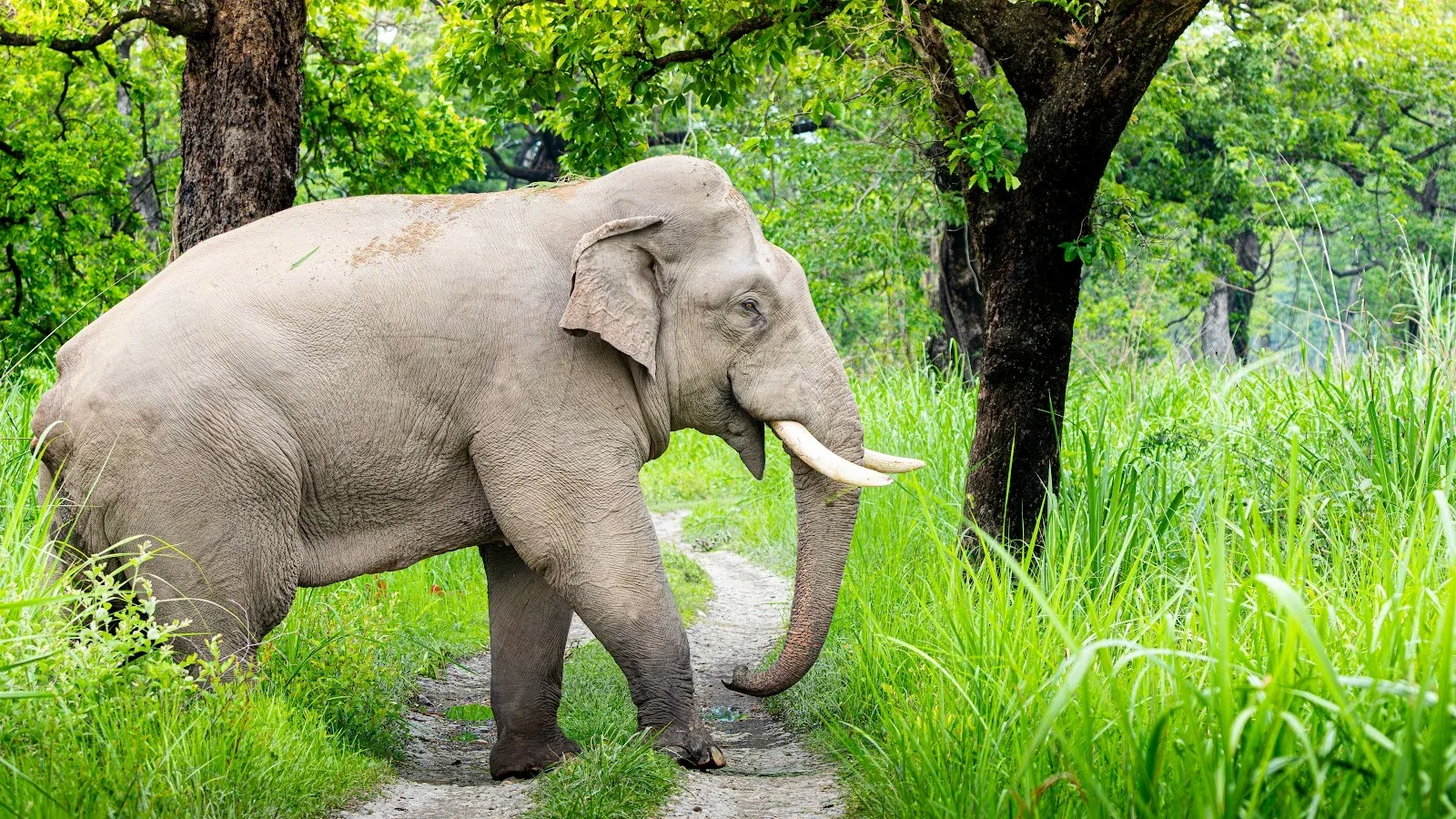
The earth vibrates under a step of colossal weight, yet not a single twig snaps. In the dense twilight beneath the Sal canopy in Bardia, a titanic silhouette standing well over ten feet tall emerges through the elephant grass: a wild Asian elephant (Elephas maximus). Possessing immense physical power, deep generational memory, and sophisticated emotional intelligence, this forest titan is the sovereign ruler of Nepal's Terai lowlands. Tracking a wild bull elephant on foot is undeniably one of the most exhilarating, heart-pounding wilderness experiences on Earth.
This comprehensive naturalist field guide explores the biology, matriarchal family dynamics, solitary bull behavior during hormonal Musth, transboundary wildlife corridors of the Terai Arc Landscape (TAL), and strict on-foot safety protocols in Bardia, Chitwan, and Suklaphanta National Parks.
1. The Wild Asian Elephant in Nepal: Biology, Population & Keystone Role
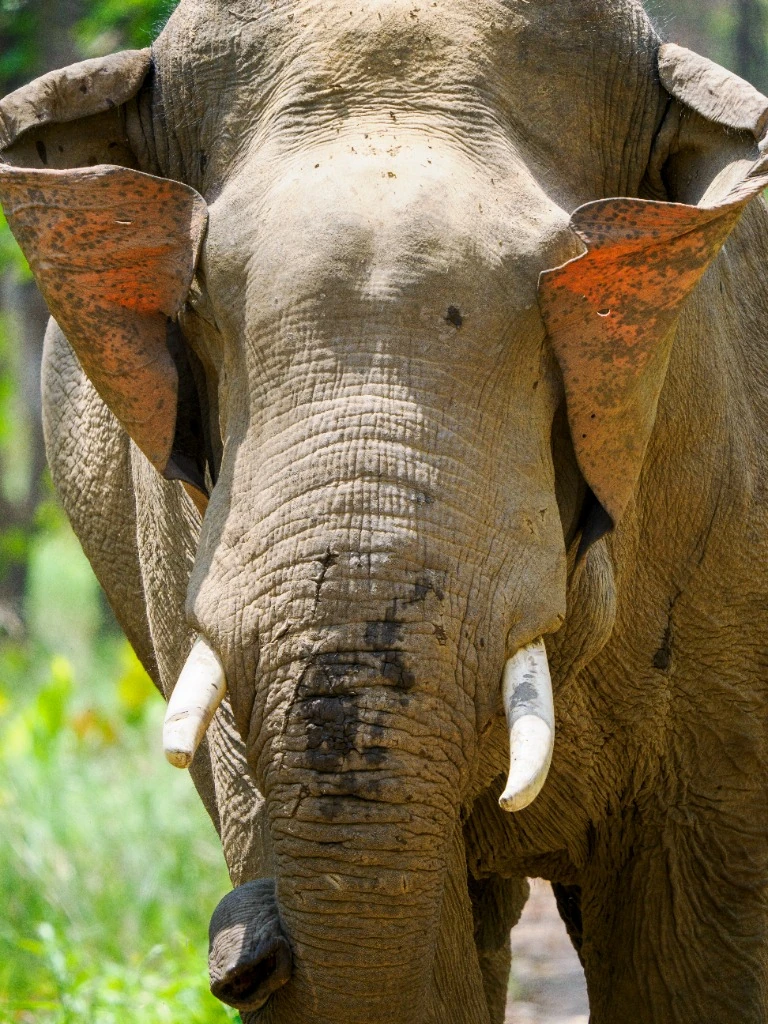
The Asian elephant (Elephas maximus) is the largest living terrestrial mammal on the Asian continent. In Nepal, the resident wild population is estimated between 200 and 250 individuals, distributed across four main subpopulations along the southern Terai belt: Eastern (Jhapa and Koshi Tappu), Central (Chitwan National Park and Parsa), Western (Bardia National Park), and Far-Western (Suklaphanta National Park).
Ecosystem Engineers of the Sal Forest
Wild elephants are not merely jungle residents; they are indispensable ecological engineers. A single adult consumes between 150 and 200 kilograms (330 to 440 lbs) of vegetation daily, including tall elephant grasses, tree bark, wild acacia shoots, and river reeds. This foraging activity opens critical light gaps in the dense Sal tree canopy, allowing sun-loving herbaceous plants to flourish on the forest floor.
Furthermore, their extensive dung piles disperse thousands of forest seeds across the Terai Arc Landscape, fertilizing the topsoil and sustaining dung beetles, birds, and small mammals. During dry pre-monsoon months, elephants use their feet and tusks to dig deep depressions in dry riverbeds, creating essential watering holes utilized by tigers, rhinos, and spotted deer.
Comparison Table: Matriarchal Herds vs Solitary Bull Elephants
| Trait | Matriarchal Family Herd | Mature Bull Elephant (Solitary) |
|---|---|---|
| Group Structure | 5 to 20 individuals (cows, juveniles, calves) | Solitary or loose bachelor associations |
| Leadership | Oldest, most experienced matriarch | Individual dominance based on size and age |
| Tusk Development | Absent in females (or minute tushes) | Long curved tusks (Tuskers) or tuskless (Makhnas) |
| Encounter Temperament | Highly protective of young; mock charge warnings | Calm when relaxed; unpredictable during Musth |
| Habitat Preferences | Floodplain tall grasslands, riverine riverbeds | Extensive ranges across rugged Siwalik foothills |
2. The Physiology of Musth: Hormonal Surges in Bull Elephants
Musth (derived from the Persian word for intoxicated) is a natural periodic condition in healthy adult bull elephants. During this phase, a bull's testosterone levels can spike 40 to 60 times higher than baseline levels. This extreme hormonal state is visibly signaled by copious secretions from the temporal glands located between the eye and ear, accompanied by continuous urine dribbling.
A bull in musth exhibits heightened territoriality and assertiveness. He continuously advertises his prime reproductive status, uprooting large trees and challenging rival bulls for access to breeding herds. On walking safaris, our trackers constantly read the wind for the pungent, musky scent of musth, executing immediate detour maneuvers to ensure complete group safety.
🐘 Bardia's Legendary Giant Bulls: "Bahadur" and "Ronaldo"
Bardia National Park is world-renowned for hosting some of the largest wild Asian bull elephants on Earth. Legendary bulls such as Bardia Bahadur and Ronaldo stand over 3.4 meters (11 feet) tall at the shoulder with tusks exceeding five feet in length, exhibiting striking anatomical resemblances to ancient woolly mammoths.
3. Transboundary Wildlife Corridors (The TAL Project)
Nepal's wild elephants traverse extensive historical migration routes that cross international borders between Nepal and adjacent protected areas in India (including Dudhwa, Katarniaghat, and Valmiki Tiger Reserves).
The Terai Arc Landscape (TAL) program, overseen by the Nepalese government (DNPWC) and WWF Nepal, preserves critical ecological bottlenecks like the Khata and Basanta Corridors. Maintaining these contiguous forest passages prevents habitat fragmentation and mitigates human-wildlife conflict along agricultural fringes.
Track Wild Elephants in Bardia National Park
Eco-friendly walking safaris and wild expeditions led by certified local trackers.
4. Vital On-Foot Safety Protocols for Elephant Encounters
Encountering a wild elephant on foot demands absolute situational awareness and disciplined calm. Elephants possess acute hearing and olfactory senses, though their eyesight is less sharp at distance. Our senior guides follow strict safety rules:
- Constant Wind Direction Monitoring: Guides frequently drop pinches of fine dry dust to assess breeze shifts. We always position the group downwind to prevent human scent from reaching the elephant.
- Deciphering Behavioral Cues:
- Relaxed state: Rhythmic ear fanning to regulate body heat; trunk casually pulling grass clumps.
- Alert state: Ears locked rigidly perpendicular to head; trunk held high testing scents; forward foot swaying.
- Mock charge: Loud shrill trumpet; vigorous head shaking; short rapid forward rush of 15 to 20 meters before abrupt stop.
- Real charge: Ears pinned flat against skull; trunk tightly curled under chin; silent, devastatingly fast forward sprint.
- Emergency Protocol During a Charge:
- Never run in a straight line along an open track: elephants sprint at speeds up to 40 km/h (25 mph) on flat terrain.
- Run in a zigzag pattern through dense forest, placing thick Sal tree trunks between yourself and the charging animal.
- Drop a bulky item (backpack or jacket) onto the path: an elephant's natural curiosity will frequently cause it to pause to inspect and trample the object, buying vital escape time.
5. Wildlife Photography Masterclass: Wild Elephants in the Jungle
- Low-Angle Perspectives: Shooting from low hides or eye-level vantage points accentuates the immense scale and majesty of large bulls.
- Exposure Compensation: An elephant's slate-grey skin absorbs extensive light in shaded forest canopies. Dial in +0.3 to +0.7 EV compensation to recover subtle skin texture and dry mud details.
- Focus on the Eye and Trunk Base: Ensures razor-sharp focus where it counts most, even when shooting wide open at f/2.8 or f/4.
6. Social Ethology and Infrasonic Seismic Communication
The study of Asian elephant social behavior demonstrates cognitive sophistication on par with great apes and cetaceans. Matriarchal herds, comprised of multiple generations of related females and calves, exhibit intense lifelong bonds characterized by cooperative calf-rearing and grief rituals for deceased family members.
One of the most remarkable discoveries in modern elephant biology is their use of infrasonic communication. These ultra-low frequency rumbles (ranging between 14 and 24 Hz), completely below human hearing thresholds, travel through both air and ground for distances exceeding 10 kilometers (6 miles). Elephants detect these ground vibrations via specialized mechanoreceptors (Pacinian corpuscles) embedded in the dense fat pads of their feet and sensitive trunk tips. This subterranean network allows scattered family groups across Bardia to coordinate movements, broadcast warnings of danger, and locate distant breeding partners.
7. Human-Elephant Coexistence and Innovative Buffer Zone Solutions
As human settlements along the boundaries of Bardia, Chitwan, and Suklaphanta expand, community buffer zones frequently become areas of seasonal conflict. During rice and sugarcane harvest seasons (September to November), adventurous bull elephants often forage into agricultural fields under the cover of night.
To establish sustainable, non-violent coexistence, indigenous Tharu communities and conservation organizations (WWF Nepal, DNPWC) have pioneered innovative biological deterrents:
- Chili and Beehive Fencing: Elephants have extraordinary olfactory sensitivity and actively avoid the pungent aroma of capsaicin from hot chili ropes. Similarly, they fear bee stings on their delicate trunks. Beehive fences along forest borders naturally deter elephants while producing high-grade forest honey that provides local farmers with supplemental income.
- Community Watchtowers (Machans): Farmers take turns maintaining night watches from elevated tree towers, using solar searchlights and acoustic alarms to herd elephants back into park territory without violence.
- Rapid Crop Insurance & Tourism Revenue Sharing: Up to 50% of national park entrance fees are directly reinvested into community development and rapid crop compensation funds, transforming local communities into invested guardians of wild pachyderms.
8. Recommended Gear for On-Foot Elephant Tracking Safaris
- Silent Footwear: Lightweight hiking boots or trail runners with supple rubber soles that minimize noise when walking over brittle dry Sal leaves.
- High-Clarity 8x42 or 10x42 Optics: Crucial for penetrating low-light understory conditions to spot subtle ear twitches through dense grass.
- Earth-Toned Jungle Clothing: Breathable, ripstop cotton shirts and trousers in muted olive, drab green, or mud brown.
9. Masterclass in Field Tracking: Deciphering Elephant Signs
Reading the subtle indicators left by forest elephants without seeing them is the core skill taught in the Bardia Naturalist Academy. Key field signs include:
- Pugmark Circumference Formula: An elephant's hind foot makes an oval depression, while the front foot leaves a circular print. Naturalist rule of thumb: twice the circumference of the front footprint equals the approximate shoulder height of the elephant!
- Tree Debarking Patterns: Elephants gouge their tusks into the bark of Kadam and Sal trees, tearing off long fibrous strips to consume the mineral-rich inner cambium.
- Mud-Rubbing Posts: After bathing, elephants vigorously rub their flanks against large tree trunks to scrape away parasites and dried clay. The vertical height of the mud mark directly indicates the animal's physical stature.
- Dung Thermal Freshness: Placing a palm near elephant dung reveals radiant warmth and internal moisture, providing an accurate estimate of whether the animal passed fifteen minutes or several hours ago.
10. Seasonal Movement Calendar for Wild Elephants
- October to December: Foraging in tall grassland floodplains after monsoon rains. Clear sightings along riverbanks.
- January to March: Herds disperse into deep Sal woodlands. Bull elephants begin roaming extended territories in active Musth.
- April to June: Extreme heat forces herds to spend long daily hours in river rapids and perennial waterholes. High predictability at water points.
- July to September (Monsoon): Herds migrate toward the higher, well-drained Siwalik hills to escape flooded lowlands.
11. In-Depth Case Study: The Legend of Bardia's Tuskers
Unlike many wildlife reserves across Asia where selective poaching has drastically reduced the prevalence of prominent tusks among bull elephants, Western Nepal retains healthy genetic lineages capable of growing monumental ivory. Bulls like Bardia Bahadur demonstrate exceptional solitary foraging strategies. During the winter, they navigate deep into the Siwalik hill valleys to graze on high-protein wild bamboo shoots before descending onto the Karnali floodplains in spring.
Observing a bull of this magnitude crossing a river channel at dawn—surrounded by rising mist and illuminated by the orange glow of sunrise over the Himalayas—remains the ultimate benchmark of an authentic wildlife expedition in Nepal.
12. Extended Field FAQ & Wildlife Biology Notes
How do wild Asian elephants cope with monsoon floods?
Elephants are extraordinarily powerful swimmers. They can cross raging channels of the Karnali River during peak monsoon currents, utilizing their buoyant body mass and extending their trunk tips above the surface as natural snorkels. As lowland plains submerge, family herds migrate to the higher forested slopes of the Siwalik hill range.
What is the lifespan and reproductive cycle of wild elephants in Nepal?
Wild Asian elephants have an average lifespan of 60 to 70 years in protected habitats. Female cows reach sexual maturity around age 12 to 14, undergoing a gestation period of 20 to 22 months—the longest pregnancy of any terrestrial mammal. Calves nurse for up to 3 to 4 years and are cooperatively protected by all herd aunts and sisters (allomothering).
Frequently Asked Questions (FAQ) — Wild Elephants in Nepal
What is the difference between Asian and African elephants?
Asian elephants are smaller, possess smaller ears shaped somewhat like the Indian subcontinent, have a convex curved back, and feature a single prehensile finger at the trunk tip (compared to two fingers in African elephants). Only select Asian males carry prominent tusks.
Is walking with wild elephants safe?
Walking safaris are conducted by two licensed DNPWC naturalist guides with deep expertise in animal behavior. By strictly respecting wind direction and buffer distances, on-foot encounters are both exhilarating and safe.
Which park offers the best wild elephant sightings in Nepal?
Bardia National Park and Suklaphanta National Park offer the highest probability of encountering truly wild, unhabituated elephant herds and legendary giant tuskers in untamed natural habitats.
Do you offer elephant-back safari rides?
No. Jungle Nepal Adventure strictly refuses captive elephant-back rides. We advocate 100% ethical wildlife viewing focused on observing wild animals in their natural habitats on foot or from rivercraft.
Explore our multi-day wilderness trekking itineraries like Bardia & Babai Wild Camping Safari or read our Complete Suklaphanta Guide.