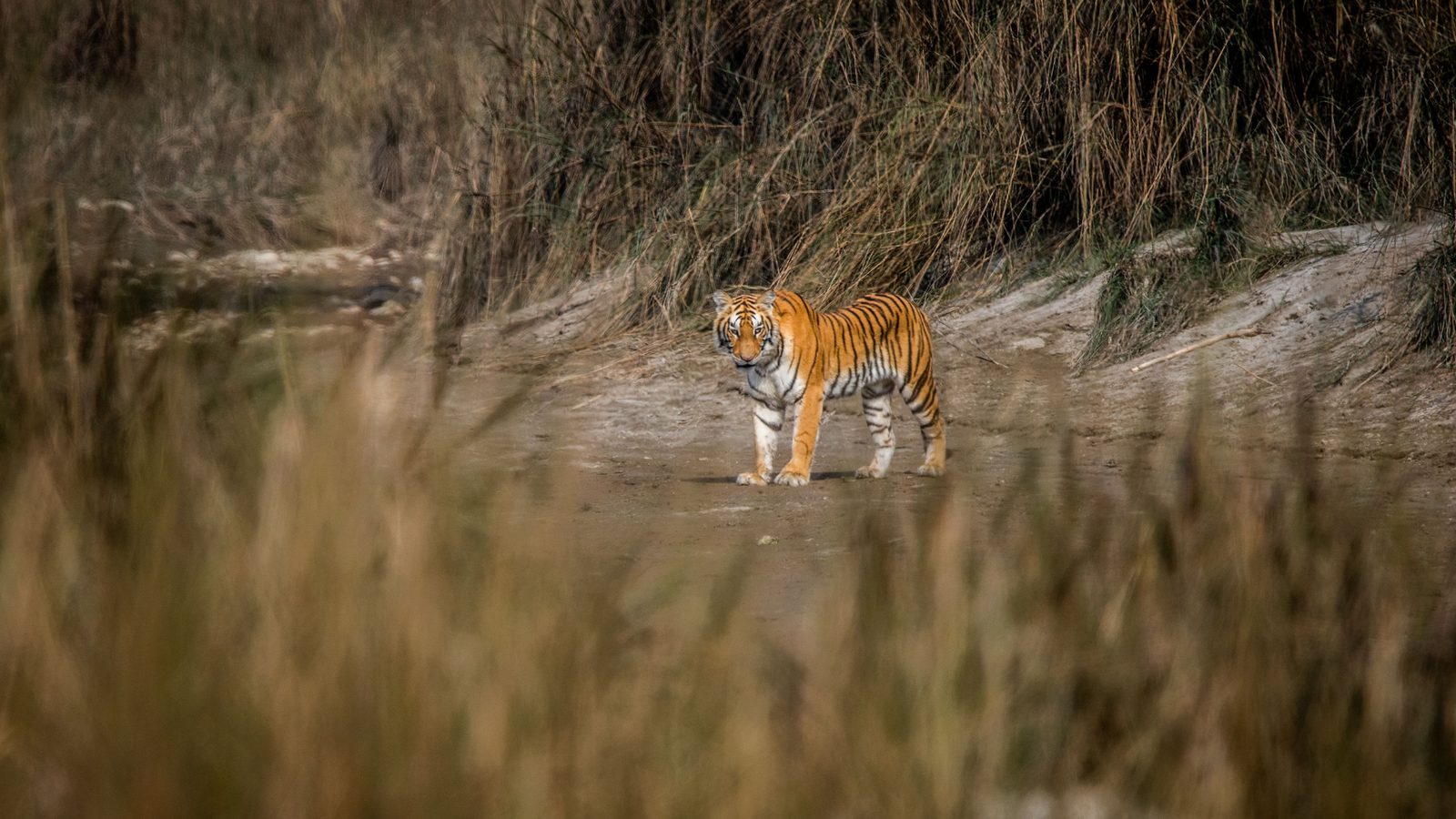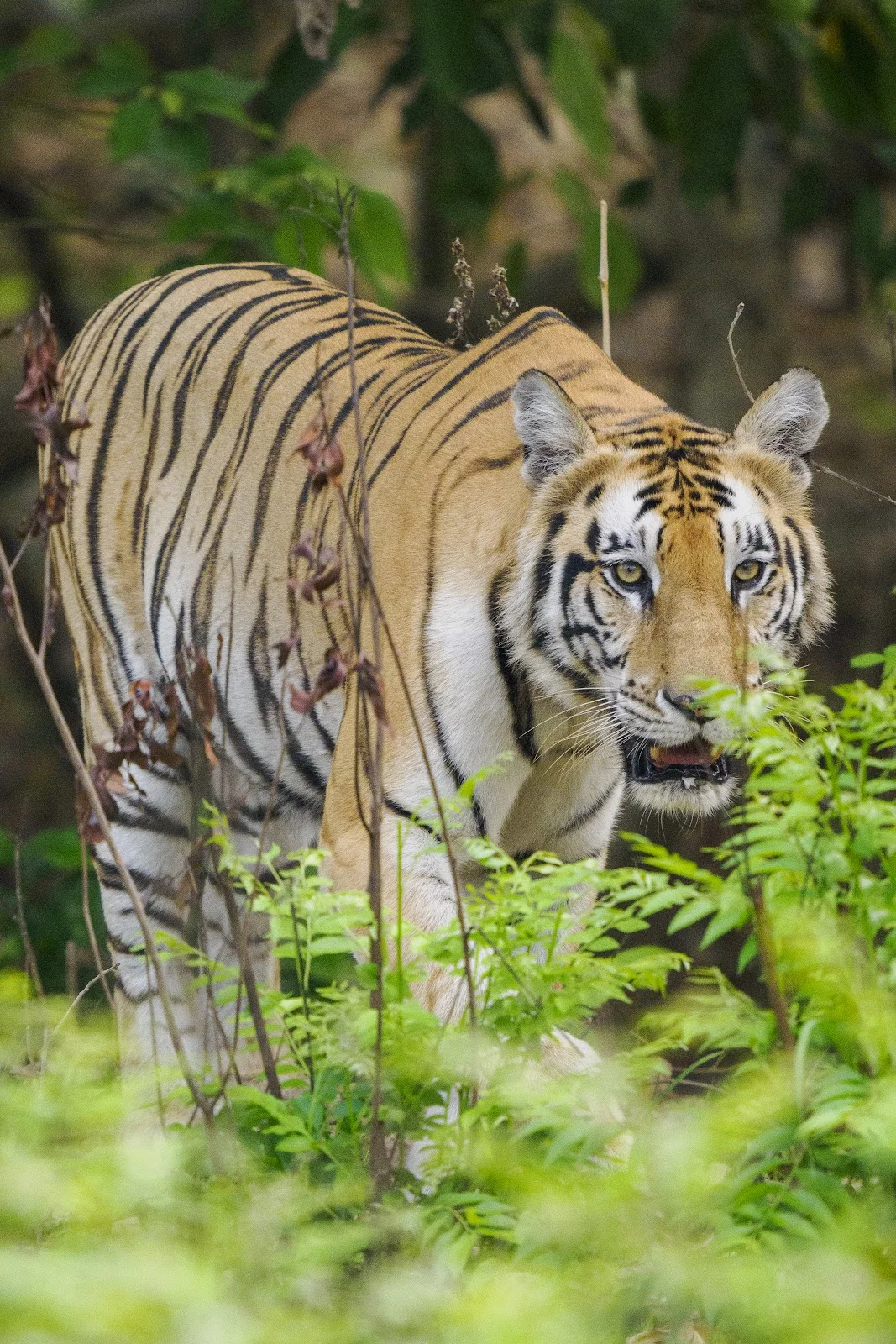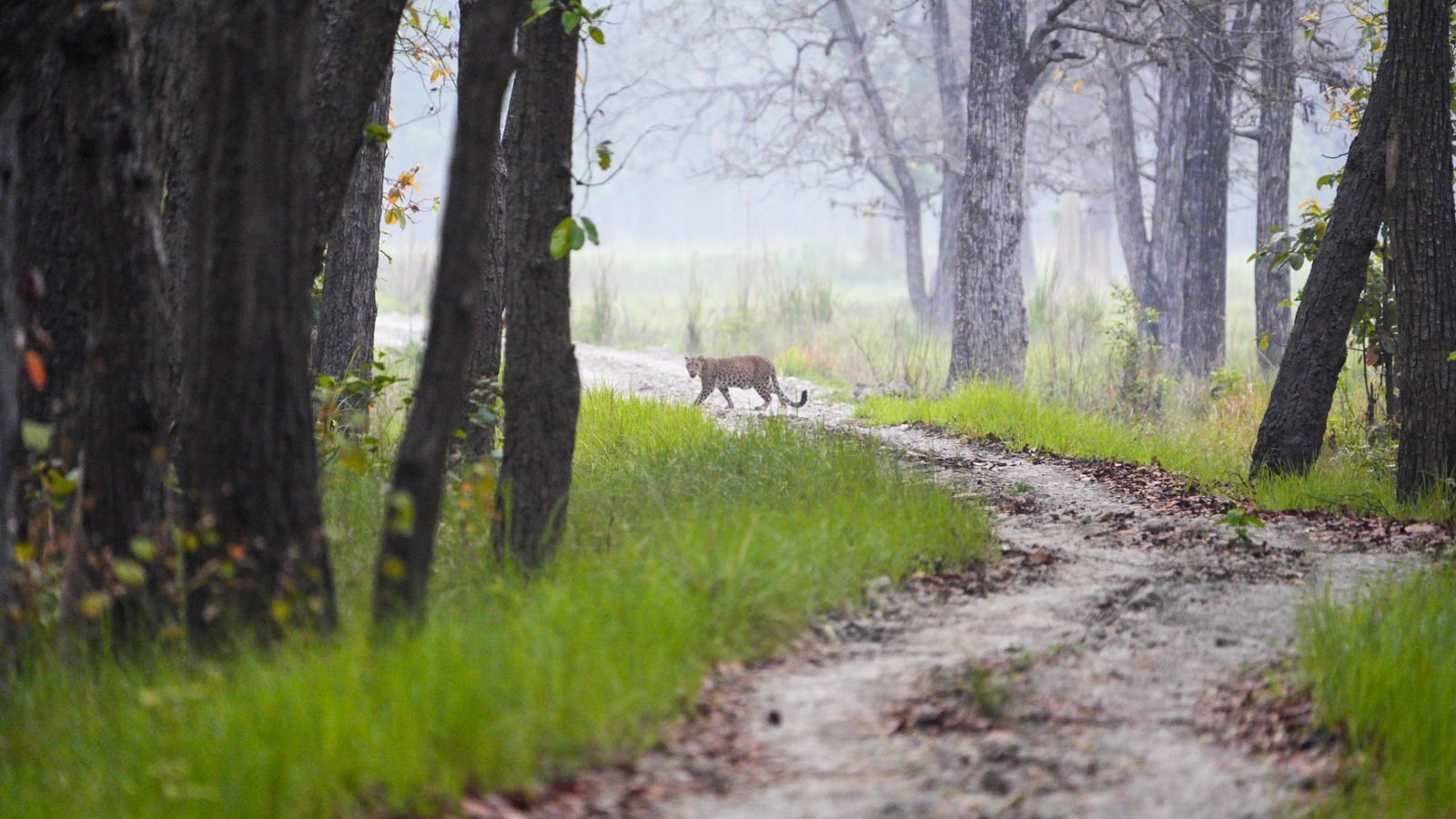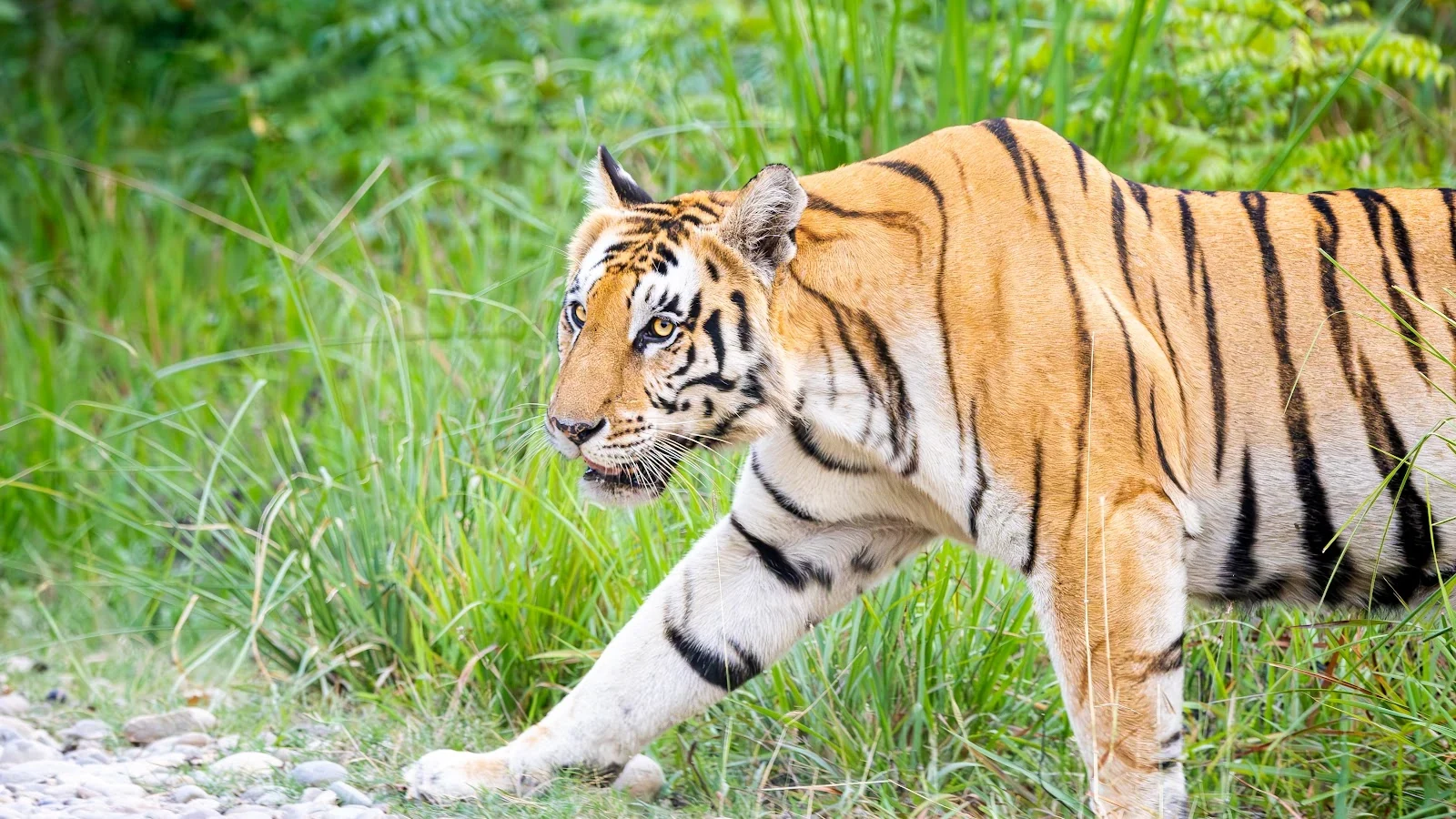

Entering the pristine jungles of Bardia or Suklaphanta on foot is unlike any other wildlife experience on earth. Deprived of the protective metallic shell of a safari jeep, every single human sense is instantly amplified. In these dense Sal tree forests and four-meter-tall elephant grasslands, sight alone is never enough. To locate apex predators, greater one-horned rhinos, or wandering wild elephant herds, one must learn to read the jungle like an open manuscript. This is the ancient art of wildlife tracking, handed down through generations of indigenous Tharu forest dwellers and honed to perfection by Nepal's most accomplished field naturalists.
Modern wildlife tracking in subtropical ecosystems is not mystical folklore; it is a meticulous empirical science. It merges biomechanical footprint analysis, bioacoustics of the forest canopy, microclimate thermal awareness, and profound animal behavioral psychology. In this detailed field guide, we take you behind the scenes to reveal the exact methods used by our expert trackers to turn every walking safari into an exhilarating and deeply safe adventure.
1. Reading Pugmarks: Deciphering Footprints to the Millimeter
A footprint in the ground — known as a pugmark across South Asia — is an animal's unmistakable personal signature. Every species, sex, and individual specimen leaves a unique imprint. On the soft sandbanks of the Geruwa, Babai, or Karnali rivers, as well as along dusty jungle tracks, our trackers extract an astonishing amount of intelligence from a single track.
Biomechanical Morphometrics of the Bengal Tiger
Identifying the sex, physical size, and movement pace of a Bengal tiger from its pugmark is vital for mapping the resident territories of dominant cats:
- The Male Tiger: The overall footprint fits inside a perfect square. The four toe pads are massive, rounded, and closely set. The central metacarpal pad is remarkably wide, frequently measuring between 13 and 16 centimeters across. The stance angle of the front paws is wider to support a massive chest exceeding 220 kilograms.
- The Female Tigress: The footprint fits into a narrower vertical rectangle. Her toe pads are more elongated and oval-shaped, and the central pad width rarely exceeds 11.5 centimeters. Her trackway follows a narrower, more aligned central axis.
- Pace Register (Overstep vs Understep): During normal stalking or slow walking, the tiger places its rear paw precisely into the footprint made by its corresponding front paw (direct register walking). If cautiously stalking, the rear paw falls behind the front track (understep). When trotting or charging, the rear footprint lands well ahead of the front impression (overstep).
| Species | General Shape | Key Identification Feature | Deduced Behavior |
|---|---|---|---|
| Bengal Tiger | Circular / Square (male) | No claw marks (retractile), 3 rear lobes on main pad | Silent deliberate stride, boundary patrol |
| Indian Leopard | Oval and compact (7-9 cm) | Approximately half the size of a mature tiger print | Edge movement, tree-line proximity |
| One-Horned Rhino | Clover-shaped (25-35 cm) | Three distinct heavy hoof lobes without feline pad | Habitual trail travel along cleared tunnels (dandas) |
| Sloth Bear | Elongated plantigrade | 5 prominent non-retractile digging claws (6-8 cm) | Termite mound foraging, meandering gait |
| Asian Elephant | Circular / Elliptic (35-50 cm) | 5 nail marks front, 4 nail marks rear, cracked sole texture | Matriarchal column march or lone bull roaming |
Gauging Track Freshness: The Edge, Wind, and Moisture Rule
Finding a track is exciting; determining whether the cat walked past 5 minutes ago or last night is what ensures safety and successful sightings. Trackers rely on proven physical indicators:
- Edge Crispness and Soil Cohesion: When a tiger steps into moist alluvial river sand, the displaced sand creates a sharp, damp lip around the pad depression. Under the tropical Terai breeze and sun, these delicate sand ridges dry out, lose their dark tone, and crumble within 20 to 30 minutes. If individual sand grains are still visibly trickling into the depression, the animal is lurking in the adjacent thicket.
- Dew and Mist Deposition: Early in the morning between 6:00 and 8:00 AM, the ground is saturated with dew. If a pugmark displays an unbroken glaze of micro-droplets matching the surrounding soil, it dates from the middle of the night. However, if the footstep crushed through morning dew, exposing fresh, dark, warm earth without condensation, the cat crossed the trail at daybreak.
- Cross-Layering of Other Species: Forest wildlife leaves a continuous timeline. If bird tracks (thick-knees, lapwings) or dung beetle grooves cut across the tiger's footprint, the feline passed earlier. If the tiger's paw crushed a fallen Sal leaf whose green veins have not yet wilted, proximity is immediate.
2. Territorial Signposts: Claw Rakes, Scrapes, and Scent Signatures
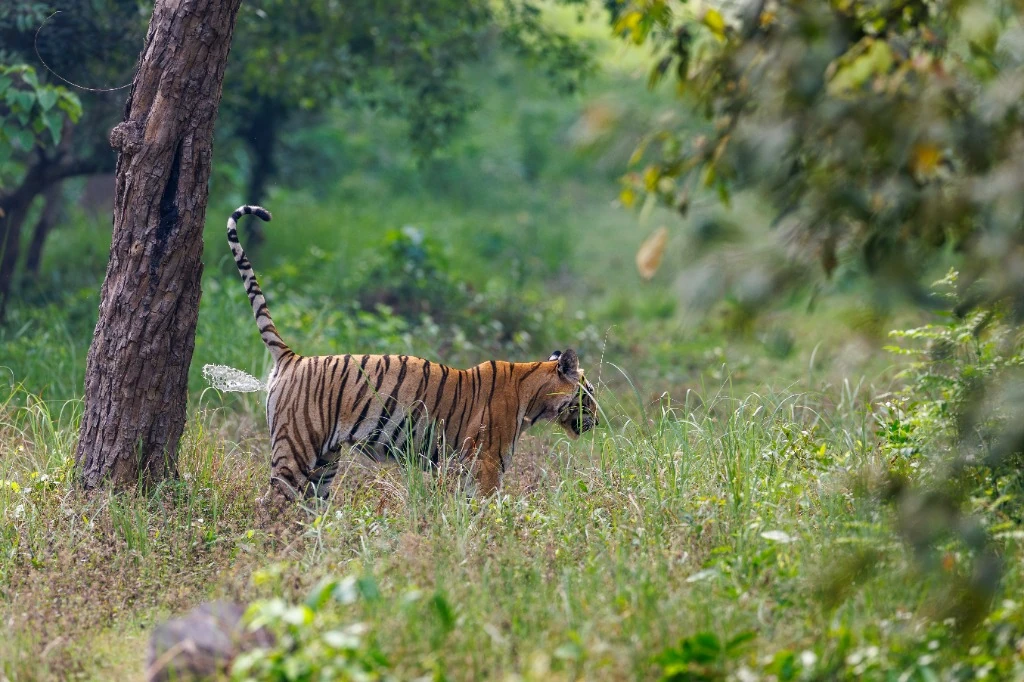
Tigers and leopards are solitary territorial apex predators that maintain continuous communication with neighbors through visual and olfactory boundary markers. Spotting these signposts reveals whether you are walking through the core territory of a resident master or across a transient corridor.
Claw Trees (Tree Scratches) and Reach Height
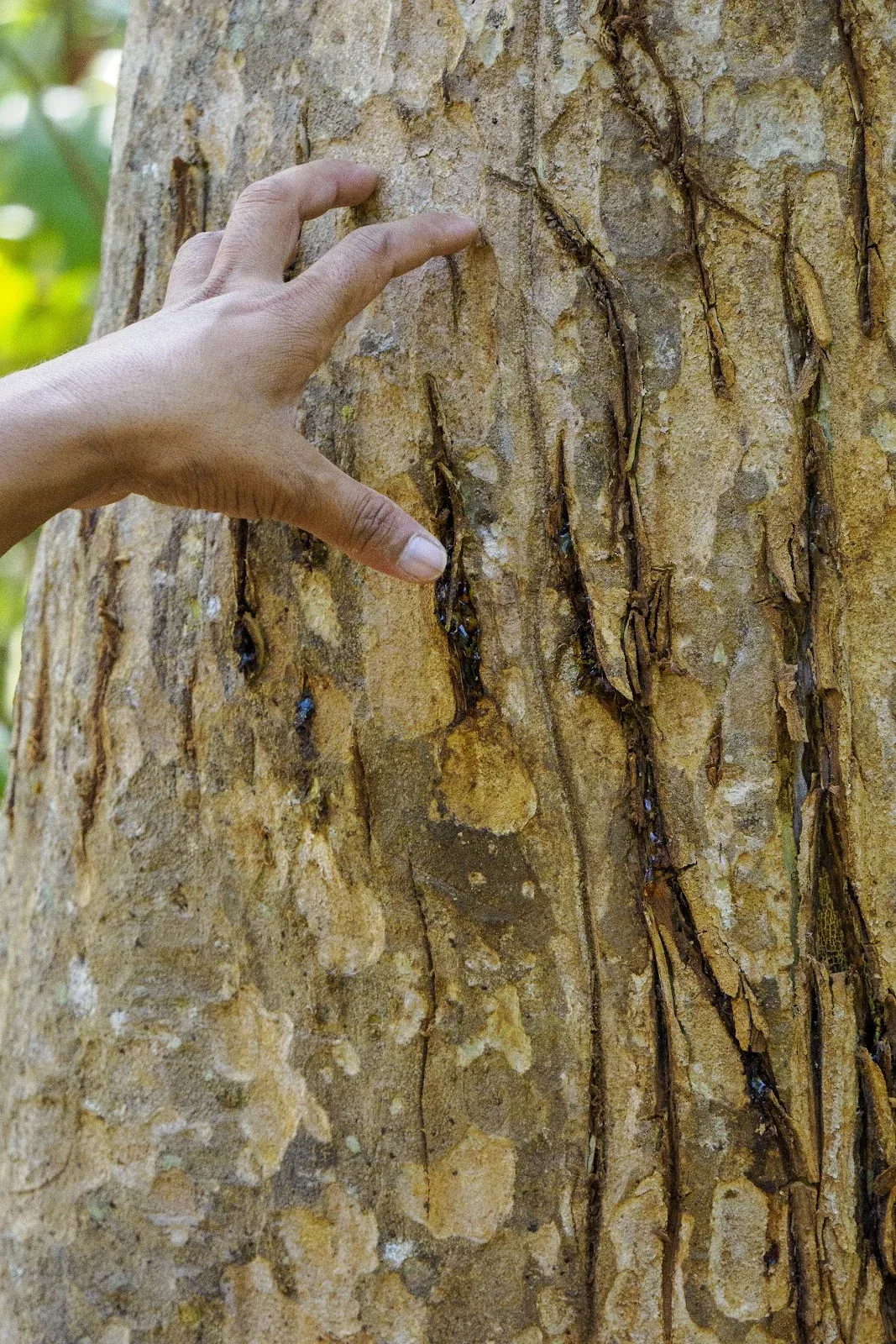
Along primary jungle corridors, trackers inspect the sturdy trunks of Sal (Shorea robusta) and Silk Cotton (Bombax ceiba) trees. Tigers stand on their hind legs and rake the bark vertically up to 2.6 meters above the ground. This behavior serves a dual purpose: sharpening their retractable claws and depositing scent secretions from interdigital glands. The higher the scratch marks, the larger and more intimidating the resident cat appears to roaming challengers.
Ground Scrapes and Scent Marking
At prominent trail intersections, male tigers execute backward scraping motions with their hind paws, piling loose forest soil and dead leaves into a distinct mound (the scrape), frequently sprayed with pungent urine and anal gland musk. This distinctive odor — reminiscent of hot basmati rice with a heavy musky undertone — lingers in the humid jungle air for several days. An experienced tracker will smell a fresh scrape long before spotting it on the path.
Experience wild tracking on foot in Bardia National Park
Exclusive walking safaris guided by two certified naturalist trackers and local wilderness experts.
3. The Alarm Call Symphony: The Jungle's Warning Network
In the jungle, no large predator can travel undetected for long. A sophisticated collective early-warning system connects herbivores and canopy birds to expose every move of a prowling tiger or leopard. Mastering the interpretation of these alarm calls is the most effective skill of a walking safari guide.
1. The Hanuman Langur (Sacred Monkey): The Aerial Watchtower
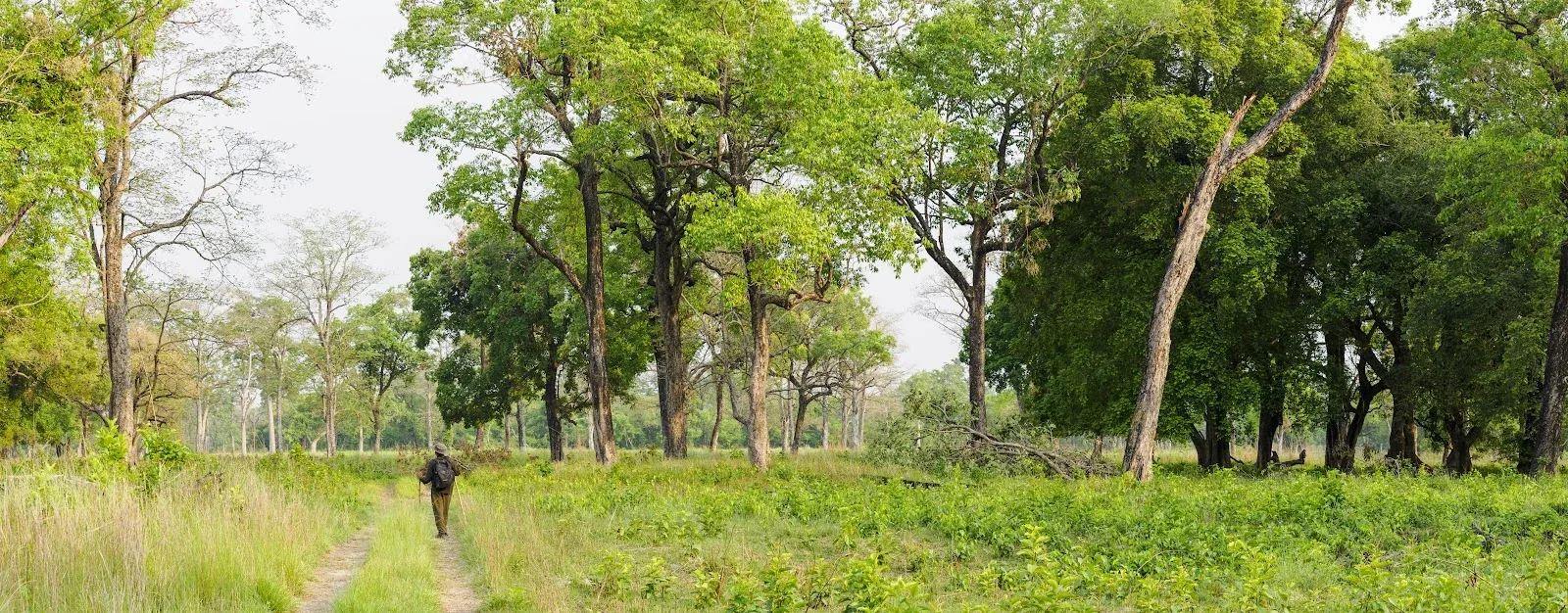
Perched high in the canopy 25 to 35 meters above the forest floor, langurs command a panoramic view of the undergrowth. When a tiger approaches, the dominant male emits a guttural, coughing bark: “Khokh... Khokh... Khokh-arrr”. This alarm is repeated rhythmically as the predator progresses. By observing which direction the monkeys face, guides determine the cat's exact bearing hundreds of meters away.
2. The Spotted Deer (Chital): Sharp Understory Warnings
The chital utilizes a piercing, high-pitched metallic bark that resembles a referee's whistle: “Pounk!”. Females also stomp their hooves against the soil to transmit vibrational shockwaves. If a single bark occurs without repetition, it is often a false alarm triggered by a wild boar or jackal. However, if the entire herd clusters together, raising their white tail-flags and barking continuously in unison, a predator is actively stalking.
3. The Sambar Deer: The Deep Resonant Canon
The mighty Sambar deer — weighing up to 300 kg — produces a deep, booming hollow roar that carries over two kilometers: “Dhonk!”. This is the most reliable alarm in the Asian jungle. Sambar almost never call for harmless animals; they reserve their thunderous warning strictly for mature tigers or aggressive solitary elephants.
4. Sentinels of the Air: Drongos, Peafowl, and Laughingthrushes
Birds add surgical precision to audio tracking:
- Indian Peafowl (Peacock): When spotting a cat crouching in tall grass, peafowl fly to a low branch and unleash an unmistakable nasal cry (“Aooo-ou... Aooo-ou”), staring down fixated at the predator's hideout.
- Black Drongo and Babblers: These agile birds dive-bomb the creeping feline, snapping their bills with sharp metallic clicks to harass the cat and alert the entire glade.
4. Managing Wind and Microclimates: Blending into the Habitat
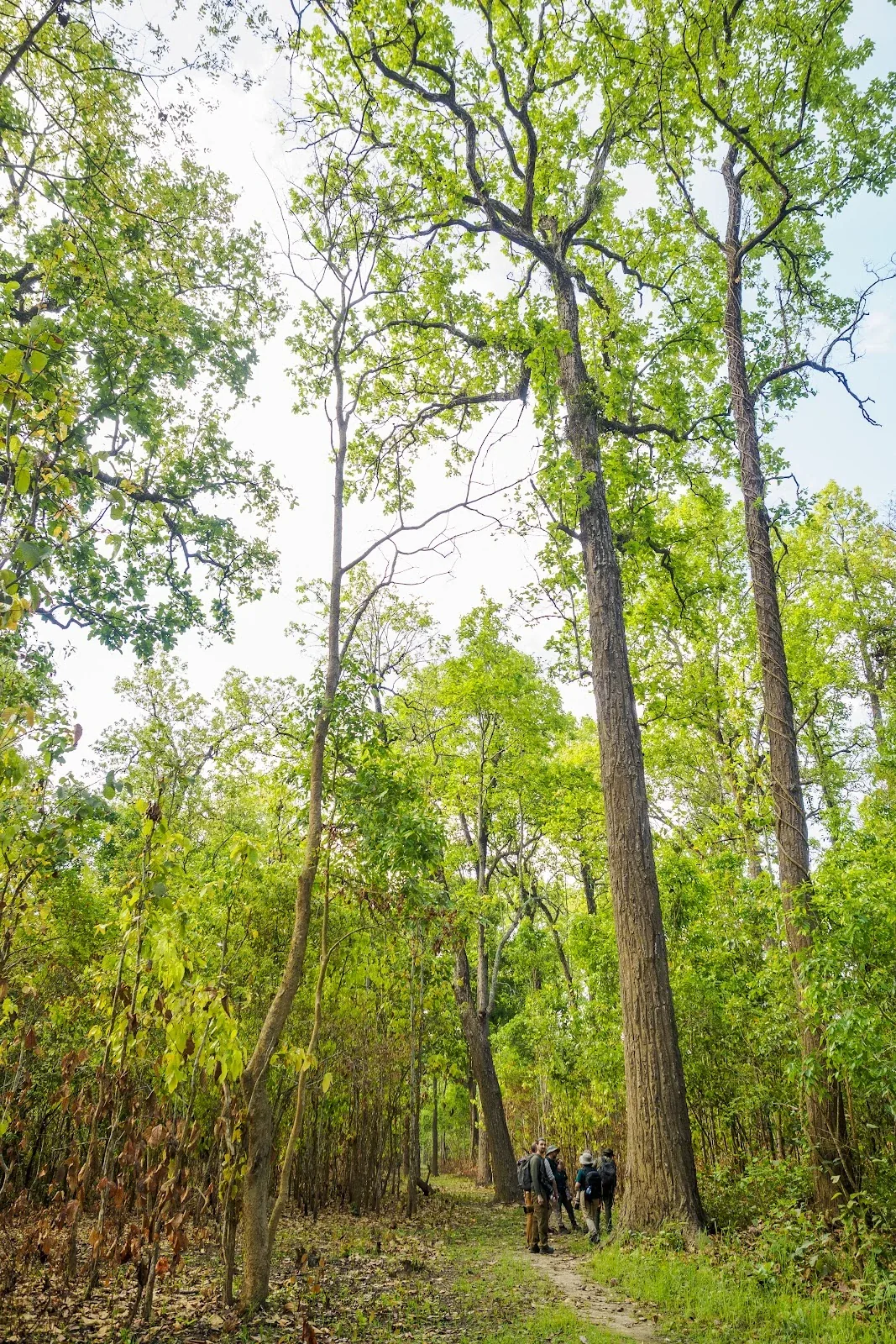
A seasoned Nepali tracker never walks without regularly testing the wind. While tigers possess moderate olfactory senses compared to their extraordinary hearing and eyesight, rhinos and wild elephants can detect human scent over 600 meters downwind.
The Fine Dust Drift Test
Every twenty minutes, the lead guide picks up a pinch of ultra-fine river dust or grass seeds and lets it trickle from their fingers. The drift reveals subtle thermal micro-currents. In Terai river valleys, cool air drains downstream in early morning, then completely reverses direction by midday as gravel banks heat under the tropical sun.
The Fox Walk: Silent Footwork Protocols
Walking through the jungle requires collective stealth. Guides instruct every traveler on the traditional stalking walk:
- Heel-to-toe roll: Place the outside edge of the foot down first before softly rolling onto the heel, feeling for dry twigs before transferring full body weight.
- Single-file progression: Each hiker places their boots precisely inside the footprints of the guide ahead, minimizing the group's sensory footprint.
- Silent non-verbal signals: No words are spoken. Two subtle tongue clicks mean “Freeze immediately”; a raised flat hand means “Crouch low”; a closed fist commands absolute immobility.
5. Field Safety Protocols: Encountering the Giants on Foot
Walking safaris in Nepal are strictly governed by seasoned safety rules. Our expeditions always deploy a two-guide team: a lead naturalist in front managing navigation and tracking, and an assistant guide at the rear equipped with traditional hardwood bamboo sticks (lathi), guarding blind spots.
What to Do During a Close Encounter
- Encountering a Bengal Tiger: Tigers are cautious and naturally avoid human confrontation unless surprised. The golden rule is never run (which instantly triggers their predatory chase instinct). The group gathers shoulder-to-shoulder to appear large, maintains calm eye contact, and steps backward slowly while speaking in firm, steady low tones.
- Encountering a One-Horned Rhino: Rhinos have poor vision but formidable smell and hearing. If charged, climbers immediately seek a sturdy climbable tree, move downwind, or weave behind massive Sal tree trunks that disrupt the rhino's straight-line charge.
- Encountering a Lone Bull Elephant (Tusker): This is the only animal for which guides execute an immediate proactive detour of several hundred meters upon hearing branch breaks or smelling fresh dung. Wild elephants always have absolute right-of-way.
- Encountering a Sloth Bear: Myopic and easily startled when digging into termite mounds, bears may bluff charge on hind legs. Making rhythmic tapping sounds with bamboo sticks against the ground while standing firm consistently causes them to retreat into thickets.
Conclusion: Experiencing the Jungle at Its Most Authentic
Tracking wildlife on foot restores the true nobility of wilderness exploration. Far removed from crowded tourist convoys, it reconnects travelers to nature in its purest, most respectful form. Every fresh paw print discovered in the morning mist, every breathless silence following a deer's alarm bark, is an unforgettable lesson in humility and wonder.
6. Substrate Science: Reading Tracks Across Diverse Terai Terrains
Tracking conditions vary dramatically across the heterogeneous landscapes of Bardia and Chitwan. Naturalist guides master the distinct physical mechanics of each terrain type:
- Alluvial River Silt and Sandbars: The finest substrate for precise morphometric measurement. Moist sand preserves complete anatomical impressions, including the subtle tripartite lobes of the rear pad and clear interdigital webbing outlines.
- Sal Forest Loam and Leaf Litter: Dense Sal tree canopies deposit a heavy carpet of broad leathery leaves. Here, physical pugmarks are rarely complete. Trackers rely on fractured leaf stems, overturned pebbles showing dark moist undersides, and faint scuff marks along damp game trails.
- Tall Elephant Grass Savannas (Saccharum and Imperata): In grass reaching four meters in height, footprints are hidden by thick root mats. Trackers navigate by reading bent grass stems (which dry from green to pale straw within hours of being stepped on), dew-rubbing marks on stalk sides, and fresh dung deposits.
- Dry Gravel and River Shingle: On pebble beds, foot impressions are invisible. Pisteurs track by detecting micro-scratches on river stones, wet pebble surfaces indicating an animal recently stepped out of the water, and scattered gravel displaced in the direction of travel.
7. Scat Analysis (Scatology): Diet and Health Assessment in the Field
Dung analysis — or scatology — provides invaluable ecological intelligence without disturbing wildlife. A fresh carnivore scat reveals the animal's identity, diet, and physiological state:
- Tiger vs Leopard Scat: Tiger scat is massive (exceeding 4 to 5 cm in diameter) and segmented, typically containing large dense hair bundles and thick bone shards from sambar or buffalo. Leopard scat is narrower (2.5 to 3.5 cm), containing smaller chital hair, rodent fur, or bird feathers.
- Freshness Evaluation: Fresh scat possesses a shiny, moist outer mucous coating and a pungent musky aroma. Within 12 to 24 hours under the Terai sun, the surface hardens into a dull crust. Over subsequent days, rain and dung beetles rapidly break down the organic matter.
- Bone and Hair Fragment Inspection: By examining the white calcified deposits and hair texture, naturalists determine when the predator last fed and what species it preyed upon, indicating whether the cat is actively hunting or currently resting near an active kill.