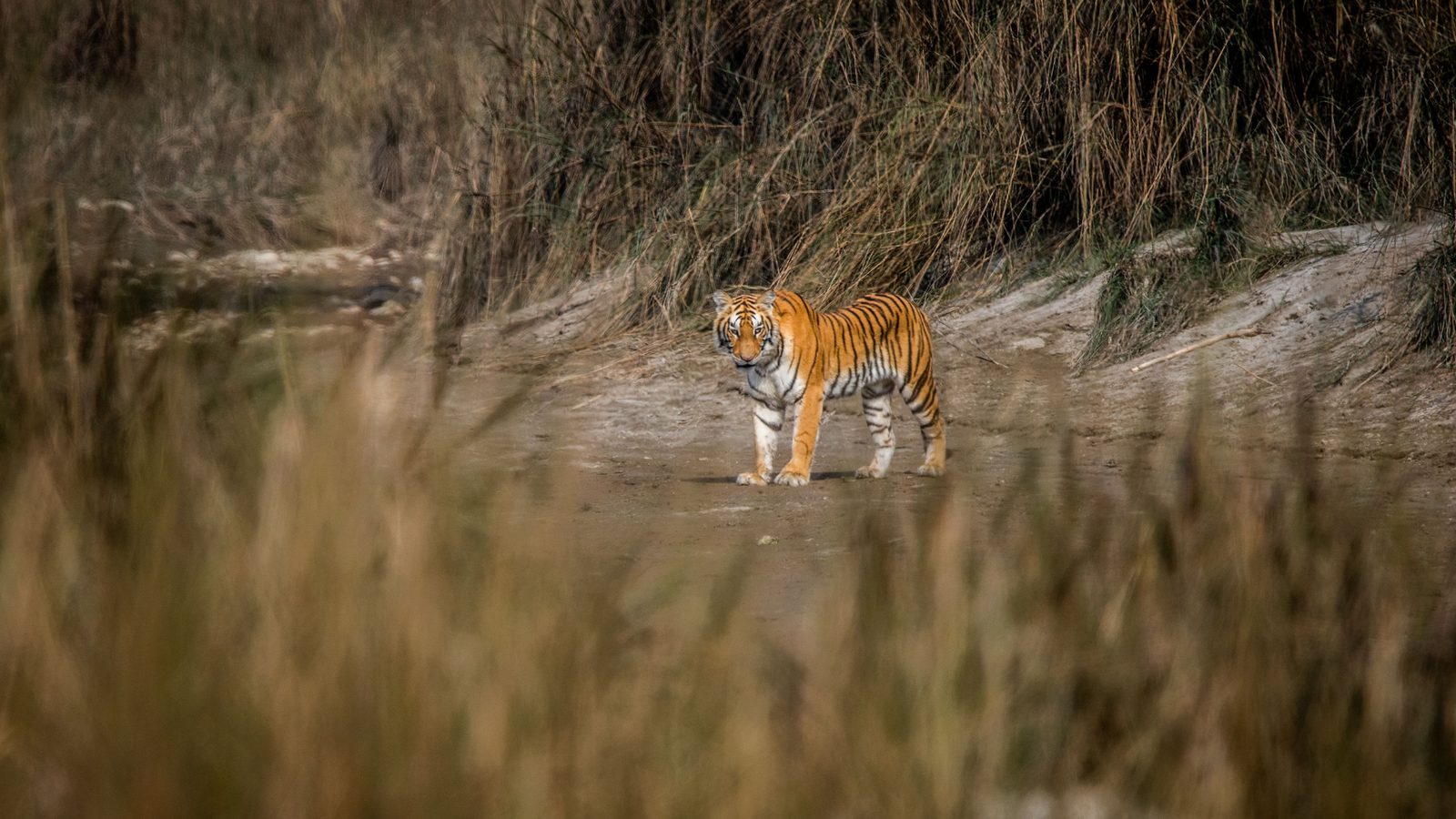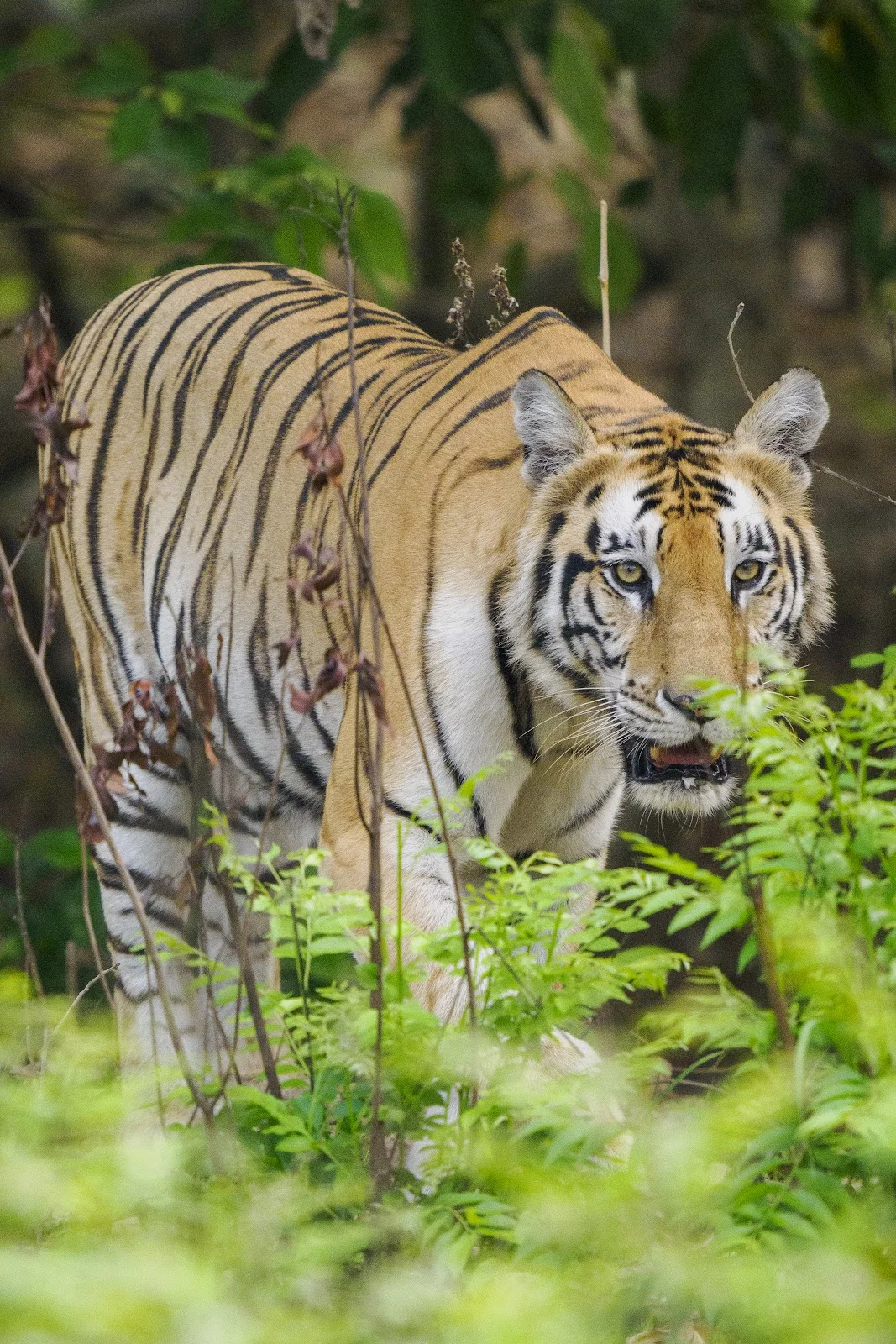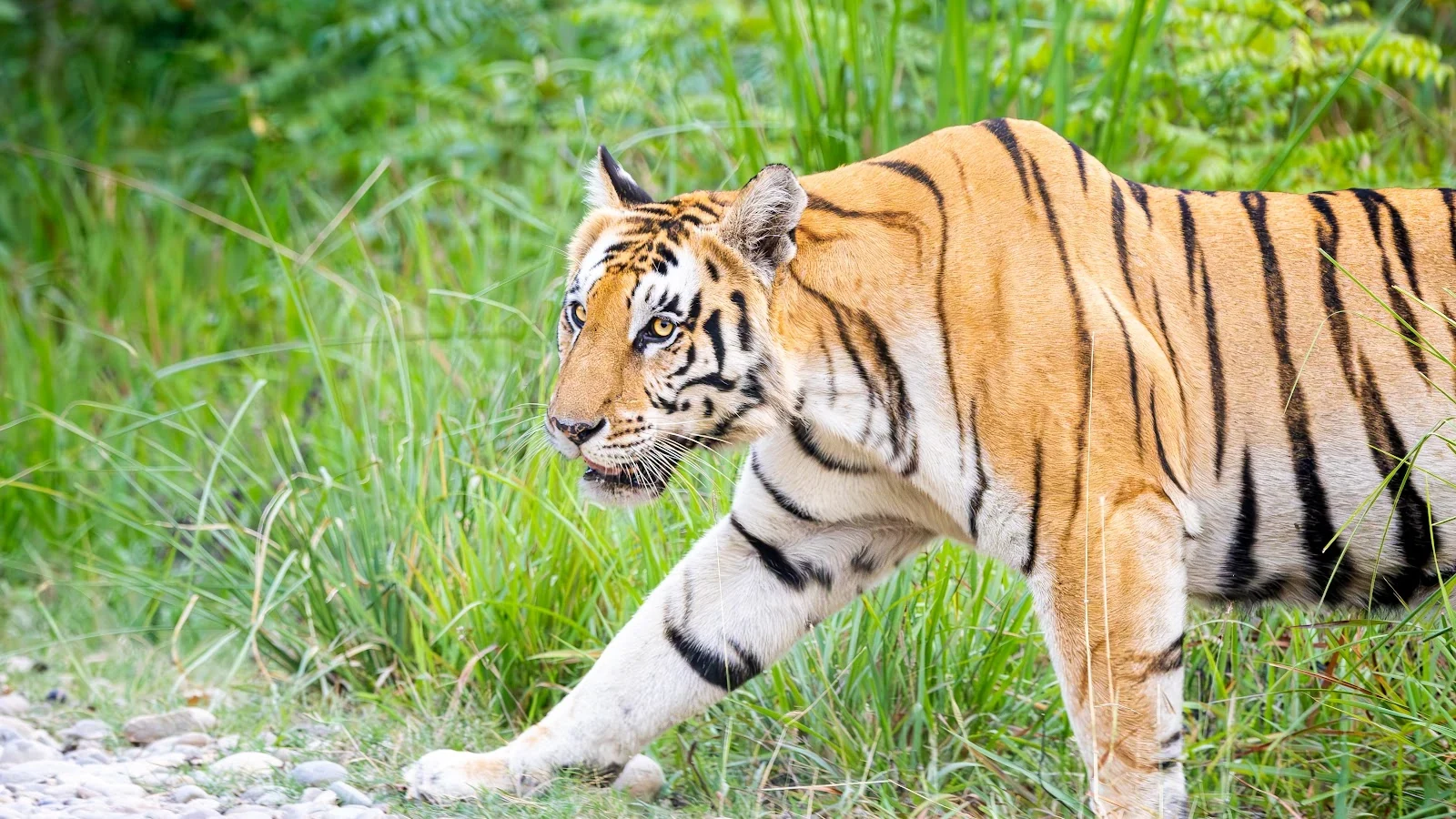

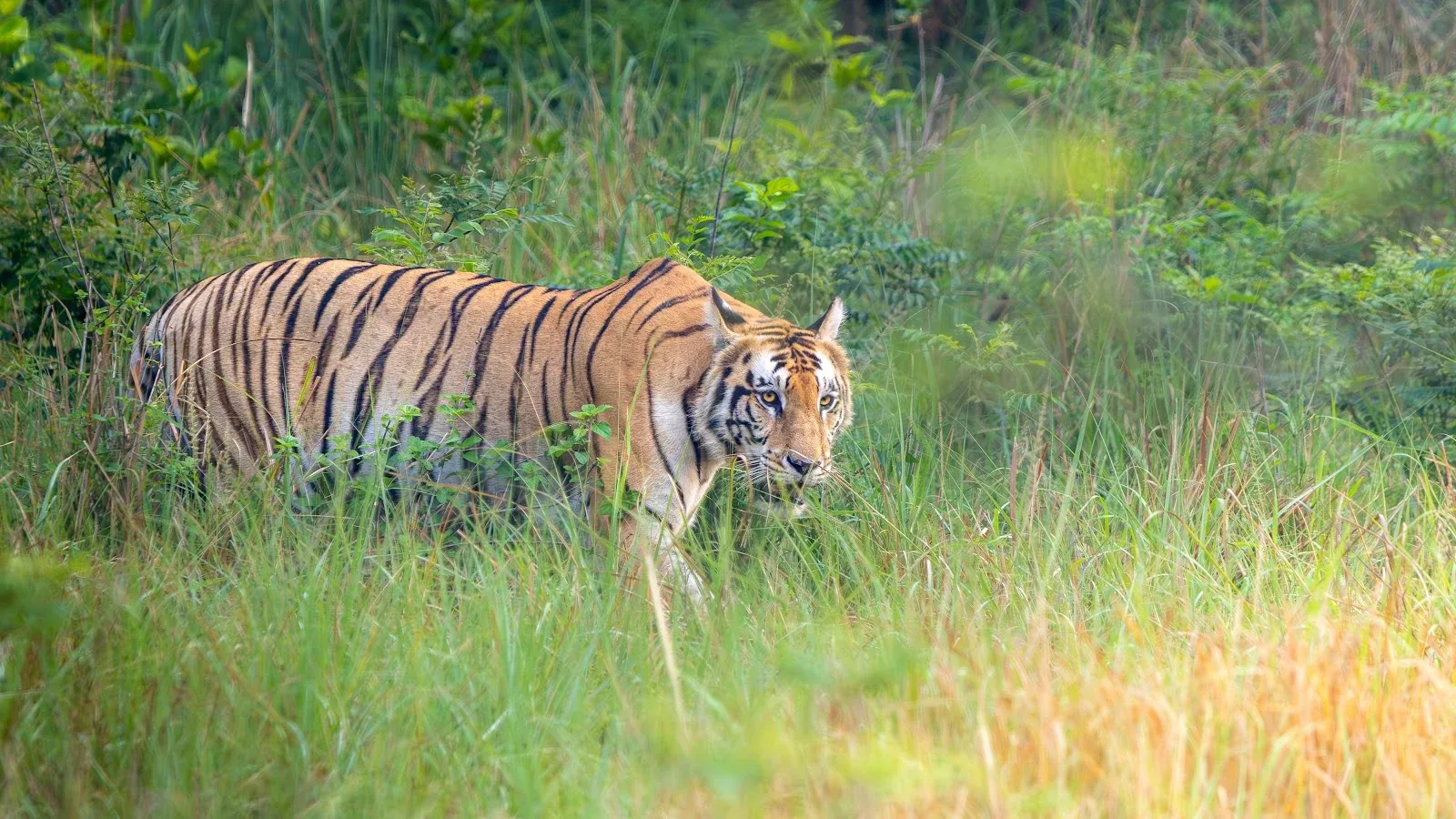
While the majestic Royal Bengal Tiger and Greater One-Horned Rhinoceros dominate global safari headlines, the vast floodplains and dense subtropical forests of Nepal's Terai harbor a secret kingdom of elusive wildlife. Beneath the swirling currents of the Karnali, within the ancient Sal canopy, and across the marshy savannas of Suklaphanta roam legendary, secretive species: the freshwater Gangetic dolphin, the sloth bear, the Indian leopard, the swamp deer (Barasingha), the Indian pangolin, and the golden jackal.
This comprehensive wildlife guide unlocks the biology, behavioral adaptations, hidden habitats, and expert tracking methodologies required to encounter these rare and elusive creatures in Bardia, Suklaphanta, and Chitwan National Parks.
1. The Gangetic River Dolphin (Platanista gangetica): Blind Cetacean of the Wild Rivers
With fewer than 50 mature individuals surviving in the river systems of Nepal, the Gangetic River Dolphin (locally revered as Susu after the acoustic exhalation sound made when surfacing) is among the most critically threatened aquatic mammals in the world. Listed as Endangered (EN) on the IUCN Red List, it has inhabited the silt-rich currents of the Karnali and Narayani rivers for millions of years.
Extreme Evolutionary Specialization
Due to high monsoon water turbidity where visual clarity is reduced to zero, the dolphin's eye lenses completely atrophied over evolutionary history—rendering the species functionally blind. To hunt and orient in turbulent currents, it broadcasts high-frequency ultrasonic clicks through its rounded melon, interpreting returning acoustic echoes with pin-point accuracy. It frequently swims on its side along the sandy riverbed, using its pectoral fin to sweep up bottom-dwelling catfish and freshwater crustaceans.
2. The Sloth Bear (Melursus ursinus): The Pneumatic Insectivore of the Forest
Immortalized as Baloo in Rudyard Kipling's The Jungle Book, the sloth bear is one of Asia's most unique ursids. Featuring a shaggy black coat, a distinctive pale V- or Y-shaped chest crescent, and massive ivory-colored curved claws measuring up to 4 inches, it is an unmatched excavator.
Pneumatic Suction Feeding Mechanism
The sloth bear has evolved extreme anatomical adaptations for myrmecophagy (ant and termite consumption). Lacking upper central incisors, it possesses flexible mobile lips and a long protractile tongue. After ripping open concrete-hard clay termite mounds with its powerful claws, it blows away debris and vacuums up insects through high-powered acoustic suction audible over 200 meters away through the quiet forest.
Comparison Matrix: Rare and Cryptic Wildlife of Nepal
| Cryptic Species | IUCN Status & Nepal Population | Primary Habitat & Key Location | Activity Profile & Ethology |
|---|---|---|---|
| Gangetic Dolphin (Platanista gangetica) | Endangered (<50 ind.) | Deep Karnali river confluences (Bardia) | Diurnal, echolocation, brief surfacing |
| Sloth Bear (Melursus ursinus) | Vulnerable (~200-250 ind.) | Sal forests & termite mounds (Bardia/Chitwan) | Crepuscular/Nocturnal, solitary excavator |
| Swamp Deer / Barasingha (Rucervus duvaucelii) | Vulnerable (~2,000 ind. in Suklaphanta) | Open flooded grasslands (Suklaphanta) | Gregarious (massive herds), splayed hooves |
| Indian Leopard (Panthera pardus fusca) | Vulnerable (Secretive) | Hilly buffer zones, Siwalik forest fringe | Nocturnal, arboreal, avoids tiger cores |
3. The Barasingha of Suklaphanta: The Greatest Herd on Earth
The Barasingha (Rucervus duvaucelii), translating literally to "twelve-tined" in Hindi and Nepali in homage to the multi-branched antlers grown by mature stags, is fundamentally adapted to wetland savannas. Its splayed, flexible hooves distribute body weight across marshy ground, allowing swift locomotion without sinking.
Suklaphanta National Park in far-western Nepal preserves South Asia's largest continuous alluvial grassland, hosting the world's most breathtaking concentration of swamp deer: a single contiguous herd numbering over 2,000 individuals! Watching this ocean of golden stags gallop across mist-covered savannas at dawn is one of the grandest wildlife spectacles on the planet.
Track Rare and Elusive Wildlife in Nepal
Tailor-made walking expeditions for passionate naturalists and wildlife photographers.
4. The Indian Leopard (Panthera pardus): Spatial Coexistence with the Bengal Tiger
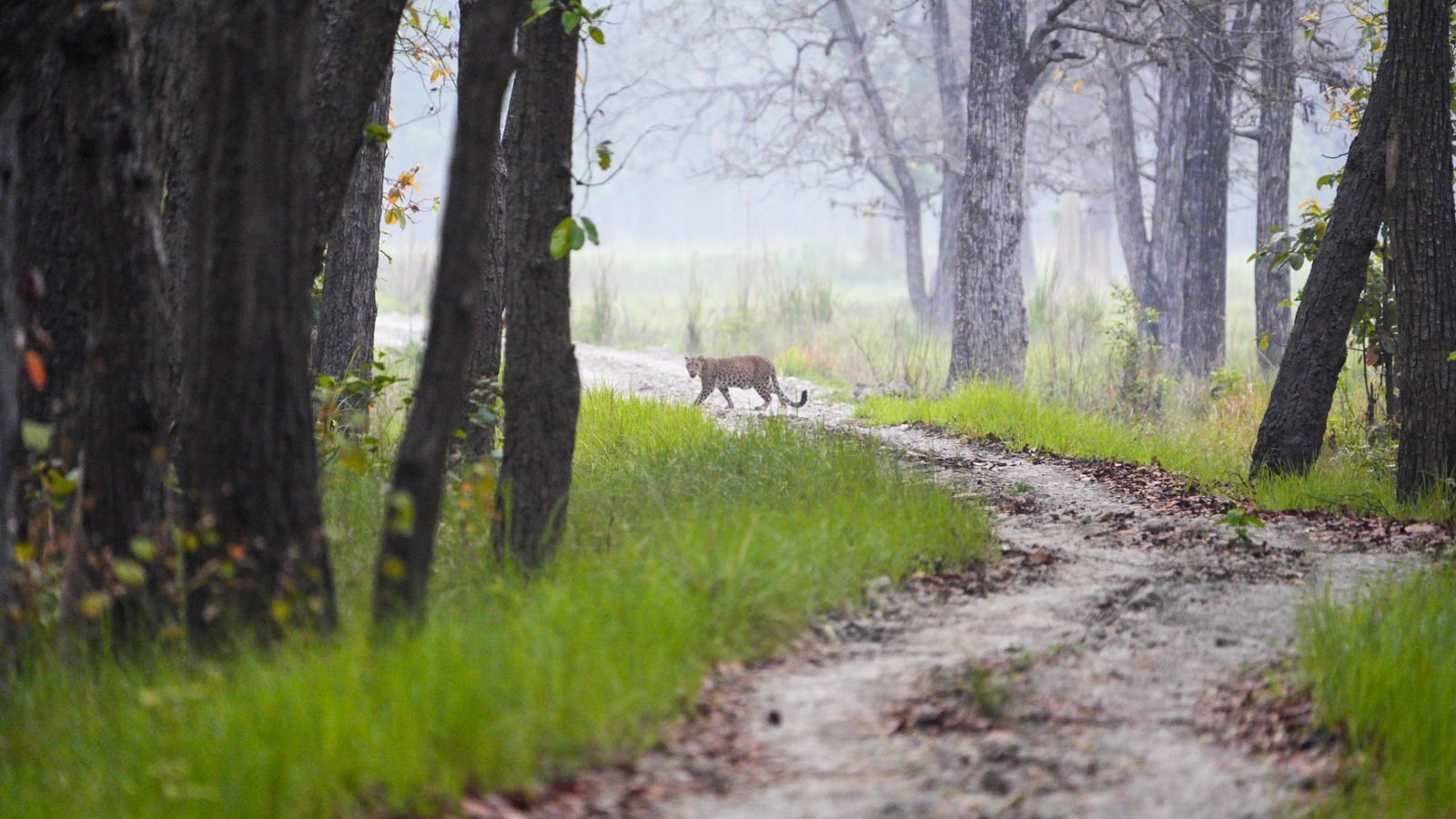
In the predatory hierarchy of the Terai, the Royal Bengal Tiger rules prime riverbanks and prey-dense core grasslands. To survive alongside this dominant apex competitor, the Indian leopard executes an intricate behavioral strategy known as niche partitioning.
Leopards concentrate along rugged Siwalik foothills, dense thickets, and buffer zone boundaries. By hunting primarily at night and hoisting heavy prey into the canopy out of reach of ground-dwelling tigers, leopards thrive silently across the landscape.
5. Naturalist Field Tactics for Tracking Secretive Species
- Elevated Watchtowers (Machans): Shy species avoid open dirt tracks. Spending twilight hours in elevated hides overlooking forest waterholes dramatically improves sloth bear and leopard sighting odds.
- Cross-Referencing Alarm Calls: The sharp honk of peafowl and the barking alarm of Muntjac deer pinpoint moving leopards long before they emerge from thick undergrowth.
- Strict Scent Discipline: Sloth bears possess extraordinary olfactory senses. Never wear synthetic perfumes or fragranced lotions during tracking excursions.
6. The Golden Jackal and Smooth-Coated Otter: Masters of the Shoreline
Beyond apex cats and bears, the Terai ecosystem is enriched by subtle, highly specialized species:
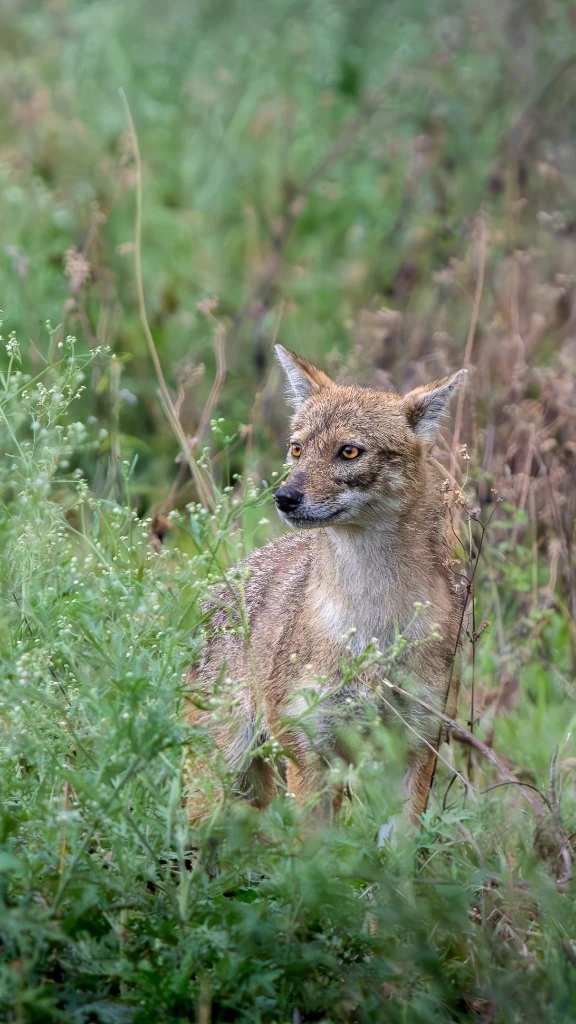
- The Golden Jackal (Canis aureus): Frequently sighted at twilight patrolling the boundary between grassland and Sal forest, this intelligent canid provides vital scavenging sanitation services while controlling agricultural rodent numbers. Their eerie synchronized evening howls echo across wild river camps.
- The Smooth-Coated Otter (Lutrogale perspicillata): Inhabiting social family clans of 4 to 10 individuals, this aquatic predator is an astonishingly agile swimmer. Trackers frequently spot them mud-sliding along the Babai riverbanks or hunting cooperatively by herding fish shoals into shallow water channels.
7. Expert Pugmark Identification Guide for Cryptic Mammals
Reading track signatures in damp river sand is a hallmark of senior Bardia wilderness guides:
- Sloth Bear Track: Highly distinctive plantigrade impression (similar to a small human footprint on the hindfoot) accompanied by five deep, prominent curved claw gouges set inches ahead of the toe pads.
- Indian Leopard Pugmark: Rounder and more compact than a tiger's print (roughly 3 to 3.5 inches across). Lacks claw marks (retractile claws) with an asymmetrical three-lobed main heel pad.
- Barasingha Hoofprint: Elongated, widely splayed cleits that frequently show prominent dewclaw impressions in soft marsh mud.
8. Annual Tracking Calendar for Nepal's Secret Species
- November to January: Optimal visibility for Gangetic River Dolphins at Karnali river confluences. Leopards descend into lowland river corridors.
- February to April: Peak sloth bear activity. Controlled grass burns expose termite mounds, and flowering Madhuca longifolia (Mahua) trees drop intoxicating sweet nectar blossoms that bears adore.
- May to June: Massive congregations of Barasingha herds around perennial wetlands in Suklaphanta before monsoon rains begin.
9. In-Depth Case Study: The Rescue of the Indian Pangolin
The Indian Pangolin (Manis crassicaudata) and its montane counterpart, the Chinese Pangolin (Manis pentadactyla), rank among the most evolutionary unique and critically endangered creatures on the planet. Enclosed in an armor of overlapping keratin scales (the same structural protein found in human fingernails), the pangolin rolls into an impregnable sphere when threatened by natural apex predators like tigers or leopards.
Tragically, this passive defensive posture leaves it highly vulnerable to illegal international poaching for traditional medicine markets. In Nepal, national park authorities across Bardia and Chitwan established specialized anti-poaching canine tracking units (utilizing trained Malinois and Pointer breeds) combined with community-led forest intelligence networks. This aggressive protection strategy reduced poaching incidents by over 90% in the last decade, turning Nepal into a premier global sanctuary for wild pangolin recovery.
10. The Golden Jackal: Cooperative Social Intelligence in the Terai
Mating for life in lifelong monogamous pairs, golden jackals maintain well-defined home ranges marked along the fringes of grasslands and Sal woodlands. Mated pairs frequently hunt cooperatively: while one jackal flushes hares or ground-nesting francolins from thorny thickets, the second partner waits in ambush along the escape corridor. Their vocal repertoire includes alarm yelps, chuckles, and haunting evening chorus howls that echo across the Terai floodplains at twilight.
11. Field Sighting Probability Matrix for Rare Mammals
| Cryptic Species | Field Detection Probability | Optimal Time Window | Best Season |
|---|---|---|---|
| Sloth Bear | Moderate to High (Walking safaris) | 06:30 - 08:30 / 16:00 - 18:30 | March to May (Mahua tree blossom season) |
| Gangetic River Dolphin | High (Karnali confluences) | 08:00 - 11:30 / Midday | October to March (Clear, low-velocity waters) |
| Indian Leopard | Low to Moderate (Secretive) | Twilight / Deep Nightfall | December to April |
| Swamp Deer (Barasingha) | 100% Guaranteed in Suklaphanta | All Day in Open Grasslands | November to May |
12. Forgotten Small Cats of the Terai: Fishing Cat and Jungle Cat
Beyond the celebrated big cats, two remarkable small felines inhabit the wetland fringes of southern Nepal:
- The Fishing Cat (Prionailurus viverrinus): Weighing 8 to 14 kg (18 to 30 lbs), this muscular feline features semi-webbed front paws and non-retractable claw sheaths engineered for aquatic hunting. An exceptional swimmer, it dives completely underwater to scoop out large freshwater carp and waterfowl.
- The Jungle Cat (Felis chaus): Featuring long legs and small ear tufts reminiscent of a miniature lynx, it stalks rodents and ground-nesting birds through tall alluvial savannas at dawn and dusk.
13. Nocturnal Viverrids: Large Indian Civet and Palm Civet
The riparian forest canopies of Bardia support nocturnal viverrids including the Large Indian Civet (Viverra zibetha) and Common Palm Civet. Moving silently through high branches after midnight, these solitary omnivores serve as crucial forest seed dispersers for native fruit-bearing trees.
14. Extended Field FAQ for Elusive Species
What makes Suklaphanta special for rare wildlife tracking?
Suklaphanta features the largest uninterrupted grassland in South Asia, minimal tourist traffic, and the highest concentration of swamp deer on Earth, alongside growing populations of tigers, leopards, and rare grassland birds like the Bengal Florican.
Are night game drives permitted inside Nepal's national parks?
Core park areas close strictly at sunset to avoid disturbing wild animals. However, nocturnal safaris and guided night walks are conducted in community-managed buffer zone forests surrounding Bardia and Chitwan with special permits.
Frequently Asked Questions (FAQ) — Rare Wildlife in Nepal
Are sloth bears dangerous on walking safaris?
Sloth bears have poor eyesight and hearing. If startled at close quarters in dense grass, their defensive reflex can be sudden. Naturalist guides make gentle walking sounds with wooden poles to alert bears well in advance.
Where is the best place to see Gangetic dolphins?
The confluence of the Karnali and Geruwa rivers at the southern boundary of Bardia National Park (near Kothiyaghat) is the top location in Nepal for regular dolphin surfacing sightings.
Can we see snow leopards in Bardia or Chitwan?
No. Snow leopards inhabit high Himalayan mountain elevations above 3,500 meters (Dolpo, Annapurna). Lowland national parks like Bardia host the common Indian leopard.
Discover our dedicated wilderness itineraries including Bardia Wilderness Explorer or browse our Suklaphanta Wildlife Guide.
15. Specialized Expedition Itinerary: The Secret Wilderness of Bardia & Suklaphanta
For dedicated wildlife photographers and naturalists seeking these elusive species, we recommend a 7 to 10-day specialized expedition. Spending dedicated mornings tracking otter families along the Babai canyon, midday hours scanning Karnali river confluences for dolphin surfacing breaks, and late afternoons positioned silently in elevated hides overlooking waterholes provides unparalleled opportunities to document Asia's most secretive wildlife.
Our senior trackers utilize non-invasive tracking techniques, respecting animal comfort zones while maximizing visual contact through generational field knowledge.
16. Essential Field Ethics for Tracking Cryptic Mammals
Because rare species such as the sloth bear, Indian pangolin, and freshwater Gangetic dolphin are extraordinarily sensitive to anthropogenic disturbance, our tracking expeditions adhere to rigorous conservation standards:
- Thermal Camera Use: For nocturnal mammal research in buffer zones, we employ thermal imaging monoculars rather than harsh white spotlights, preserving natural nocturnal foraging behavior without causing retinal stress.
- Scent Masking & Wind Discipline: Group sizes are strictly capped at four travelers per naturalist team, and movements are coordinated downwind of known active den sites.
- Community Intelligence & Local Guides: 100% of our tracking operations are conducted with local indigenous trackers who monitor seasonal animal movements year-round.
17. Sustainable Community Tourism Partnerships in Suklaphanta & Bardia
Our rare species safaris operate in direct economic partnership with local Buffer Zone Management Committees. A mandatory conservation levy from every expedition directly finances local anti-poaching youth patrols, community solar fencing maintenance, and veterinary support for livestock in villages bordering core national park habitats. By joining our ethical safaris, you actively safeguard Nepal's most vulnerable species.