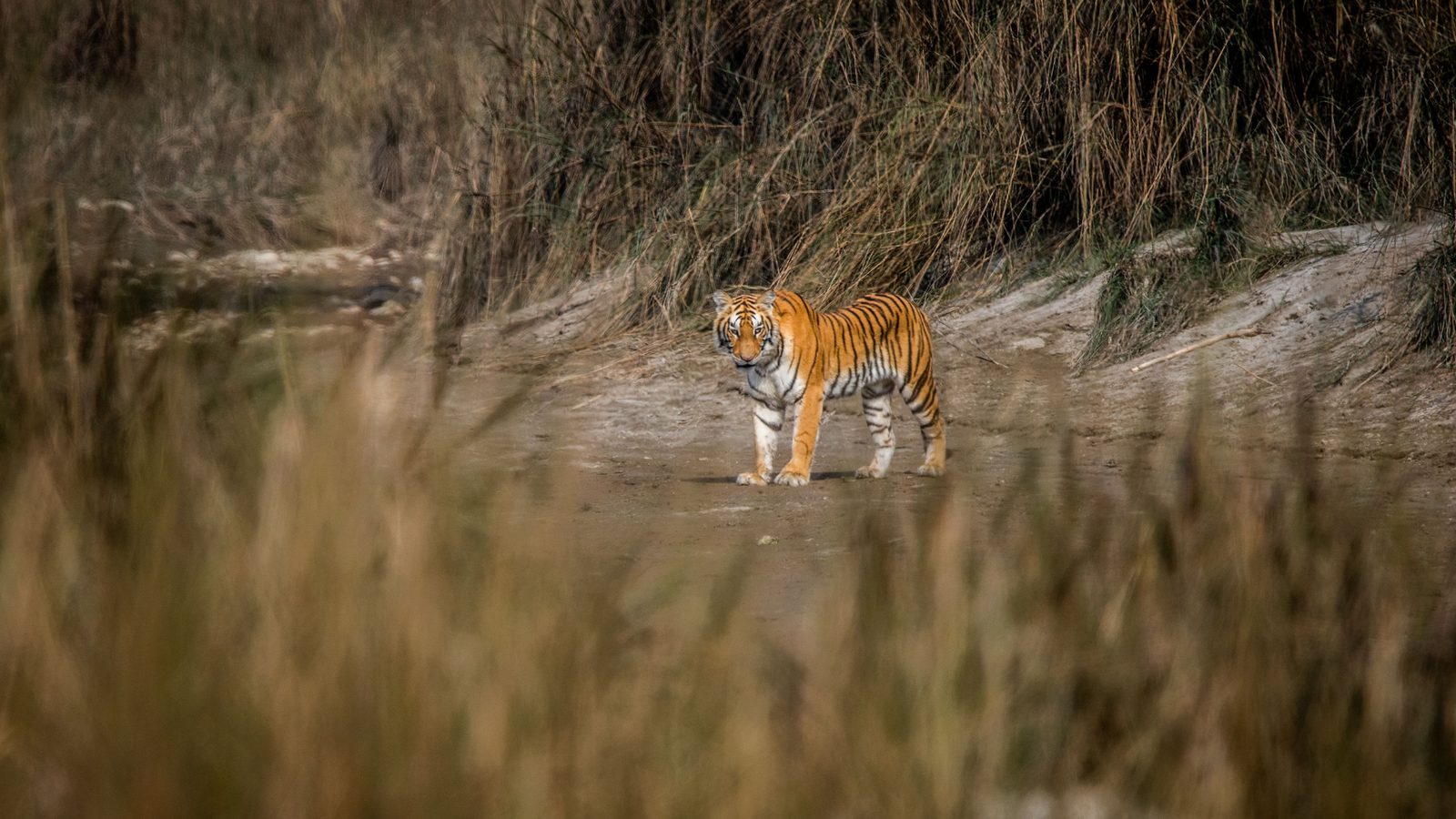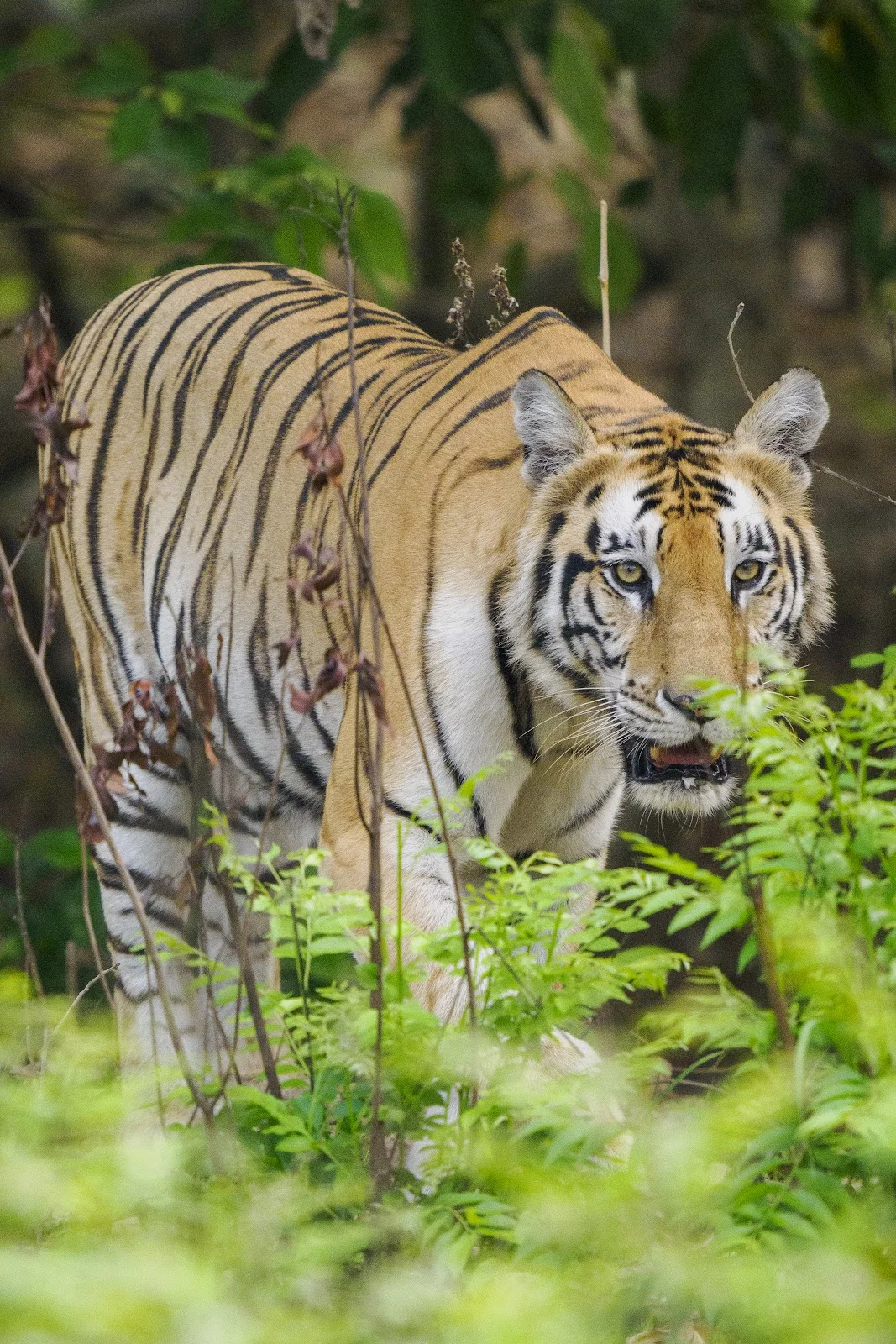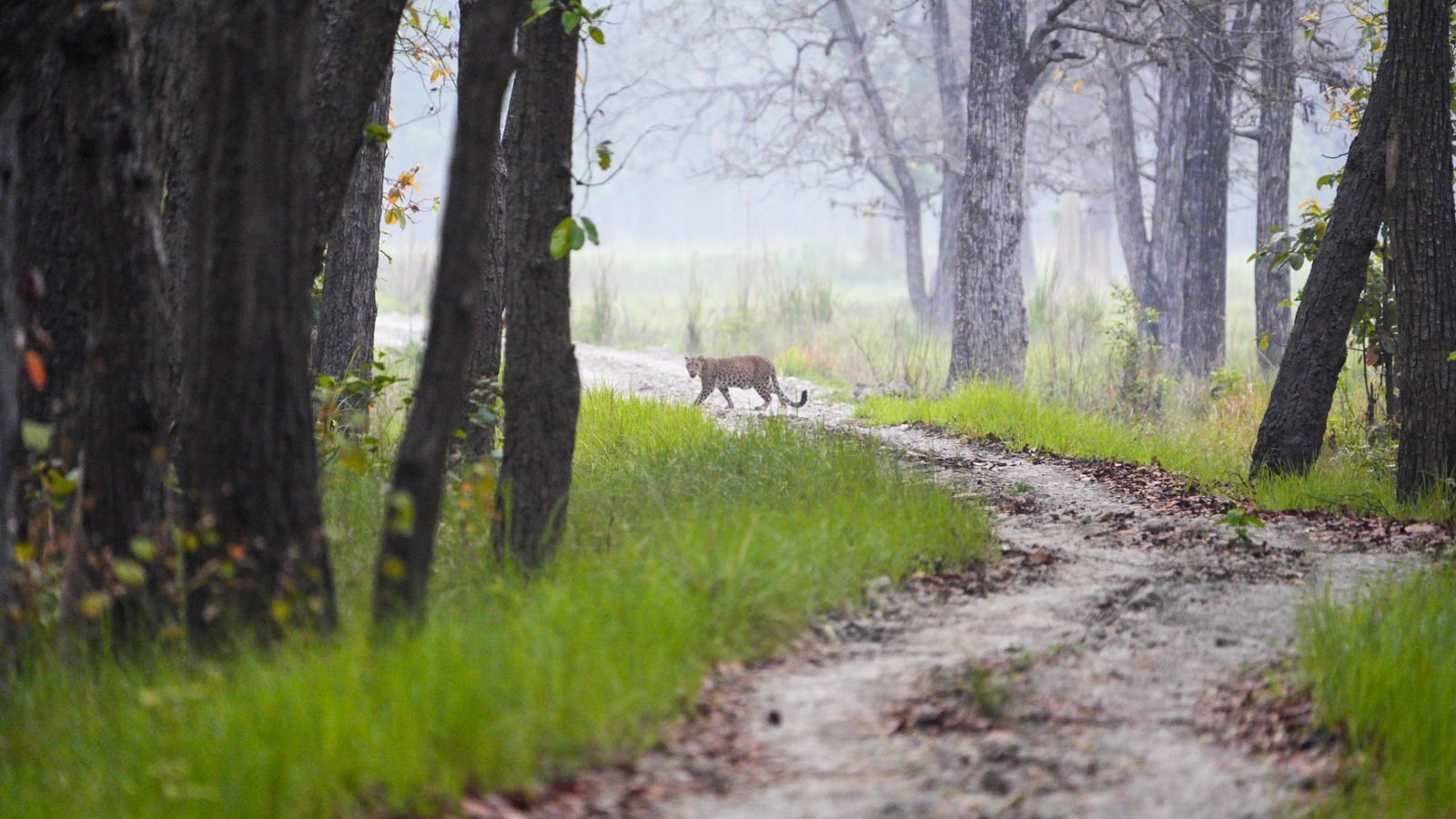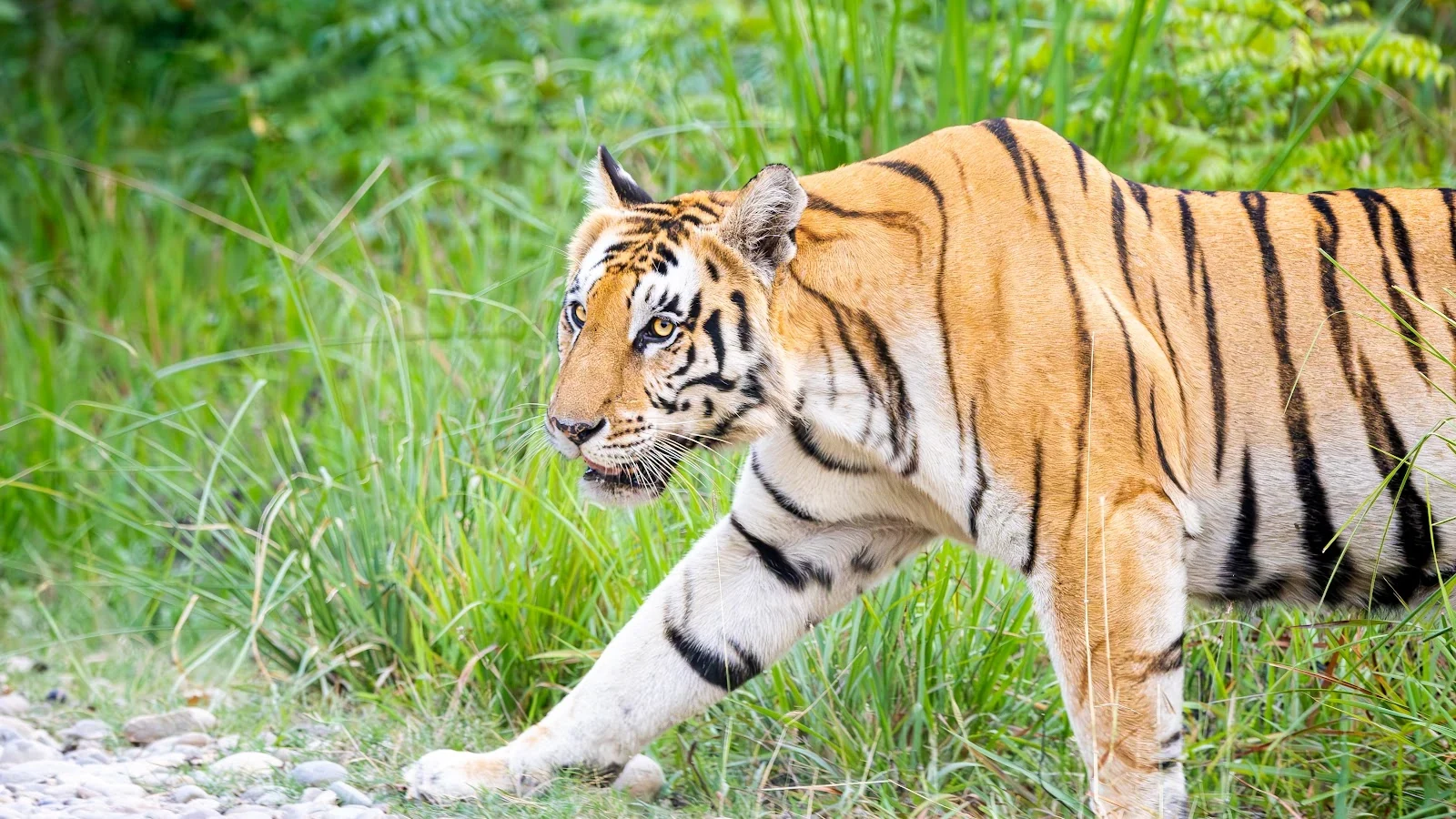

When passionate wildlife travelers dream of observing the wild Bengal Tiger in its natural Asian habitat, their choice almost invariably narrows down to two iconic destinations: India (with legendary reserves like Ranthambore, Jim Corbett, Bandhavgarh, and Kanha) and Nepal (home to the pristine wilderness sanctuaries of Bardia, Chitwan, and Suklaphanta). While India possesses enormous global commercial prestige, Nepal has quietly emerged among dedicated naturalists and wilderness purists as the most authentic, intimate, and thrilling safari destination on the entire Indian subcontinent.
Why is a wildlife safari in Nepal so fundamentally distinct from its Indian counterpart? How does the exclusive privilege of walking safaris on foot, the absence of commercial vehicle scrums, and the deep conservation ethic of local trackers elevate a standard wildlife outing into a genuine exploration expedition? In this comprehensive, unbiased field comparison, we break down the operational rules, atmospheric realities, costs, and wilderness value between these two conservation giants.
1. The Walking Safari: Nepal's Unrivaled Wilderness Exclusive
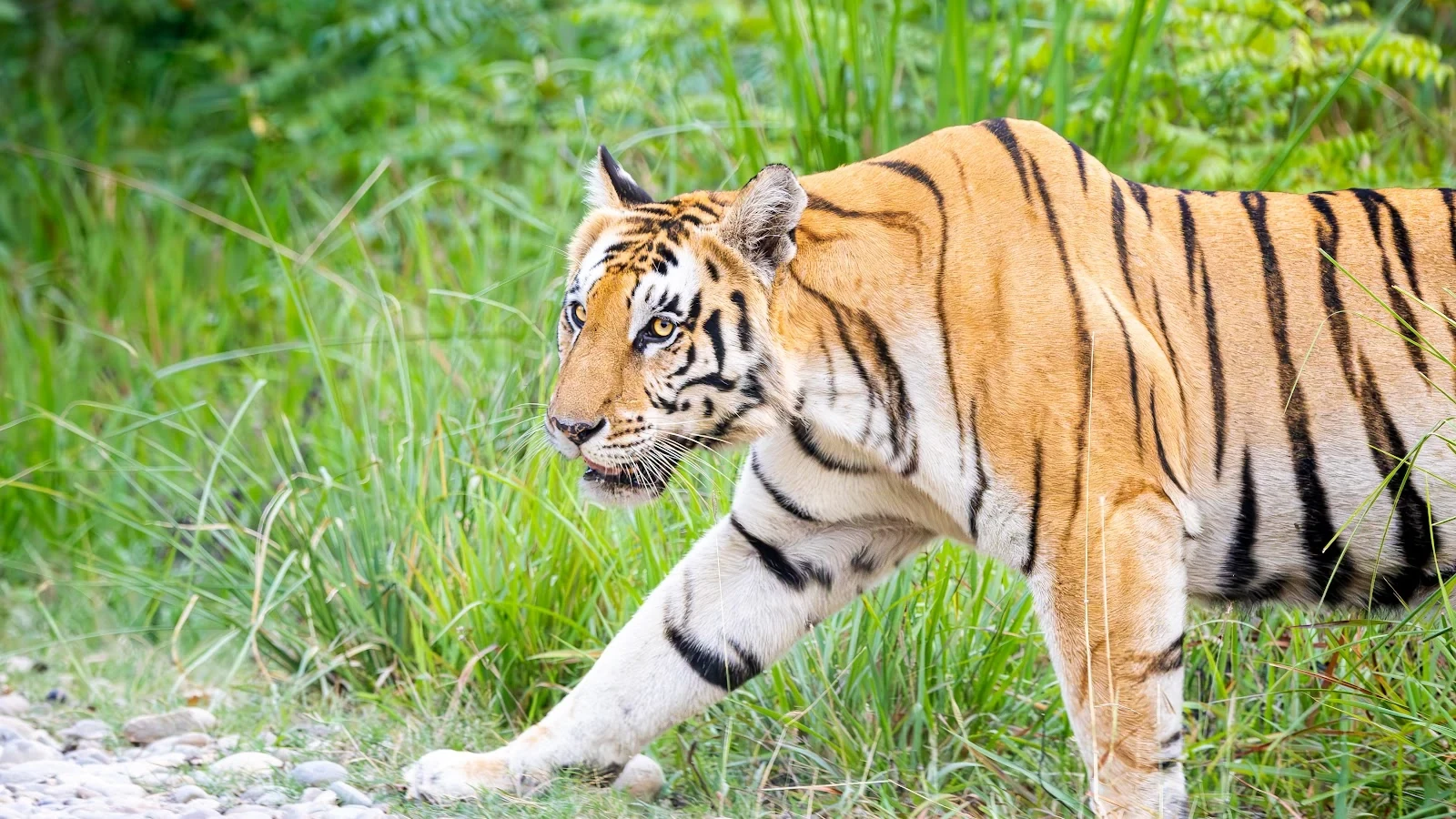
This single fundamental regulation represents the ultimate distinction separating wildlife exploration in Nepal from India: the legal right to explore the primary jungle on foot.
The Indian Regulation: Strict Vehicle Confinement
In India, National Tiger Conservation Authority (NTCA) guidelines strictly prohibit any tourist from stepping out of their vehicle inside core national parks. Visitors are confined to open-top 4x4 jeeps (Maruti Gypsys) or massive 20-passenger open trucks (Canters). Movements are locked into designated rigid route tracks, fixed zone assignments, and rigid 3-hour time slots with steep penalties for delayed exits.
The Nepalese Privilege: Total Sensory Immersion on Foot
In Nepal, park authorities in Bardia, Chitwan, and Suklaphanta actively permit and support Walking Safaris led by two certified local naturalist guides. Walking shifts your psychological relationship with the jungle entirely:
- Heightened Sensory Awareness: You detect every twig snap, smell fresh territorial musks on tree bark, and examine fresh pugmarks without the continuous drone of a diesel engine.
- Extended Quiet Hides: You can spend hours stationed behind natural camouflage blinds along river channels, waiting peacefully as a tiger emerges to drink or a rhino wallows in mud.
- Unrestricted Off-Trail Access: Pisteurs can track along dry gravel river channels and deep Sal forest canopies where motorized vehicles can never penetrate.
| Comparison Factor | Nepal Safari (Bardia / Suklaphanta) | India Safari (Ranthambore / Corbett) |
|---|---|---|
| Primary Safari Format | Walking Safari on Foot, Canoe & Jeep | 100% Motorized Vehicle Only (Gypsy & Canter) |
| Crowd Pressure | Extremely low (often zero other hikers in sector) | Very high (up to 40 vehicles surrounding one cat) |
| Park Daily Hours | Full continuous day (sunrise to sunset) | Strict split slots (3 hrs morning + 3 hrs evening) |
| Jungle Bivouac Options | Yes (Guarded wilderness camping in Bardia/Babai) | Strictly illegal across all core tiger reserves |
| Permit Flexibility | Full park access, flexible local issuing | Locked zone quotas booked 90+ days in advance |
2. Tourist Density and the Elimination of the 'Vehicle Scrum'
A recurring frustration for travelers returning from popular Indian reserves (such as Ranthambore or Bandhavgarh) is the aggressive “Tiger Show” phenomenon. As soon as a tiger is spotted by radio contact, dozens of jeeps race through thick clouds of dust, engines idling as passengers jostle for camera angles between roll cages and bumpers.
The Untouched Serenity of Bardia and Suklaphanta
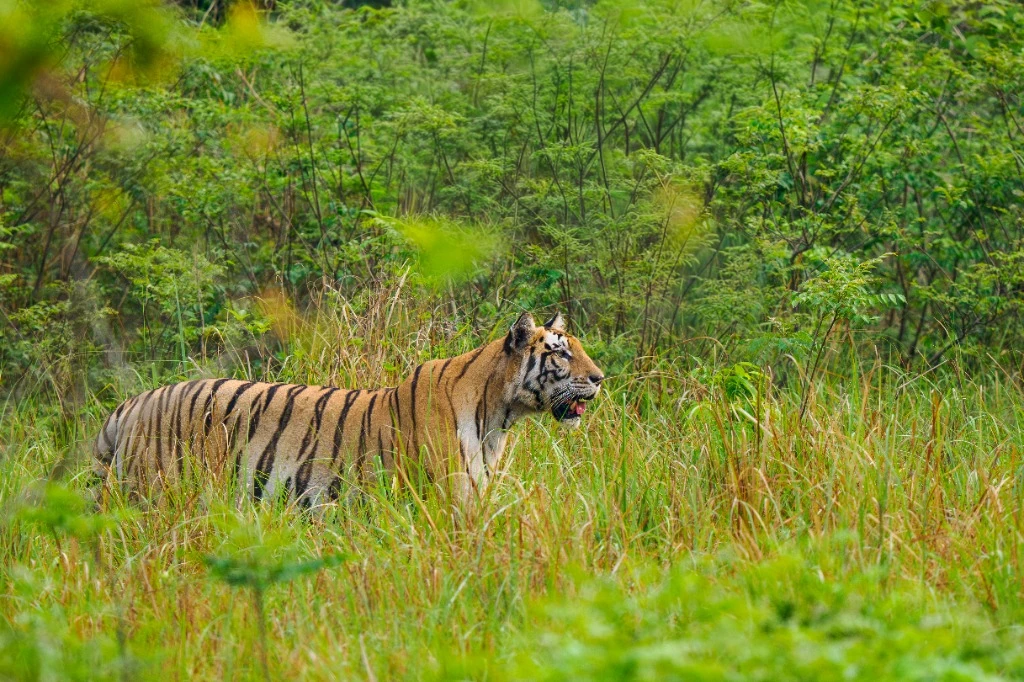
In Nepal, Bardia National Park encompasses over 968 square kilometers of pristine wilderness welcoming only a tiny fraction of daily visitors. It is routine to hike for an entire day through prime tiger territory without encountering another human party. When a tiger emerges onto a sunlit sandbank, you share that breathless moment in utter solitude. This profound intimacy cannot be matched in high-density commercial circuits.
Experience authentic wilderness tracking in Nepal
Exclusive small-group walking safaris and private expeditions guided by certified local naturalists.
3. Wildlife Density and Nepal's Historic Conservation Triumph
For decades, India was viewed as the only practical stronghold for observing wild Bengal tigers. Yet Nepal has achieved an internationally celebrated conservation milestone: nearly tripling its wild tiger population in a single decade (from 121 individuals in 2009 to over 355 tigers today, with more than 125 residing in Bardia alone).
A Complete Mega-Fauna Assemblage in One Compact Realm
Unlike many Indian tiger reserves that lack other major megafauna, Nepal's Terai protects an intact ecological web:
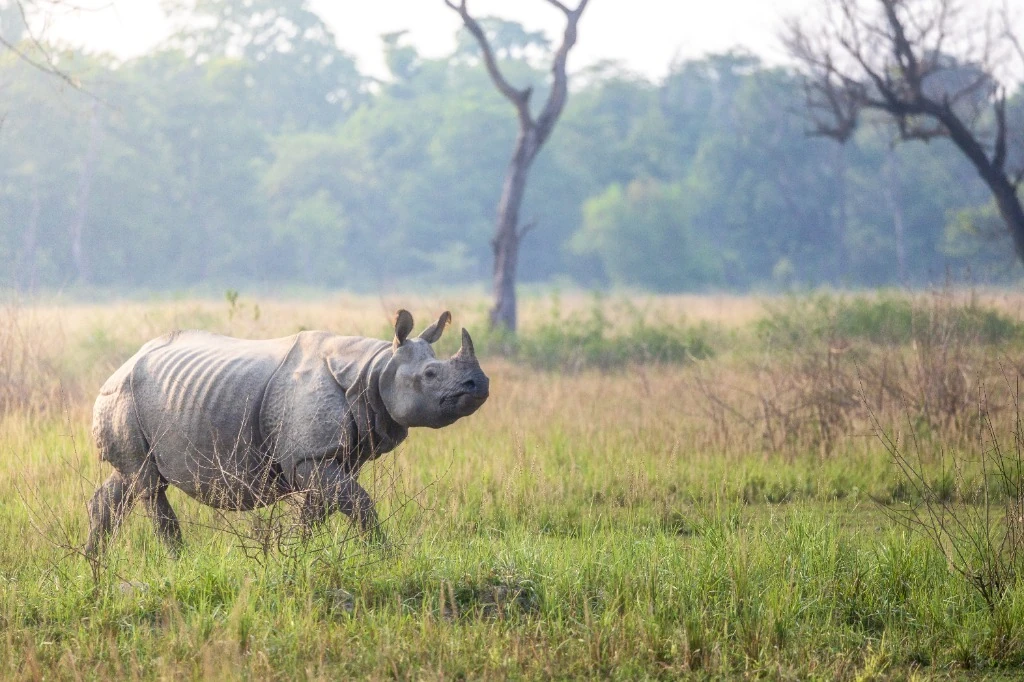
- The Greater One-Horned Rhinoceros: Over 750 rhinos thrive in Nepal across Chitwan and Bardia. In India, rhinos are largely restricted to far-eastern Kaziranga in Assam.
- Wild Asian Elephants: Robust migratory herds and legendary solitary tuskers roaming across cross-border biological corridors.
- The Critically Endangered Gharial: Ancient, fish-eating prehistoric crocodiles basking undisturbed on river sandbars.
- Gangetic River Dolphins: Thriving in the deep pools of the Karnali river system.
4. Budget, Logistics, and Booking Simplicity
Field logistics highlight stark practical differences between both countries:
Indian Permit Rigidities
Booking prime safari zones in India requires navigating government portals 90 to 120 days prior, submitting non-refundable passport data. Foreign permit fees are steep, and if your jeep is assigned to a low-density zone (such as Zones 1 to 10 in Ranthambore), you cannot alter your sector.
Nepalese Freedom and Greater Value
In Nepal, a single day permit grants seamless access across the entire national park without artificial zone barriers. You and your guides determine your daily strategy spontaneously based on fresh dawn alarm calls and waterhole activity. Furthermore, comprehensive safari packages (including boutique jungle lodges, private naturalist guiding, permits, and meals) average 30% to 45% less expensive than equivalent Indian high-end safari lodges while providing substantially higher personal immersion.
Conclusion: Selecting the Right Adventure for You
- Choose India if: You seek a conventional Golden Triangle palace tour with a brief 2-day motorized jeep add-on, or if mobility restrictions prevent walking on foot.
- Choose Nepal if: You crave authentic wilderness exploration, absolute silence, the magic of walking tracking, intimate encounters, and the profound feeling of exploring true untamed nature alongside dedicated local naturalists.
5. Wildlife Photography: Eye-Level Intimacy vs Downward Vehicle Angles
For discerning wildlife photographers, shooting perspective makes the definitive difference between an ordinary tourist snapshot and an award-winning fine art portfolio image:
- High-Angle Downward Shots in Jeeps (India): Seated two meters above ground in elevated Maruti Gypsy seats, your lens unavoidably points downward at the animal. The background is dominated by ground dust and gravel, flattening visual depth and emotional connection.
- Eye-Level Ground Perspective on Foot (Nepal): In Bardia or Chitwan, crouched low behind a natural driftwood blind on a sandbar along the Geruwa river, your lens sits at exact eye level with a drinking tiger or charging rhino. Foreground and background fall into silky, cinematic bokeh, rendering the predator's gaze with breathtaking power.
6. Park-by-Park Breakdown: Ranthambore vs Bardia, Corbett vs Chitwan
| Indian Tiger Reserve | Nepalese Equivalent Sanctuary | Key Nepalese Advantage |
|---|---|---|
| Ranthambore (Rajasthan) | Bardia National Park | 968 km² of total walking immersion, no restrictive zone gates, complete coexistence of tigers, rhinos, wild elephants, and gharials. |
| Jim Corbett (Uttarakhand) | Chitwan National Park | Silent traditional canoe safaris on the Rapti river, dense subtropical gallery forests, and profound indigenous Tharu cultural heritage. |
| Kaziranga (Assam) | Suklaphanta National Park | Asia's largest continuous alluvial grassland plain (54 km² of open savanna), massive herds of 2,000 swamp deer, zero tourist crowds. |
7. The Indigenous Ethics and Field Mastery of Tharu Naturalists
In Nepal, the naturalist guides who lead your walking safaris are not temporary seasonal drivers. Belonging predominantly to the indigenous Tharu community whose ancestors have coexisted with tigers and rhinos for millennia, they possess an intuitive, reverent understanding of forest ecology. This cultural harmony ensures a deeply non-intrusive tracking methodology that never stresses wildlife while imbuing your journey with unforgettable ancient folklore and bushcraft wisdom.
8. Summary Conclusion: Choosing Your Ideal Wildlife Odyssey
If your goal is a conventional Golden Triangle heritage tour combined with standardized jeep game drives, India offers a well-trodden circuit. But if you yearn for authentic raw adventure, the electric thrill of tracking big cats on foot, supreme silence, and intimate connections with untouched ecosystems, Nepal stands undisputed as Asia's premier wilderness sanctuary.
9. Seasonality and Climate: Comparing the Terai to Central India
Seasonal timing plays an immense role in shaping the daily comfort and success of your safari:
- Subtropical Winter (November to February): In Nepal, this period is absolute perfection. Days are sunny, dry, and pleasantly warm (22 to 26°C / 72 to 78°F), while clear mornings occasionally reveal the snow-capped Himalayan peaks towering beyond the green Sal canopy. In North India (Corbett, Ranthambore), open-jeep winter morning drives can be bitterly cold (near 4°C / 39°F) with heavy dense fog that severely impedes wildlife visibility.
- Pre-Monsoon Dry Heat (March to May): As temperatures rise toward 38°C (100°F), the Terai's perennial rivers (Karnali, Babai, Rapti) become vibrant wildlife magnets. Large breeding herds of wild elephants and resident tigers gather along open gravel waterholes, creating world-class aquatic observation opportunities that are impossible to experience in dry Indian scrub habitats.
10. Continuous All-Day Freedom vs Fragmented Time Slots
One of the greatest luxuries of wildlife exploration in Nepal is uninterrupted continuity. In India, park rules mandate that all vehicles must exit by 10:30 AM and cannot re-enter until 3:00 PM, fracturing your daily flow. In Nepal, our walking expeditions unfold as continuous full-day wilderness journeys: enjoying an authentic hot bush-lunch prepared by our team under the shaded canopy of a wild banyan tree, resting during the midday lull beside clear river waters, and resuming tracking the moment afternoon alarm calls ripple through the forest.
11. Community Impact and Local Ecotourism Reinvestment
The conservation tourism funding models between both nations operate under starkly different philosophies:
- The Indian Corporate Model: Surrounding Ranthambore or Corbett, the vast majority of luxury safari resorts are owned by major national hotel conglomerates headquartered in Delhi or Mumbai. Consequently, a substantial portion of tourism revenue leaks out of the local economy rather than directly benefiting rural villagers living along reserve boundaries.
- The Nepalese Community Cooperative Model: In Nepal, visionary Buffer Zone Management legislation mandates that 30% to 50% of all national park entry fees are directly transferred back to local village forest committees. This capital finances community schools, local health clinics, solar predator-deterrent fencing, and indigenous reforestation corridors. When you embark on a safari with Jungle Nepal Adventure, your investment directly empowers local Tharu families and provides tangible economic incentives to protect wild tigers for generations to come.
12. Final Decision Matrix: Summary Scorecard
| Experience Dimension | Nepal (Bardia / Chitwan / Suklaphanta) | India (Ranthambore / Corbett / Kanha) |
|---|---|---|
| Walking Safaris on Foot | Exceptional (Core attraction, fully legal) | Prohibited (Strictly vehicle confined) |
| Atmospheric Quiet & Privacy | Unmatched (Deep wild silence, zero traffic) | Heavily commercialized (Loud vehicle jams) |
| Megafauna Diversity | Complete Big 4 (Tiger, Rhino, Elephant, Gharial) | Mainly tiger focused (Rhinos absent in central India) |
13. Expert Verdict: Unmatched Freedom in the Heart of Asia
While India will always preserve a cherished place in wildlife history, the modern commercialization of its premier tiger reserves has created a congested, highly regulated safari environment. For adventurous travelers who seek the authentic spirit of discovery — where you step quietly onto the earth, listen intently to the forest, and meet Asia's greatest apex predators on equal terms — Nepal delivers an extraordinary, soul-stirring safari experience that is second to none in the modern world.
14. Frequently Asked Questions: Nepal vs India Safari Choice
Is tiger sighting probability higher in Nepal or India?
In prime dry season months (March through May), tiger sighting probability in core Bardia reaches over 80% on multi-day walking safaris. While certain small Indian reserves offer concentrated sightings, Nepal provides far longer, uninterrupted, and intimate viewing without crowds.
Can I combine a Nepal safari with a Himalayan trek?
Yes! This is Nepal's unique geographical superpower. You can trek through high alpine valleys beneath Annapurna or Everest, and within a single short domestic flight, find yourself exploring lush subtropical tiger jungles on foot.